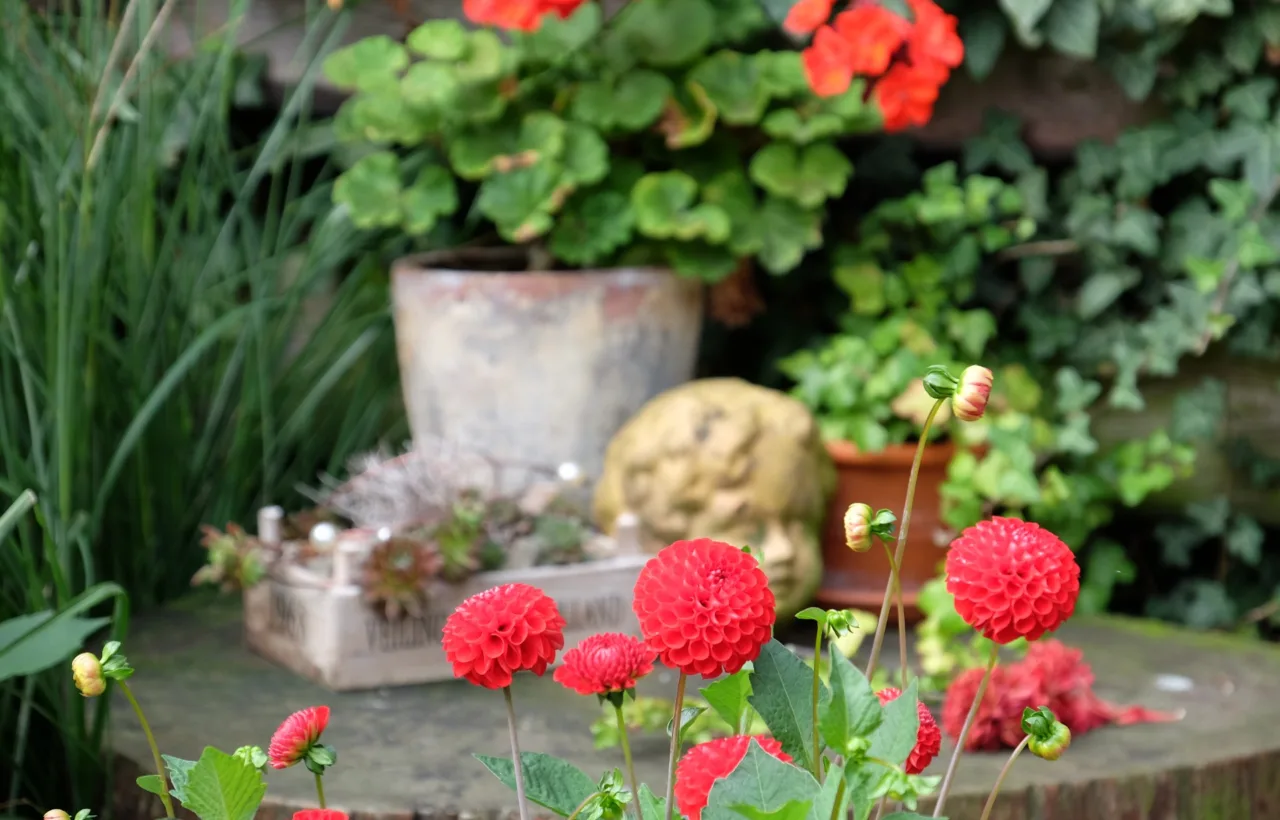

I spent years watching my friends fill their yards with massive dahlia borders while I stared at my tiny patio and wondered if I was stuck with boring annuals forever. That changed the summer I started treating dahlia in pots container garden setups like a real experiment instead of a compromise. Honestly? The results shocked me. My pots now pump out more blooms than some of those in-ground beds, and I can move the show wherever the light is best.
I still remember the first season I got it wrong. Tiny pots. Daily wilting. A few sad flowers that flopped over after one good rain. I almost gave up. Then I fixed the basics and everything shifted. Now I grow dozens of them this way every year, and the process feels simple once you know what actually matters.
Why Pots Beat the Ground for My Setup
Space is the big reason I went this route. My yard is mostly hardscape and a few raised beds that already host tomatoes and herbs. Pots let me claim the sunny spots on the deck and the front steps without digging anything up.
Control is the second reason. I pick the exact soil mix. I control the water. I can shift a plant into partial shade during a heat wave without transplanting shock. See, ground soil in my area stays soggy after spring rains, and dahlia tubers hate that. Pots drain fast and warm up quicker.
The third reason is pure selfishness. I want flowers at eye level when I sit outside with coffee. Tall border plants look great from across the lawn. Potted ones look great from three feet away.
Place pots on feet or slats, especially on hardscape, so drainage holes cannot seal against the deck or steps.
The One Mistake That Kills Most Container Dahlias
Pot size. Full stop.
I used to grab whatever 10-inch plastic pot sat on the nursery shelf. The tubers sprouted fine. Then the plants hit knee height, the roots filled every available inch, and the whole thing became a daily watering emergency. Blooms stayed small. Stems leaned. I felt defeated every August.
Larger pots fixed it. I now treat 12 inches wide and 12 inches deep as the absolute minimum for any single tuber. Compact varieties do fine there. Anything taller or larger-flowered needs 16 to 20 inches across, sometimes more. I once planted three compact types in a big galvanized trough about 24 inches wide and got a solid wall of color that lasted until frost.
Bigger soil volume holds moisture longer. It also gives the plant room to build a root system that can support heavy blooms without toppling. Heavy ceramic or wooden barrels work better than lightweight plastic for taller plants. Wind is real, and a top-heavy dahlia in a skinny pot will tip the first time a storm rolls through.
Drainage holes matter just as much. I check every pot before I plant. If water sits in the bottom, the tuber rots. I sometimes add a layer of broken pottery or coarse gravel at the base, but only if the holes already exist.
Skip gravel as a drainage cure: it can reduce usable root space. Rely on adequately sized pots with open drainage holes.
Best Dahlia Types for Pots
Not every dahlia belongs in a container. The giant dinnerplate varieties can work if the pot is huge and staked hard, but I mostly skip them now. They demand constant attention and still look awkward once the flowers fill with rainwater.
I stick with these groups:
- Gallery series and other dwarfs under 2 feet. These stay tidy, bloom heavily, and rarely need staking. Perfect for 12- to 15-inch pots.
- Border and mignon types. Slightly taller, still manageable. They give me more flower size without the drama.
- Dark-leaved varieties like Bishop of Llandaff or Bishop of Canterbury. The foliage alone looks good even before the flowers open. They handle pots well and attract pollinators.
- Compact decorative and ball types. I grow a few of these every year for cutting. The blooms last in a vase and the plants stay under 3 feet if I pinch them early.
I avoid the tallest cactus and dinnerplate forms unless I have a half-barrel ready. Even then I plant only one tuber and stake it the day I plant.
Read the cultivar’s mature height, not just “compact” on the label. A three-foot decorative may still need support and a heavier pot.
Soil Mix That Actually Works
Garden soil is a hard no. It compacts in pots and drains poorly. I use a high-quality potting mix as the base. Then I amend it.
My current mix looks like this:
- Two-thirds bagged potting mix that already contains some compost or coir
- One-third additional compost or well-rotted manure
- A handful of perlite or grit for extra drainage
- A small dose of slow-release fertilizer mixed in at planting
The goal is soil that stays moist but never soggy. It should feel light when I stick my finger in. Heavy, sticky mixes lead to rot. Lightweight mixes that dry out in six hours lead to stress. I aim for the middle.
I fill the pot about two-thirds full first, set the tuber, then finish filling. That way I do not bury the eye too deep by accident.
Pre-moisten the potting mix before filling; dry coir-based blends can repel water, leaving the tuber surrounded by unevenly damp soil.
How I Plant the Tubers
Timing is everything. I wait until the soil in the pot stays above 60 degrees and frost risk is gone. In my zone that usually means mid to late May. Starting earlier indoors under lights works if I harden the plants off carefully, but I prefer to plant straight into the final pot once the weather settles.
I place the tuber horizontally with the eye facing up. Depth sits around 4 to 6 inches of soil over the top. I water lightly once, then leave it alone until green shoots appear. Overwatering at this stage is the fastest way to lose the tuber.
One tuber per pot is my rule for anything under 16 inches wide. Larger containers can hold two or three compact plants if I space them well.
I insert a sturdy stake or tomato cage the same day I plant. Waiting until the plant is tall makes it harder and risks damaging roots. The stake goes near the center so the stems can lean on it as they grow.
Daily Care That Keeps the Blooms Coming
Watering is the biggest time commitment. Containers dry out fast. In full summer heat I water most pots every day, sometimes twice if the weather is brutal. I check by sticking a finger two inches down. If it feels dry, I water deeply until it runs out the bottom.
Feeding starts once the first flower buds show. I switch to a high-potash liquid fertilizer every week or two. Tomato feed works great. Balanced fertilizer early on is fine, but bloom production needs more potassium later.
Pinching the growing tip when the plant reaches about 12 inches forces branching. More branches mean more flowers. I do this once and then let it go.
Deadheading keeps the show going. I snip spent blooms back to a leaf node. The plant responds by pushing new buds.
Sun is non-negotiable. I give every pot at least six to eight hours of direct light. Morning sun is ideal. In very hot climates I shift some pots so they get afternoon shade. Too much heat scorches the leaves and slows flowering.
Inspect leaf undersides weekly during hot, dry weather; spider mites can multiply quickly when potted dahlias are heat-stressed.
Staking and Support Without the Fuss
Tall plants in pots act like sails in the wind. I use one strong bamboo stake or a small metal cage right from the start. Soft garden twine or plant clips hold the stems loosely. Tight ties cut into the tissue as the stem thickens.
For a group of pots I sometimes run a simple string grid between them for extra stability. It looks neat and saves me from chasing toppled plants after every storm.
Overwintering the Tubers
When the first hard frost hits, the tops blacken. I cut them back, dig the tubers carefully, and let them dry for a few days in a shaded spot. Then I store them in a box of barely moist peat or vermiculite in a cool, dark place that stays above freezing.
Some people leave compact varieties in the pots and move the whole container into a garage. I have tried both methods. Lifting the tubers feels more reliable for me, but the pot method works if the container stays dry and cold but not frozen solid.
In spring I check for firm tubers with visible eyes and start the cycle again.
Real Results from My Patio
Last summer I had twelve pots going. Gallery types in smaller pots lined the steps. Two larger barrels held mixed border dahlias near the seating area. The color started in early July and kept coming until mid-October. Neighbors stopped to ask what fertilizer I used. The answer was mostly correct pot size and consistent water.
I still lose a tuber now and then. That is normal. The ones that thrive more than make up for it. The best part is the flexibility. If a plant looks tired in one spot, I move the whole pot. Try doing that with an in-ground dahlia.
Frequently Asked Questions
Can I grow dahlia in pots container garden style if I only have a balcony? Yes. Focus on the most compact varieties and make sure the pots drain well. Balconies often get strong wind, so choose heavy containers and stake early.
How often should I fertilize potted dahlias? Once buds appear I feed weekly with a bloom-boosting liquid. Before that a light balanced feed every two weeks is enough. Overfeeding creates lush leaves and fewer flowers.
Do I need to divide the tubers every year? Not always. If the clump stays small I plant it as is. Larger clumps get divided in spring so each piece has at least one eye. Fresh divisions often bloom better than old overcrowded ones.
What if my pot dries out too fast even when I water daily? The pot is probably too small or the mix is too light. Size up next time or add more compost to hold moisture. Mulching the surface with a thin layer of fine bark also helps.
Are there any pests I should watch for in containers? Aphids and spider mites show up more often in pots because the plants sit closer together. I check the undersides of leaves weekly and hose them off early. Slugs are less of a problem than in the ground, which is a nice bonus.
I used to think dahlias belonged only in big gardens. Now my container collection is the part of the season I look forward to most. Start with one or two solid pots this year. Get the size right. Water consistently. The flowers will do the rest. Next summer you might find yourself rearranging the patio just to show them off better. I still do.