
I spent years staring at half-empty pots on my deck. The spot gets solid morning light then slips into shade by early afternoon. Full-sun plants scorched. Deep-shade ones stretched and sulked. Then I locked in on part sun container plants. Everything changed.
Honestly? Those first few seasons felt like a series of quiet defeats. I overwatered. I underfed. I picked the wrong varieties and watched them fade by July. Once I matched the light correctly, the whole setup started working. Now my containers stay full of color and texture from spring right through fall. You can do the same. Here’s exactly how I do it.
What Part Sun Actually Means in a Container
Part sun sits in that sweet middle zone. Most definitions put it at three to six hours of direct sun each day. Morning light works best for me. Afternoon rays hit harder and dry pots out faster.
Containers change the equation. Soil heats up quicker than garden beds. Roots have less room to search for moisture. That means even a plant labeled “part sun” can struggle if the pot sits in a heat-reflecting corner or if I skip a watering on a windy day.
I walk the deck with a notebook three clear mornings in a row. I note when the sun first hits each spot and when it leaves. No apps needed. Just eyes and a clock. That simple habit stopped me from guessing.
See, the light level is the foundation. Get it wrong and nothing else matters.
My Go-To Part Sun Container Plants
I keep a short list of reliable performers. These are the ones that return for me year after year or that I replant as annuals without regret.
Track each favorite by bloom period and foliage color, then combine early and late performers for patio color that lasts beyond one peak.
Foliage First: Coleus and Heuchera
Coleus is my non-negotiable. The leaves come in almost every color combination you can imagine. I favor the darker burgundy types because they hold their intensity even when the light is on the lower end of part sun. I plant them as fillers. They bulk up fast and never need flowers to look good.
Heuchera, or coral bells, sits right beside them in most of my pots. The purple and silver varieties stay compact. Once established they shrug off short dry spells. I elevate the pots on feet so winter wet never sits around the crowns.
Flower Power: Begonias and New Guinea Impatiens
Dragon Wing begonias changed my hanging baskets. They bloom nonstop without deadheading. The arching stems spill just enough to soften the edges. They handle four hours of morning sun and still look lush in the afternoon shade.
New Guinea impatiens give me bigger, brighter blooms than the old-fashioned kind. They want a bit more light than classic impatiens, which makes them perfect for true part sun. I water them at the base and keep the soil evenly moist. Miss a day in high heat and they wilt dramatically, but they bounce back fast.
The Quiet Workhorses: Hostas and Astilbe
Mini hostas fit smaller pots without taking over. The blue-green leaves look cool even on the hottest days. I plant them toward the back of mixed containers so taller plants can rise above them.
Astilbe brings soft plumes in pink or white. It demands consistent moisture. I mix extra coir into the potting soil and never let the surface dry completely. When I get that right the flowers last for weeks.
Spillers That Finish the Look
Creeping Jenny in chartreuse trails over every rim I own. It tolerates the full range of part sun and brightens darker combinations. Dichondra ‘Silver Falls’ does the same job in a cooler silver tone. Both grow fast enough that I sometimes have to tuck the excess back into the pot midseason.
How I Plant and Care for Part Sun Container Plants
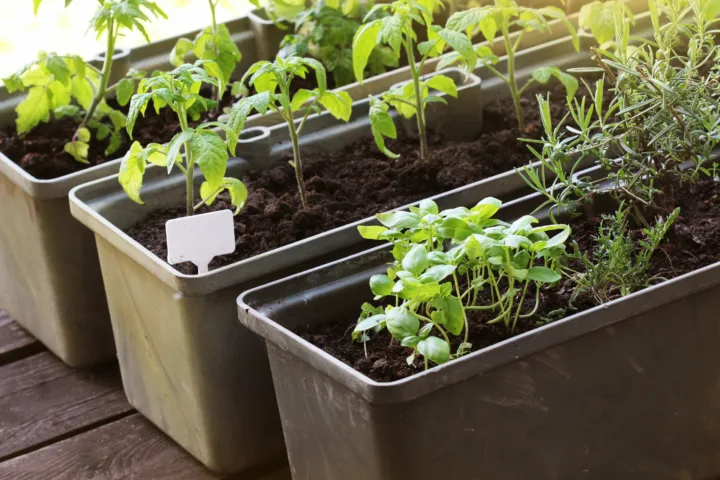
I start with a quality potting mix. Garden soil packs down and kills drainage. I use a bark-based mix with perlite and a little coir. Every pot gets drainage holes. I never skip that step.
Watering is the real skill. I stick my finger two inches down. If it feels dry, I water thoroughly until it runs out the bottom. Morning is best. Afternoon watering can leave leaves wet overnight and invite problems.
Fertilizer keeps everything moving. I use a balanced liquid feed every two weeks from late spring through early fall. Half strength works fine. Full strength burns roots in hot weather.
I group plants with similar needs. Moisture lovers stay together. Drought-tolerant ones go in their own pots. Mixing them creates constant frustration.
Repotting happens every two or three years for the perennials. I knock the plant out, tease the roots, and give it fresh mix in a slightly larger pot. The annuals just get composted at the end of the season.
Empty drainage saucers after watering; standing water can keep container roots saturated even when the mix surface appears dry.
Combining Plants the Simple Way
I stick to the classic thriller-filler-spiller formula. It keeps designs from looking random.
- Thriller: Something upright for height. A small ornamental grass or a taller coleus works.
- Filler: The bulk of the color and texture. Heuchera, begonias, and compact hostas fill this role.
- Spiller: Trailing plants that soften the edges. Creeping Jenny or dichondra every time.
I plant denser than the tags suggest. Containers look sparse when everything is still small. By midsummer the plants knit together into one solid mass.
Color pairs stay simple. Dark purple coleus with chartreuse Jenny. Pink begonias with silver heuchera. Too many colors fight each other in a limited space.
Mistakes I Made So You Don’t Have To
I used to buy the prettiest plant at the nursery without checking the tag. Pretty dies fast in the wrong light. Now I read every label twice.
I also crowded roots in tiny pots. Roots need room. A twelve-inch pot is my minimum for most mixed plantings. Smaller ones dry out before I finish my morning coffee.
Overfeeding ranked high on the regret list too. Burned leaf tips taught me to go light on fertilizer.
And I ignored winter protection for the perennials. A simple move under the eaves or a layer of mulch on the soil surface keeps more of them alive.
Frequently Asked Questions
How many hours of sun do part sun container plants really need?
Most of the ones I grow want three to six hours of direct light. Morning sun is gentler and keeps soil moisture more stable. Less than three hours and flowering drops off for the bloomers.
Can I grow part sun container plants in hanging baskets?
Absolutely. Begonias, trailing lobelia, and dichondra all perform well up high. Just remember baskets dry out faster, so check them daily in warm weather.
What’s the easiest part sun container plant for beginners?
Coleus. It forgives missed waterings better than most, comes in endless colors, and never needs deadheading. Start there and build confidence.
Do I need special soil for these plants?
Regular high-quality potting mix works. I avoid garden soil. It compacts and holds too much water. A mix with good drainage is the real requirement.
How do I overwinter part sun container plants?
I move the hardy ones to a protected spot against the house. Tender ones come indoors under a bright window or get treated as annuals. Either way works.
I still walk out to the deck every morning with a mug of coffee and check on the pots. Some seasons feel effortless. Others require more attention. The plants that earn a permanent spot on my list are the ones that keep showing up no matter what the weather throws at them.
Start with two or three of the plants I listed. Match them to the light you actually have. Water with intention. The color will follow. Your patio will thank you.