
I spent three summers staring at empty pots on my tiny patio and feeling like a failure. The dirt stayed dry. The flowers wilted. Neighbors walked by without a second glance. Then I started collecting real container flower garden ideas from trial and error, and everything shifted.
I still mess up sometimes. But now my pots overflow with color from spring through fall. You can do the same. These are the ideas that worked for me after years of sad, sparse containers.
Why Containers Became My Only Real Garden
I live in a rental with zero yard space. Concrete and a few square feet of balcony. In-ground beds were never an option. Containers gave me control.
I can move them when the sun shifts. I can swap plants when one fails. I can create height without digging. Honestly? That freedom kept me gardening when I almost quit.
Most people think containers are limited. I think that’s the wrong way to go about it. Containers are portable stages. You set the scene yourself.
The Thriller-Filler-Spiller Method That Saved My Designs
I used to plant one lonely geranium in the middle of a pot and call it done. It looked sparse. Always.
Then I learned the thriller-filler-spiller approach. It changed how every pot looks.
For a quick patio combination, try purple-leaf sweet potato vine, white bacopa, and a compact ornamental grass for contrasting color and texture.
What Each Role Does
Thriller plants stand tall. They draw the eye up. I use purple fountain grass, canna lilies, or upright salvia. Place the thriller in the center if the pot shows from all sides. Put it toward the back if people only see one face.
Filler plants bulk up the middle. They add color and body without stealing the show. Petunias, coleus, and geraniums do this job well for me. I pack three to five of them around the thriller.
Spiller plants cascade over the rim. They soften hard edges and make the whole thing feel finished. Sweet potato vine, creeping Jenny, and calibrachoa are my go-tos. I tuck them right at the edges so they tumble freely.
I stick to plants that want the same light and water. Mixing a thirsty impatiens with a drought-loving lantana kills the whole display by July. Match the needs. The rest falls into place.
One 16-inch pot usually gets one thriller, four or five fillers, and six or seven spillers. The formula is a guide, not a prison. Sometimes I break it on purpose for a single bold plant. Still, the structure keeps most of my pots looking intentional.
Sun-Loving Container Flower Garden Ideas That Thrive in Heat
My patio bakes from 10 a.m. until late afternoon. Shade plants die fast. I had to learn what handles full sun without constant drama.
Bold Summer Color Combo
I plant one tall angelonia as the thriller. Around it go Supertunia Vista Bubblegum and a few lantana. Sweet potato vine ‘Marguerite’ spills over the side in chartreuse. This mix blooms hard from June until frost. It shrugs off heat better than anything else I’ve tried.
Water when the top inch of soil feels dry. Feed every two weeks with a balanced liquid fertilizer. Deadhead the petunias if they get leggy. That’s it.
Pollinator Power Pot
I wanted bees and butterflies, not just pretty pictures. Salvia ‘Black and Blue’ goes in the center. Agastache and compact lavender fill the middle. Trailing verbena spills. The whole pot stays busy with visitors all summer. FYI, this one needs almost zero deadheading.
Drought-Tolerant Standby
When I travel, this pot survives. Zinnias for height. Globe amaranth and euphorbia in the middle. Scaevola trails. These plants forgive missed waterings better than most. I still check them, but they bounce back from a dry spell.
Shade Container Flower Garden Ideas for Darker Corners
My north-facing corner gets almost no direct sun. Early attempts looked anemic. Then I stopped forcing sun plants into shade and picked what actually likes it.
Classic Cool Combo
Caladium leaves make a dramatic thriller with their pink and green patterns. New Guinea impatiens or begonias fill the space. Ivy or trailing torenia spills. This pot stays lush without sunburn. I water more often here because shade soil stays cooler and wetter longer, but the plants still need consistent moisture.
Foliage-First Display
Sometimes I skip flowers almost entirely. A tall coleus or Persian shield sits in the middle. Heuchera and ferns fill. Dichondra ‘Silver Falls’ spills. Texture does the heavy lifting. The pot looks rich even on gray days.
Seasonal Swaps Keep Things Fresh
I never leave the same plants in pots year-round. Containers make seasonal changes easy.
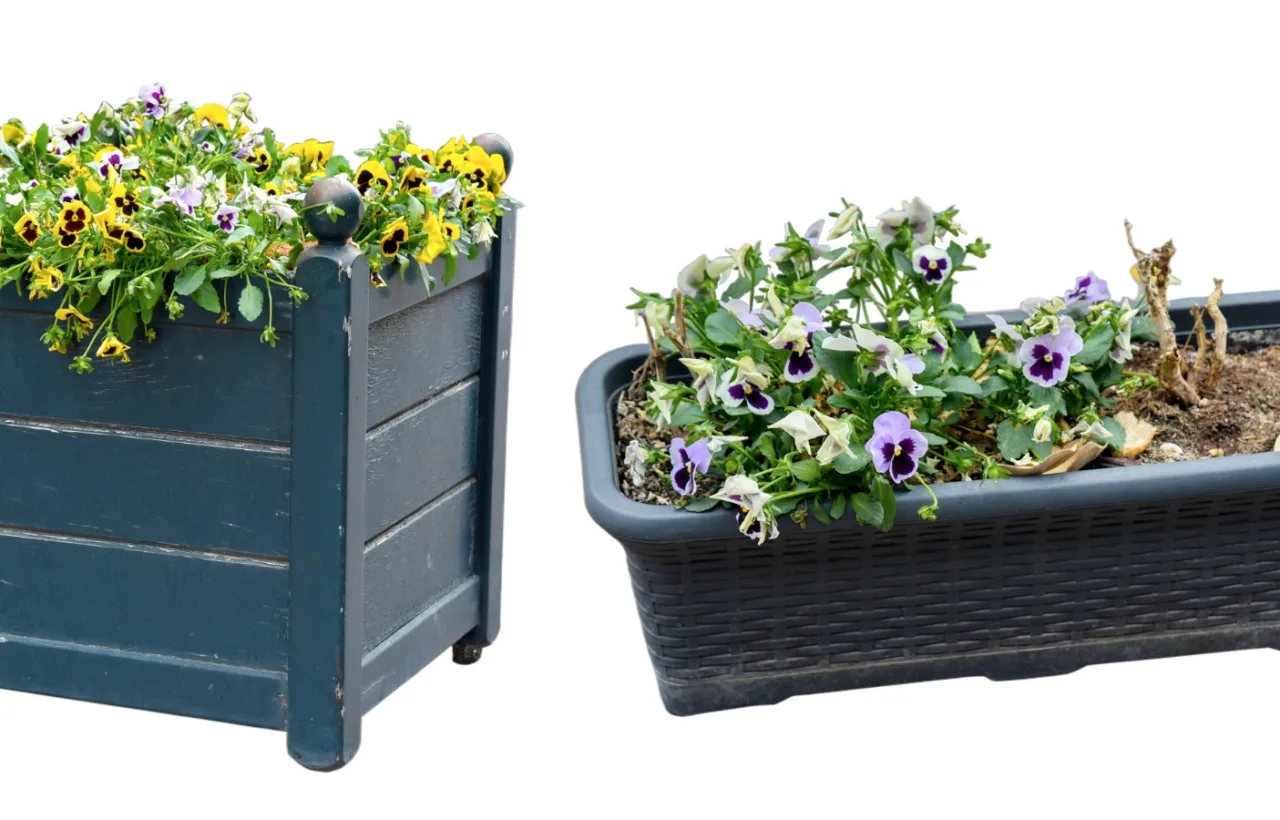
In early spring I fill pots with pansies, violas, and grape hyacinths. They handle cool nights. By late May I pull them and install the summer mix.
Fall gets mums, ornamental kale, and trailing ivy. I add a few small pumpkins around the base for a quick seasonal nod. Winter is mostly evergreen boughs and berries for me. Some years I try pansies that claim to overwinter. Results vary by zone.
The beauty is speed. I can empty a pot, refresh the soil, and replant in under an hour. No digging. No waiting for ground to warm.
Vertical and Small-Space Tricks I Rely On
Floor space runs out fast on a balcony. I started thinking upward.
Hanging baskets with wave petunias and bacopa give me color at eye level. I hang them at different heights so they don’t block each other.
A simple metal plant stand lets me stack three pots. Tallest in back. Medium in middle. Trailing one in front. Instant depth without extra footprint.
Rail planters clamp right onto the balcony railing. I fill them with trailing nasturtiums and alyssum. They look full and free up the floor.
One oversized statement pot often works better than five tiny ones. A single big container feels deliberate. Scatter of small pots can look cluttered. I learned that the hard way.
Practical Rules That Stop Most Failures
I ignore these at my peril.
Every pot needs drainage holes. No exceptions. I drill extra ones if the container only has one. Sitting water kills roots fast.
Use real potting mix, never garden soil. Garden soil packs hard in a pot and drains poorly. I buy a quality bag and mix in a little slow-release fertilizer at planting time.
Bigger pots forgive more mistakes. A 14-inch or larger pot holds more soil and moisture. Small pots dry out in a day during heat waves. I size up whenever possible.
Group pots in odd numbers. Three or five look balanced. Even numbers can feel static. Vary the heights a little so the group has rhythm.
Water deeply when you water. A light sprinkle on the surface does almost nothing. I water until it runs out the bottom, then let it drain fully.
Empty saucers after deep watering, especially on patios, because trapped runoff can keep roots waterlogged despite adequate drainage holes.
Combinations I Keep Coming Back To
Here are a few exact recipes I repeat because they work.
- Sunny porch pair: Purple fountain grass + red geraniums + chartreuse sweet potato vine.
- Soft pastel: White angelonia + pink calibrachoa + silver dichondra.
- Hot color blast: Orange zinnia + yellow marigold + trailing black-eyed Susan vine.
- Shade relief: Pink caladium + white begonia + green ivy.
- Herb and flower mix: Upright rosemary + purple basil + trailing thyme and a few nasturtiums. Pretty and useful.
I plant a little tighter than recommended at first. The plants grow into each other and look full faster. Just don’t jam so many that air can’t move between them.
Frequently Asked Questions
How often should I water my container flower garden? I check the soil with my finger every day in summer. When the top inch feels dry, I water thoroughly until it drains. Hot windy days sometimes need two waterings. Cooler weather stretches the time between.
Can I use the same container flower garden ideas for a front door and a balcony? Yes. Front door pots often face more wind and get seen from one side, so I put the thriller toward the back. Balcony pots can be viewed from more angles, so center placement works better. The plant choices stay similar if the light matches.
What size pot works best for most container flower garden ideas? I aim for at least 12 to 16 inches across for mixed plantings. Smaller pots dry too fast and limit root space. One large pot often looks stronger than several tiny ones.
Do I need to fertilize regularly? Yes. Container plants use up nutrients faster than in-ground ones. I mix slow-release fertilizer into the soil at planting, then switch to a liquid feed every two weeks once blooms start. Skipping this step gives me weak, pale plants by midsummer.
How do I keep containers looking good into fall? I start planning the transition in August. When summer annuals fade, I pull them and plant mums, kale, and pansies. A few evergreen stems or berries extend the season even further.
I still get the occasional dud pot. A plant that refuses to bloom. A heat wave that fries the edges. That’s gardening. But the wins outnumber the losses now.
Start with one pot this weekend. Pick a thriller you like. Surround it with fillers that match its needs. Add a couple of spillers. Water it well. Watch what happens over the next few weeks.
The empty concrete will start to disappear under leaves and color. That’s the moment it stops feeling like a rental patio and starts feeling like your own small garden.