
I spent three summers watching pots of pretty plants turn into crispy failures on my west-facing patio. The sun hit hard from noon onward. Soil dried out by mid-afternoon. Blooms faded fast. I got tired of the cycle.
That is when I started testing full sun container ideas that could handle six-plus hours of direct light without daily drama. I kept notes. I killed a few experiments. I found combinations that kept color going into fall. Now those same setups fill my space every year. You can steal them.
Why Most Full Sun Containers Fail Fast
Containers heat up quicker than garden beds. Roots have nowhere to escape. Water evaporates at double speed. Plants that look tough on the nursery tag often collapse by July.
I learned this the hard way with a mixed pot of impatiens and fancy coleus. They looked lush for two weeks. Then the heat arrived. Brown edges. Droop. Done.
The fix is simple. Choose plants that evolved for open, dry spots. Mediterranean herbs. Prairie natives. Tough annuals that self-clean. Pair them with soil that drains fast and pots that hold enough volume.
Large containers win. Anything under twelve inches dries too fast in full sun. I stick to fourteen-to-eighteen-inch pots now. They give roots room and buy me time between waterings.
The Thriller-Filler-Spiller Formula I Rely On
Every good full sun container starts with structure. One tall plant. Mid-level color. Trailing edges. That classic method still works best.
Repeat one heat-tolerant filler throughout several pots for visual rhythm, instead of creating separate mixed combinations with incompatible watering needs.
Thrillers for Height and Drama
These plants give the pot its backbone.
- Purple fountain grass: Soft plumes that move in the wind. Handles heat like a champ. I plant one in the center of a big pot and let it claim the space.
- Dwarf canna: Bold leaves and spikes of red or yellow flowers. Needs consistent moisture early on, then settles into a rhythm.
- Salvia ‘Black and Blue’: Upright spikes that hummingbirds notice from across the yard. Blooms for months if I snip spent stems.
Fillers That Pack the Middle
These plants fill gaps and keep the show going.
- Lantana: Clusters of tiny flowers in orange, pink, or yellow. Butterflies show up within days. Drought-tolerant once established.
- Geraniums (zonal types): Classic for a reason. They bloom hard in sun and bounce back after a hard dry spell.
- Zinnias: Bright, no-fuss, and disease-resistant varieties like Zahara stay compact in pots.
Spillers That Soften the Edges
Trailing plants make the container look finished.
- Sweet potato vine: Chartreuse or deep purple leaves that cascade. Grows fast and forgives missed waterings.
- Calibrachoa (million bells): Tiny petunia-like blooms that spill over. Self-cleaning. I never deadhead them.
- Portulaca: Succulent leaves and bright flowers that open in sun. Perfect for the hottest corner of the patio.
I mix one thriller, two fillers, and one or two spillers. The pot looks full from day one and stays interesting all season.
My Favorite Full Sun Container Ideas by Theme
I group pots by mood now. It keeps the patio from looking random.
Mediterranean Heat-Beaters
Rosemary ‘Arp’ anchors the pot. Surround it with lavender ‘Hidcote’ and trailing thyme. Add a few portulaca for color pops. These plants want sharp drainage and almost no fertilizer. I water deeply once a week in peak heat. The scent alone makes the patio feel cooler.
Honestly? This combo has survived 100-degree stretches without complaint.
Pollinator Magnet Setup
Black-eyed Susan in the center. Coneflower and zinnia around it. Trailing verbena over the rim. Bees and butterflies arrive fast. I leave the spent blooms on the black-eyed Susan for the goldfinches later. This pot needs a bit more water than the Mediterranean one, but it pays you back in visitors.
Edible and Pretty
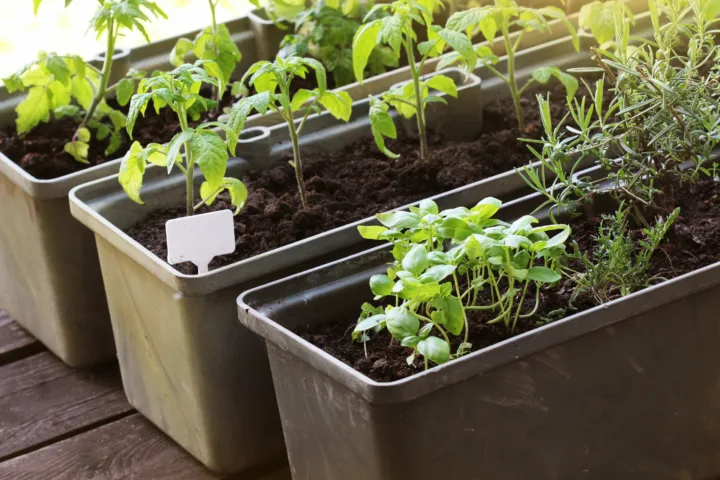
Rosemary again, but this time with basil, thyme, and a few cherry tomatoes trained on a small stake. Portulaca or nasturtium spill the edges. Everything is useful. I snip herbs for dinner and still have a full-looking container. FYI, the tomatoes need the largest pot I own and consistent moisture.
Bold Color Blocks
One big pot of red geraniums, red salvia, and red verbena. Another in pure yellow with marigolds, coreopsis, and yellow calibrachoa. Monochrome hits harder than mixed pastels in bright sun. I learned that after years of muddy color mixes.
Soil, Water, and Pot Choices That Make or Break the Setup
Potting mix matters more than the plants sometimes. Garden soil packs down and drowns roots. I use a blend of quality potting soil, perlite, and a handful of compost. Fast drainage is non-negotiable.
Water early in the morning. Stick your finger two inches down. If it feels dry, water until it runs out the bottom. In July I water some pots every other day. Self-watering containers help, but they are not magic. You still check them.
Dark pots heat up more. Light-colored or glazed ones stay cooler. I switched most of my collection to lighter finishes after one season of scorched roots.
Fertilizer? Slow-release granules at planting time. A diluted liquid feed every three weeks after that. Too much nitrogen gives leaves and fewer flowers.
Do not fertilize a wilted, heat-stressed container; rehydrate it first, because concentrated fertilizer salts can intensify root injury.
Common Mistakes I Still See (and Used to Make)
Overcrowding. People jam six plants into a ten-inch pot. Roots fight. Everything suffers. Give each plant room.
Ignoring wind. Tall thrillers tip in storms. I use heavier pots or tuck them against a wall.
Forgetting winter. Most of these plants are annuals in colder zones. I treat them as such and start fresh each spring. A few herbs overwinter indoors under a grow light.
See, the biggest shift for me was accepting that full sun containers need different rules than shady ones. Once I stopped fighting the heat and started choosing plants that love it, the whole patio changed.
Frequently Asked Questions
What are the easiest full sun container ideas for beginners? Start with lantana, geraniums, and sweet potato vine in a fourteen-inch pot. They forgive missed waterings and keep blooming with almost no fuss.
How often should I water full sun containers in summer? Check daily at first. Most need water every one to two days in peak heat. Large pots and mulch on the soil surface stretch the time between waterings.
Can I grow vegetables in full sun containers? Yes. Cherry tomatoes, peppers, and bush beans do well if the pot is at least five gallons and you water consistently. Pair them with herbs for dual purpose.
Do full sun containers need special soil? Regular potting mix works if you add perlite for drainage. Avoid garden dirt. It compacts and holds too much water around the roots.
Which plants attract the most pollinators in full sun pots? Lantana, salvia, zinnia, and black-eyed Susan pull in bees and butterflies faster than anything else I have tried.
I still walk outside most mornings and check the pots. Some days the blooms look better than expected. Other days a heat wave tests everything. The setups that work keep showing up year after year.
Pick one combination that fits your space and start there. Move the pots if the sun shifts. Adjust water as the season changes. Your patio will look alive instead of defeated by August. That is the whole point.