
I spent three summers staring at a bare concrete patio that felt more like a parking spot than a place to relax. Then I discovered container water features. These portable setups let me bring moving water, plants, and calm into a space too tight for any real pond. No digging. No permanent installation. Just a pot, some water, and a little patience.
Honestly? I almost skipped the whole idea because it sounded complicated. It wasn’t.
Why Container Water Features Clicked for Me
I wanted the sound of water without the commitment of an in-ground pond. My patio sits against a fence with maybe eight feet of usable depth. Traditional water features felt impossible. Container versions changed that overnight.
I started small. A single glazed bowl on a side table. Within a week I sat outside longer. The soft trickle drowned out street noise. Birds showed up. Neighbors asked questions.
See, the real win is flexibility. I move these features when the sun shifts or when I need the space for a gathering. They cost less than a weekend of professional landscaping. And they deliver the same peaceful effect that bigger projects promise.
I think the wrong question is “How big does my yard need to be?” The better one is “What container can I fill this afternoon?”
Choosing Containers That Actually Hold Up
I wasted money on the wrong vessels early on. Porous terra-cotta looked pretty until it leaked every day. Metal heated the water too fast in July. I learned fast.
Best materials I rely on now:
- Glazed ceramic bowls and urns
- Galvanized stock tanks and tubs
- Half whiskey barrels with plastic liners
- Fiberglass or resin planters sealed for water
Depth matters more than diameter at first. I aim for at least 12 inches if I want plants with roots. Shallower bowls work fine for floating plants or simple bubblers. I always check for drainage holes. If they exist, I plug them with silicone or a rubber stopper.
Weight is another quiet factor. A full 30-gallon tub is heavy. I place mine on a level patio stone or a rolling plant caddy so I can shift it without calling for help.
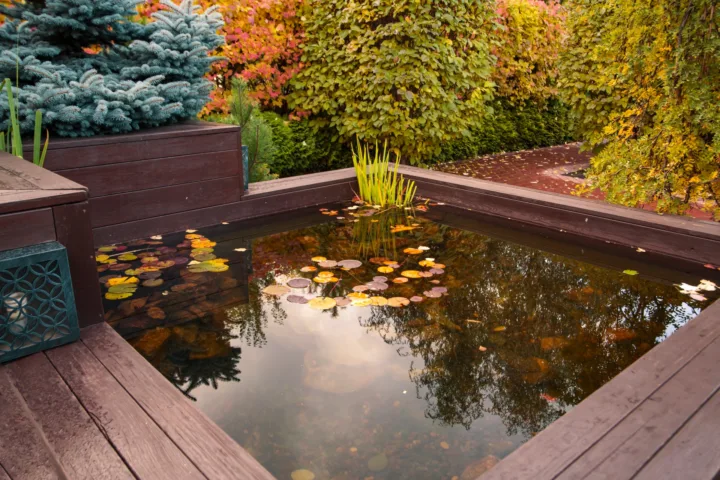
One of my favorite finds was an old galvanized washtub at a farm store. It cost $40. I cleaned it, added a liner just in case, and it became the centerpiece of my setup. The rustic look hides any imperfections. Perfect.
Plants That Survive (and Thrive) in My Setups
I killed more aquatic plants than I care to admit in year one. Overplanting. Wrong light. No fertilizer. Then I simplified.
Floating plants became my safety net. They need no soil. They feed straight from the water. Water lettuce and dwarf water hyacinth give instant coverage and help shade the surface so algae stays in check.
For something taller I reach for:
- Dwarf papyrus
- Corkscrew rush
- Parrot feather
- Small water lilies in deeper containers
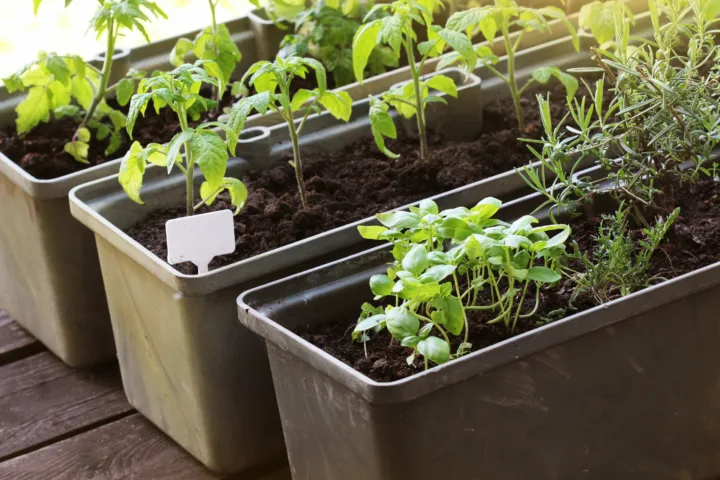
I keep the plants in their nursery pots and set those pots inside the main container. Bricks or inverted nursery pots raise the shorter ones to the right depth. This keeps the soil contained and makes seasonal changes easy.
Honestly? I stopped chasing exotic tropicals that demand constant heat. Hardy marginals handle my zone better and bounce back after a cool night. I fertilize with aquatic plant tabs once a month during the growing season. That’s it.
The mix that works best for me is one upright plant, one floating cover, and a trailing type that softens the edge. Balance beats abundance every time.
Adding Sound and Movement Without the Hassle
Still water is fine. Moving water is better. The sound is what keeps me outside longer.
I use small submersible pumps rated for the height of my feature. A 200–300 GPH pump handles most of my bowls and small tubs. I hide the pump under a layer of river rock or a decorative stone. Clear tubing runs to a simple spout or just lets the water bubble up through the rocks.
Solar options surprised me. A floating solar fountain in a wide bowl costs under $30 and needs no outlet. It only runs when the sun hits it, which matches the hours I actually sit outside. FYI, the cheaper models can sputter on cloudy days, so I keep a battery-powered backup for evenings.
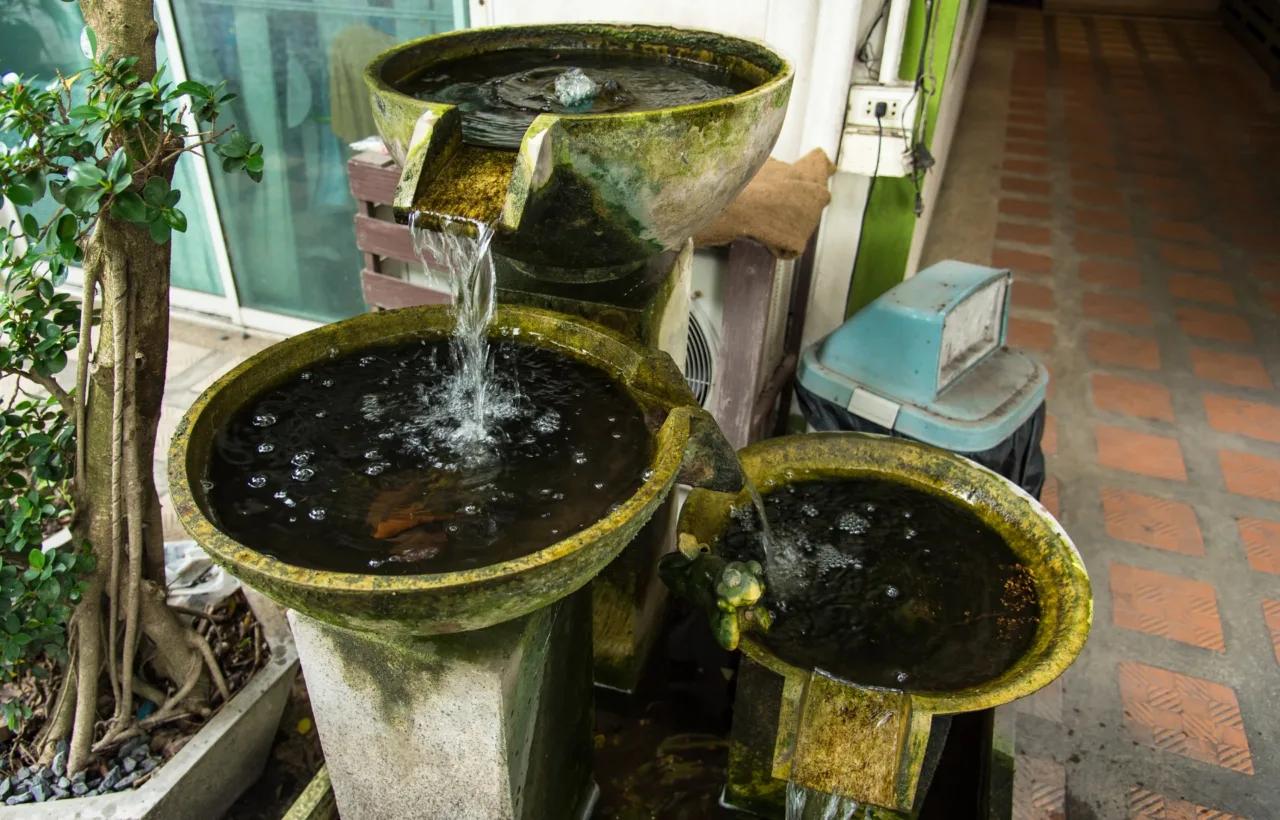
I once stacked three ceramic bowls of decreasing size for a cascading effect. Water spilled from the top to the middle to the bottom. It looked dramatic. It also lost water faster on windy days. I dialed the flow way down and the splash problem disappeared.
Keep the flow gentle. Aggressive jets waste water and create a mess on the patio.
Real Maintenance I Actually Do
People overthink this part. My routine is simple and short.
Every few days I top up the water. Evaporation is real in summer. Once a week I scoop out any debris and check the pump intake for leaves. Every month or so I dump the entire container, rinse it, and refill with fresh water. That keeps mosquitoes from settling in.
I use mosquito dunks if the water sits still for more than a couple of days. They work. I avoid chemical algaecides. Healthy plant coverage does most of the work for me.
Winter is the only season that needs real thought. I drain the containers, store the pumps indoors, and move smaller bowls into the garage. Larger tubs stay outside but empty. In spring I start over. It takes an afternoon, not a weekend.
I once left a full tub through a freeze. The ice expanded and cracked the liner. Lesson learned. Empty is safer.
Common Mistakes I Made So You Don’t Have To
I crowded the surface with too many plants. The water looked muddy within days. Now I cover no more than half the surface and leave open water for light and reflection.
I placed features in full afternoon sun without shade plants. Water temperature climbed and the pump struggled. Morning sun with afternoon shade works best for most of my setups.
I ignored the power cord. A visible black wire ruins the look. I bury it under mulch or run it along the fence line and hide it with pots.
I also bought the cheapest pump available. It failed in six weeks. Spending an extra $20 on a better model with a longer warranty paid off.
Frequently Asked Questions
Do container water features attract mosquitoes? Only if the water sits completely still. I keep a small pump running or use mosquito dunks. Moving water and regular refreshes solve the problem for me.
Can I put fish in a container water feature? Yes, but keep it simple. A few goldfish or rosy red minnows work in larger tubs. I stick to one inch of fish per gallon and never overstock. Smaller bowls stay plant-only.
How much does a basic setup cost? My first successful one ran about $80 total: container, pump, rocks, and plants. You can spend less with thrift-store finds or more with fancy ceramic urns. Start cheap and upgrade later.
Do I need a special liner? For wood or porous materials, yes. For glazed ceramic, resin, or metal, no. I always test by filling the container overnight before adding plants.
Can container water features work on a balcony? Absolutely. I helped a friend set one up on a fourth-floor balcony using a lightweight resin bowl and a solar pump. Weight and water overflow are the only real limits. Keep the container under 20 gallons if your railing is questionable.
Final Thoughts from Someone Who Almost Gave Up
I used to think water features required space I didn’t have and skills I didn’t possess. Container water features proved me wrong. They fit my tiny patio. They fit my limited free time. They deliver the calm I wanted without the drama.
Start with one simple bowl this weekend. Add a floating plant and a cheap solar bubbler. Sit outside for ten minutes and listen. That sound is the whole point.
I still move my favorite tub around the patio depending on the season. Sometimes it sits near the door. Sometimes it anchors a quiet corner with a chair. The flexibility never gets old.
If your outdoor space feels unfinished, try this. You might find yourself lingering outside longer than you planned. I certainly did.