
I spent years tossing cash at annuals every single spring. The color looked great for a few months. Then everything died. I got tired of the cycle. Honestly? Switching to container perennials changed how I garden on my small patio.
These plants give me lasting structure, color, and texture without the yearly reboot. I plant them once in the right pot. I care for them through the seasons. They return the next year looking better. That is the simple truth I learned after a few seasons of trial and plenty of wilted experiments.
Why Container Perennials Fit My Space Better Than Anything Else
My patio sits in a mix of sun and shade. Space is limited. Dragging heavy bags of soil or digging beds never appealed to me. Containers solved that. I control the soil. I move pots when the light shifts. I group them for a full look without committing to permanent beds.
Perennials in pots cost more up front than a flat of petunias. IMO that higher price pays off fast. One healthy plant can fill a container for three or four years if I treat it right. I divide some when they get crowded and get free plants for other pots. The math works in my favor after the first season.
I also like the flexibility. When a plant finishes its main show I shift the pot to a less visible corner. I bring in something still blooming. The arrangement stays interesting without constant shopping trips.
My Top Container Perennials for Full Sun
I live in a zone where summers get hot and dry. The plants that thrive in my sunny pots handle that stress better than most. Here are the ones I reach for every year.
Dark-colored pots on hot patios can overheat roots, even when a perennial is labeled suitable for full sun.
Lavender
Lavender sits at the top of my list. The scent alone sells it. I plant compact varieties in large terra-cotta pots. They need sharp drainage. I mix in extra grit or perlite so water never sits. Full sun and modest water keep them happy. The silver foliage looks good even when flowers fade. I prune lightly after the main bloom. They bounce back with another flush.
Yarrow
Yarrow laughs at heat and poor soil. I use it as a filler that still provides real color. The flat flower heads attract bees. Deadheading keeps the show going. It stays compact enough for a 14-inch pot. I pair it with other drought-tolerant plants so the whole container needs less attention.
Coneflower
Compact coneflowers hold their shape in pots better than the tall garden types. I choose ones that stay under two feet. The blooms last weeks. Birds like the seed heads later. I water them a bit more than lavender but never let the pot sit soggy. They return reliably once established.
Sedum
Upright sedums give me late-season color when everything else starts to tire. The thick leaves store water. That makes them forgiving if I miss a day or two. I plant them alone or as the structural piece in a mixed pot. They look solid from summer straight into fall.
Shade Container Perennials That Still Deliver
My patio has a corner that only gets morning light. Annuals sulked there. Shade-tolerant perennials stepped up.
Hosta
Hostas love the protection of a pot in partial shade. I choose medium sizes so they do not overwhelm the container. The foliage alone carries the display. I water them more often than the sun lovers because they prefer consistent moisture. Slugs can be an issue. I keep an eye out and remove them early.
Heuchera
Coral bells give me colorful leaves that hold interest long after flowers finish. I use them as fillers around taller plants or as the main feature in smaller pots. They handle part shade well. Fresh potting mix and regular water keep the foliage bright. I divide them every couple of years when the center starts to thin.
Astilbe
Astilbe adds height and soft flower plumes in shadier pots. It needs more moisture than most of my other plants. I group it with hostas so the watering schedule matches. The blooms last a good stretch in early to mid summer. The foliage stays neat afterward.
How I Choose Pots and Soil for Container Perennials
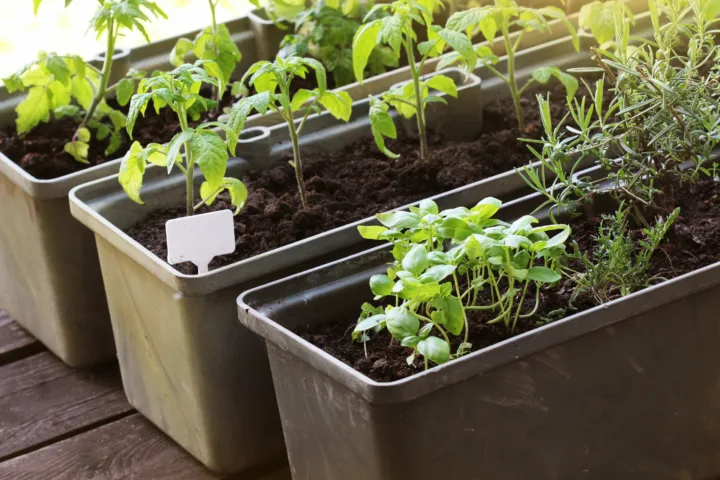
Pot size matters more than people think. Roots need room. A small pot dries out too fast and limits growth. I start with containers at least 14 inches across for most perennials. Larger is better for overwintering because more soil protects the roots.
Drainage holes are non-negotiable. I check every pot. If a pretty one lacks them I drill a few myself. Garden soil packs down hard in containers. I never use it. A quality potting mix stays lighter and drains better. For plants that hate wet feet I stir in extra perlite or coarse grit.
I plant in spring once frost risk drops. I fill the pot, set the plant at the same depth it grew in its nursery pot, and firm the mix gently. I leave an inch or so at the top so water does not spill over the rim. A thorough first watering settles everything.
Raise containers slightly on pot feet or spacers so drainage holes cannot seal against the patio surface.
Watering and Feeding the Way My Plants Prefer
Containers dry out faster than garden beds. That is the biggest adjustment. I check soil with my finger every day during hot spells. When the top inch feels dry I water until it runs from the bottom. Early morning works best. Less evaporates. The plants take it up before the heat hits.
Drought-tolerant types still need regular water their first season while roots settle. After that I can stretch the intervals a bit. Moisture lovers get more consistent attention.
I fertilize lightly. Slow-release granules mixed into the soil at planting time cover the first stretch. Later I use a diluted liquid feed every few weeks during active growth. I stop by late summer so the plants harden off for winter. Too much food pushes soft growth that suffers in cold.
Empty saucers after watering, because standing runoff can keep container soil saturated and undermine the extra drainage material.
Getting My Container Perennials Through Winter
Roots in pots feel the cold more than roots in the ground. That is the main risk. I choose plants rated at least two zones hardier than my own. That buffer helps.
In late fall I water thoroughly one last time. Then I move pots to a sheltered spot against the house or into an unheated garage. Grouping them together helps. Some years I wrap the pots in burlap or bubble wrap for extra insulation. I check every few weeks. If the mix feels bone dry I add a little water. Wet soil in freezing conditions is worse than dry.
Clay pots can crack when soil freezes and expands. I prefer plastic, wood, or thick composite for anything that stays outdoors. Some of my favorite plants go into the garage for the coldest months. They rest there and wake up ready in spring.
Mistakes I Made Early On
I started with pots that were too small. The plants dried out constantly and never reached full size. Bigger pots fixed that.
I used regular garden soil once. It turned into concrete. Roots suffered. Potting mix solved the problem for good.
I left marginally hardy plants outside without protection. Some died. Now I stick to the two-zone rule or move them under cover.
I overwatered in cool weather. Root rot showed up. Checking the soil before watering stopped that habit.
See, those early failures taught me more than any list. Once I adjusted the basics the plants started performing.
Frequently Asked Questions
Do container perennials really come back every year? Yes, if you choose varieties suited to your climate and protect the roots in winter. I have several that have returned for four seasons now with only basic care.
How often should I repot container perennials? I repot every two or three years in spring. Fresh mix and a slightly larger pot give the roots room and nutrients. Dividing crowded plants at the same time gives me extras.
Can I mix container perennials with annuals? Absolutely. I use perennials as the permanent structure and tuck a few annuals in for seasonal color. The perennials stay put while the annuals change.
What size pot works best for most container perennials? Start with 14 to 16 inches across for average plants. Larger pots hold moisture longer and protect roots better through winter.
Do I need special soil for container perennials? Regular garden soil packs too tightly. A high-quality potting mix with good drainage works far better. I add grit for plants that hate wet roots.
I still experiment with new varieties each spring. Some become permanent fixtures. Others get moved into the ground after a season or two. The point is simple. Container perennials give me lasting plants without the constant restart. They fit my limited space. They reward the basic care I give them. And they look better the longer they stay.
If you have a patio, balcony, or small yard that needs reliable color, try a few of these. Start with one or two solid performers. Get the pot size and drainage right. Protect them through the cold months. You will see the difference the following spring when they push up again stronger than before. That moment never gets old.