
I never had a real yard. When I moved into my apartment three years ago, the only outdoor space I got was a narrow balcony that barely held two chairs. I figured growing anything beyond a sad houseplant was out of reach. Then I tried container gardening. That single decision turned my concrete slab into a productive little plot that now feeds me fresh herbs, tomatoes, and greens all season long.
I still remember the first time I harvested a ripe cherry tomato right off the plant. It tasted better than anything from the store. Honestly? That moment hooked me for good.
See, container gardening solves the exact problems that stop most people. No soil? No problem. Limited space? Perfect. Bad back or no time for a big plot? This works. I started with zero experience and a lot of trial and error. Now I want to share what actually worked so you skip the expensive mistakes I made.
Why Container Gardening Clicked for Me
I used to think gardening required a big patch of dirt and weekends free. That is the wrong way to look at it. The real question is simpler: do you have a sunny spot and a pot that drains?
My balcony gets about six hours of sun on the south side. That was enough. I started small with two plastic pots and a bag of potting mix from the hardware store. Within weeks I had basil and lettuce. The next year I expanded to tomatoes and peppers. Now I keep about a dozen containers going from spring through fall.
The biggest win is control. I move pots when the weather turns weird. I protect tender plants from wind by sliding them against the wall. I never fight weeds the way ground gardeners do. And I can water everything in under ten minutes with a watering can.
IMO, this approach beats traditional beds for anyone living in an apartment, condo, or rental. You own the soil. You decide the size. You can even bring a few pots indoors when frost hits.
Before adding a dozen containers, check your balcony’s weight limit, especially after watering, since wet soil and ceramic pots become substantially heavier.
Choosing Containers That Actually Work
I wasted money on cute pots that looked great but killed plants. Size and drainage matter more than style.
Bigger is almost always better. Small pots dry out fast and restrict roots. I now stick to these minimums:
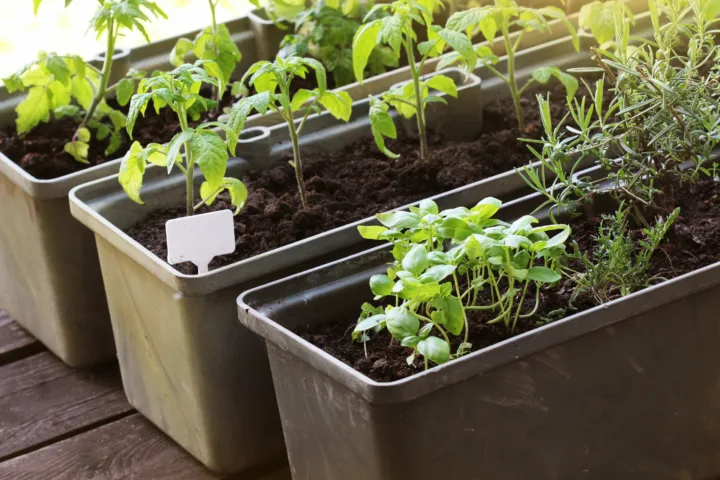
- Herbs and leafy greens: 6 to 8 inches wide and deep
- Peppers and bush beans: 12 inches wide
- Tomatoes and cucumbers: at least 5 gallons or 14 inches wide
- Larger plants like determinate tomatoes: 15 to 20 inches across
Drainage holes are non-negotiable. Every single pot I use has them. If a pretty ceramic one lacks holes, I drill them myself or double-pot it inside a nursery container that already drains.
Material choices I settled on after testing:
- Plastic: Lightweight, cheap, holds moisture well. Great for beginners and large plants.
- Fabric grow bags: Roots get more air. They dry a bit faster so I water more often, but plants stay healthier.
- Terracotta: Looks classic but sucks moisture from the soil. I only use it for drought-tolerant herbs now.
- Self-watering containers: These saved me during a hot stretch last summer. The reservoir means I can skip a day without everything wilting.
I avoid anything that once held chemicals. Old paint cans or treated wood barrels stay out of my edible garden.
Use saucers or pot feet beneath draining containers to prevent runoff stains and keep balcony surfaces from staying continuously wet.
The Soil Mix That Changed My Results
Garden dirt from the ground fails in pots. It packs tight, holds too much water, and brings pests. I learned that the hard way when my first tomato plant sat in soggy clay and rotted.
I buy quality potting mix labeled for containers. It stays light and drains while still holding some moisture. My current favorite recipe for bigger pots:
- Two parts commercial potting mix
- One part compost
- A handful of perlite for extra drainage
I mix it right in the pot. Leave an inch of space at the top so water does not spill over every time I water. For herbs I sometimes add a bit more perlite because they hate wet feet.
FYI, I skip the cheap bags that feel like pure peat and turn to bricks after a month. Spend a few extra dollars. Your plants notice.
Container mix can accumulate fertilizer salts over time, so refresh a substantial portion before replanting next season, especially in tomato pots.
Plants That Thrive in Containers (And a Few That Struggle)
I stick to varieties bred for compact growth. Indeterminate tomatoes that vine forever frustrate me in pots. Determinate or dwarf types stay manageable and still produce plenty.
Here are the ones that reliably deliver for me:
- Herbs: Basil, mint (in its own pot because it spreads), chives, parsley, oregano. Most need only 6-inch pots and partial sun.
- Greens: Lettuce, spinach, arugula, Swiss chard. I succession plant every two weeks for continuous harvest.
- Fruiting crops: Cherry tomatoes (Sungold is my favorite), peppers, bush cucumbers, eggplant. One plant per large pot.
- Flowers for color and pollinators: Marigolds, petunias, nasturtiums. They spill over the edges and look cheerful.
I tried zucchini once. The plant took over half the balcony and produced three fruits. Not worth it. Stick to compact types if you want squash.
When I plant, I follow the thriller-filler-spiller idea for mixed pots. One tall plant in the center or back. Medium mounding plants around it. Trailing ones over the edge. It looks intentional instead of random.
Install a small cage or trellis when planting compact tomatoes and bush cucumbers, because productive plants can still become top-heavy on balconies.
Watering and Feeding Without Guesswork
Container plants dry out faster than anything in the ground. On hot days I check every morning by sticking a finger in the top inch of soil. If it feels dry, I water until liquid runs out the bottom holes.
Overwatering still kills more of my plants than underwatering. Soggy soil equals root rot. I learned to wait until that top inch dries rather than watering on a fixed schedule.
Fertilizer is required because potting mix runs out of nutrients fast. I mix a slow-release granular fertilizer into the soil at planting. Then I supplement with a liquid feed every two to three weeks during peak growth. Half-strength works better than full strength for me. Strong doses burned a few young plants early on.
Mulch helps. A thin layer of shredded leaves or straw on top of the soil slows evaporation and keeps roots cooler.
Apply liquid fertilizer to already-moistened soil, not bone-dry mix, to distribute nutrients more evenly and reduce the risk of root damage.
Mistakes I Made So You Do Not Have To
I crowded too many plants in one pot the first season. They competed for water and light. Now I give each vegetable its own container when possible.
I placed pots against a dark wall that reflected heat and cooked the roots. Moving them a foot out fixed it.
I forgot about wind. Tall tomato plants snapped until I added simple cages and tied them loosely.
I used the wrong soil and watched roots rot. That one still stings.
Start smaller than you think. Two or three pots teach you more than a dozen at once. Expand once you understand your specific light, wind, and watering rhythm.
Frequently Asked Questions
How often do I need to water my container garden? Most days in summer I check the soil and water when the top inch feels dry. Hot windy weather can mean twice a day for smaller pots. Larger containers and self-watering ones stretch further.
Can I use regular garden soil in pots for container gardening? No. It compacts and drains poorly. Stick to potting mix made for containers. Your roots will thank you.
What size pot do tomatoes need? I use at least a 5-gallon container, preferably larger. Determinate varieties stay happier in that space and still give a solid harvest.
Do I need special fertilizer? A balanced slow-release at planting plus liquid feed every couple of weeks keeps plants productive. Container plants run out of food faster than ground ones.
Will container gardening work on a shady balcony? Partial shade is fine for lettuce, spinach, and many herbs. Fruiting plants like tomatoes and peppers need six or more hours of direct sun to produce well.
I still experiment every year. Last season I tried a couple of strawberry plants in hanging baskets and got enough for breakfast a few times a week. Small wins add up.
Container gardening gave me something I did not expect. It turned a boring concrete rectangle into a place I actually want to sit. I check on the plants while I drink coffee. I snip herbs for dinner without leaving home. The work feels light because everything sits at a comfortable height and stays within reach.
You do not need perfect conditions or years of experience. You need a pot with holes, decent potting mix, a plant that matches your light, and the habit of checking the soil. Start with one or two containers this weekend. Watch what happens. Then tell me what you grow first.