
I spent three summers rearranging pots on my small balcony before I landed on a container gardening vegetables layout that finally gave me real harvests instead of sad, leggy plants. The frustration hit hard. One year I lost half my tomatoes to overcrowding. Another season the lettuce bolted because I stuck it behind a monster pepper plant. Honestly? I almost gave up and ordered takeout salads forever.
Then I stopped treating my containers like random decorations and started treating them like a real garden with a plan. Everything changed. Now I pull fresh greens, peppers, and cherry tomatoes all summer from a space that measures about 6 by 8 feet. You can do the same. This is the exact approach I use every year.
Why a Smart Layout Beats Random Pots Every Time
Sunlight rules everything in a container setup. I learned that the hard way when my cucumbers shaded out the basil and left me with one bitter harvest. Tall plants go to the north or back side. Short ones sit up front. That simple rule alone fixed most of my early failures.
Airflow matters just as much. Crowded pots invite mildew and pests. I leave 12 to 18 inches between larger containers now. The difference shows up in healthier leaves and fewer spray bottles of neem oil.
Watering becomes easier too. Group plants that drink the same amount together. Tomatoes and cucumbers sit near the hose. Herbs and peppers live a little farther away. I cut my watering time almost in half once I started doing this.
Before placing pots, observe patio shadows at 9 a.m., noon, and 3 p.m.; buildings and railings can override the north-back rule.
Picking Containers That Match the Plant
Not every pot works for every vegetable. I wasted money on cute little ceramic pots that dried out in a day. Now I match size to root needs and skip the pretty but useless ones.
Here is the quick list I keep taped inside my garden notebook:
- Leafy greens and herbs: 1 to 2 gallons or shallow troughs 6 to 8 inches deep
- Bush beans and radishes: 2 to 3 gallons
- Peppers and determinate tomatoes: 5 gallons minimum
- Indeterminate tomatoes and cucumbers: 10 to 15 gallons
- Summer squash: 10 gallons or bigger
Fabric grow bags became my favorite after the first season. They drain better than plastic and the roots stay healthier. I can fold them flat when winter hits. Plastic buckets still work if I drill plenty of holes and set them on bricks so water escapes freely.
Weight counts on a balcony. I stick to lighter materials for anything over 5 gallons. One heavy ceramic pot full of wet soil nearly cracked my railing. Never again.
A 15-gallon container filled with saturated potting mix can exceed 75 pounds, so verify balcony load limits before clustering several large bags.
My Current Container Gardening Vegetables Layout
This is the exact arrangement I use on my patio right now. It produces more than enough for two people and leaves a little extra for friends.
Back row against the railing (north side):
- One 15-gallon fabric bag with a cherry tomato and four basil plants around the base
- One 10-gallon bag with two bush cucumbers trained on a small trellis
- One 5-gallon pot with a compact pepper plant
Middle row:
- Two 5-gallon pots with different pepper varieties
- One 5-gallon pot mixed with bush beans and a couple of marigolds
Front edge and railing:
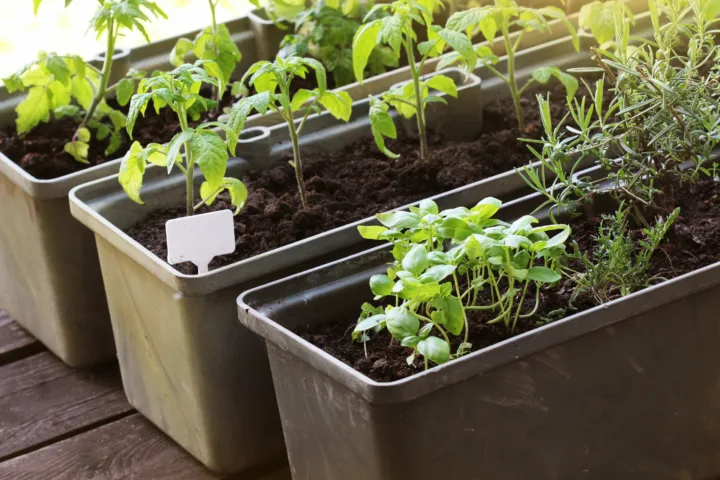
- Long window box filled with cut-and-come-again lettuce mix
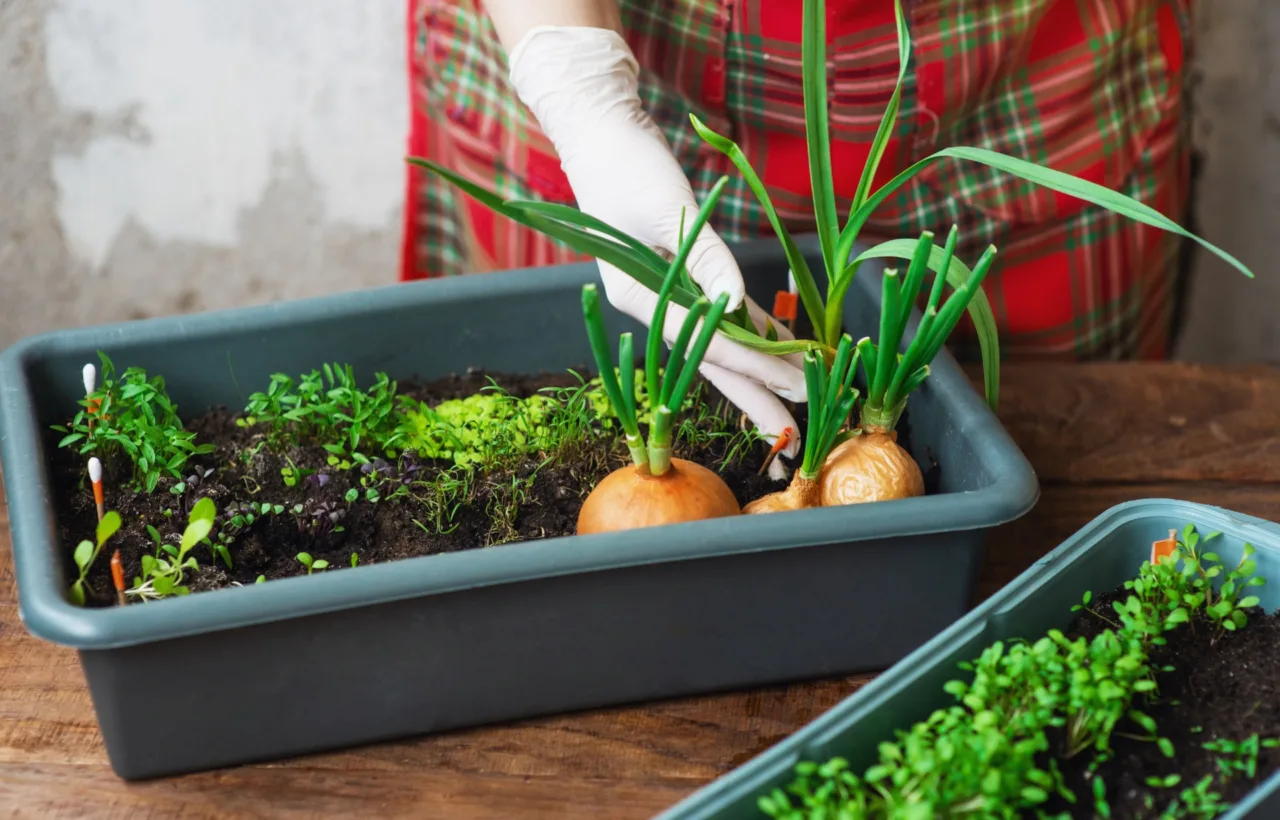
- Another shallow trough with spinach and radishes for succession
- Cluster of small pots for thyme, oregano, and parsley
I leave a clear walking path so I can reach everything without stepping on pots. The whole setup fits in that 6 by 8 foot footprint and still looks intentional instead of chaotic.
See, the tomato and cucumbers sit tallest. Everything shorter lives in front of them. Morning sun hits the greens first. Afternoon light reaches the fruiting plants without blockage.
Place lettuce and spinach where they receive morning sun but afternoon shade; this can delay bolting while fruiting crops retain brighter afternoon exposure.
Grouping by Water and Sun Needs
Hydrozoning sounds fancy but it just means putting thirsty plants together. I group my high-water crops (tomatoes, cucumbers, squash) nearest the water source. Moderate drinkers (peppers, beans, chard) sit in the middle. Low-water herbs live farthest away.
This keeps me from drowning the rosemary while the cucumbers wilt. It also makes drip irrigation simple if I ever install it. Right now I still water by hand most days. The grouping cuts the time down to about 10 minutes even in July heat.
Sun hours decide the rest. Full-sun lovers get the brightest spots. Anything that tolerates partial shade (lettuce, spinach, some herbs) can sit where the building casts a little afternoon shadow. I check the light with my phone app once a month because the angle changes.
Even in the same high-water zone, cucumber bags may dry faster than tomato containers; check each pot rather than watering by group alone.
Vertical Moves That Saved My Space
Floor space runs out fast. I started training everything that climbs. Cucumbers go up a simple bamboo trellis. Pole beans climb string attached to the railing. Even the cherry tomatoes get a cage so they grow up instead of sprawling.
Hanging baskets hold trailing nasturtiums and a couple of strawberry plants. The extra height keeps them out of the way and adds a little color. I hang them where they get morning light but stay protected from the worst afternoon wind.
Tiered plant stands work too. I put a small metal shelf against the wall and stack three herb pots on it. Instant extra growing room without eating floor space.
Mistakes I Keep Seeing (and How I Fixed Mine)
Overplanting tops the list. I used to jam six lettuce plants into a pot meant for three. They fought for light and produced almost nothing. Now I follow spacing guidelines even when the pot looks empty at first. Plants fill in fast.
Ignoring drainage killed more seedlings than I care to admit. Every container needs holes. I raise pots on feet or bricks so water never sits. Root rot vanished once I made that non-negotiable.
Forgetting succession planting left me with gaps. After the first radish crop finishes I drop in more seed or transplant lettuce starts. Same pot, continuous harvest. I keep a few six-packs of seedlings ready for exactly that reason.
Soil quality slipped early on. Garden dirt compacted in pots and roots suffered. I stick to quality potting mix with compost added. Fresh mix every season for the heavy feeders.
For the 15-gallon tomato and 10-gallon cucumber bags, begin supplemental feeding once first fruit sets; compost alone may not sustain repeated harvests.
Seasonal Adjustments That Keep the Harvest Going
Spring starts with cool crops in the front troughs. Lettuce, spinach, and radishes go in first. As soon as nights stay above 50 degrees I move the tomatoes and peppers into their permanent spots.
Summer means daily checks on water. Fabric bags dry faster than I expect. I mulch the tops with a thin layer of straw to slow evaporation. Afternoon shade cloth goes over the lettuce if temperatures climb past 85.
Fall brings another round of greens into the emptied pepper pots. I also plant garlic cloves in a deep container for next year. The layout stays flexible. I just slide pots around as the sun angle shifts.
Frequently Asked Questions
How many containers do I need for a useful harvest with a container gardening vegetables layout?
I started with five solid containers and still eat well. One big tomato bag, two pepper pots, one cucumber setup, and a lettuce trough cover most meals. Add more only when you know you will keep up with the care.
Can I mix different vegetables in the same pot?
Yes if they share the same water and light needs. Basil under a tomato works great. Herbs with different thirst levels fight each other. I keep those separate.
What is the best soil for this kind of layout?
I use a high-quality potting mix designed for containers and mix in compost at planting time. Regular garden soil packs down and drains poorly. Fresh mix every year for the big producers keeps yields high.
How often should I fertilize container vegetables?
I feed every two weeks with a balanced liquid fertilizer once the plants start growing strong. Containers lose nutrients faster than garden beds. Skipping this step shows up in pale leaves and small fruit.
Do I need to rotate crops in containers the same way as in-ground beds?
I do a simple version. I never put tomatoes in the same bag two years running. Switching the big feeders around helps avoid soil-borne problems even in pots.
I still rearrange a pot or two every season when something underperforms. The core layout stays the same because it works. Start with the sizes and placement I use and tweak from there. Your balcony or patio will look different from mine, but the principles stay solid. Grab a few good containers this weekend and plant something. The first real tomato you pick off your own plant makes all the early mistakes worth it.