
I spent three seasons staring at a bare concrete slab and calling it a garden. Then I started collecting plant container ideas the way some people collect recipes. Honestly? Those experiments saved me from giving up on outdoor plants altogether.
My balcony measures eight feet by four. No soil. No privacy. Just wind, hot summer sun, and the occasional curious neighbor. I tried planting straight into the ground once at a community plot. It failed hard. Containers fixed that. They let me move plants, control the soil, and swap looks whenever I got bored. Here is everything I learned the messy way.
Why I Keep Coming Back to Containers
Containers give me control. I decide the soil mix. I decide the light. I decide when something needs to move into shade or closer to the hose. Garden beds never offered that freedom.
I also like the scale. A single large pot can hold a cherry tomato and still leave room for basil underneath. A row of smaller ones turns a railing into a living edge. See, the real win is flexibility. I can rearrange everything in under ten minutes if a storm rolls in or if I simply hate the current layout.
Budget matters too. Fancy planters look nice but they drain the wallet. Most of my best results came from things I already owned or found for free.
Upcycled Plant Container Ideas That Cost Almost Nothing
I started with the recycling bin and the back of the closet. These are the ones that still earn their keep.
Inspect reused containers for chemical residue before planting edible herbs, tomatoes, or other food crops.
Old Boots and Rain Boots
I drilled three holes in the sole of a pair of worn rubber boots. Added a layer of gravel. Filled with potting mix. Stuck in trailing petunias and a few herbs. The boots sit by the door and make people smile. They also drain better than some store-bought pots I paid real money for.
Kitchen Colanders
A metal colander already has drainage holes. I line it with a scrap of burlap or coco coir, fill with soil, and hang it from an S-hook. Strawberries love this setup. The fruit hangs clean and out of reach of most pests. FYI, plastic colanders work too if you prefer lighter weight.
Tin Cans and Coffee Tins
I wash them, punch holes in the bottom with a nail, and paint the outside if the look bothers me. Small herbs and lettuces thrive here. Group three or four on a tray and you have an instant windowsill garden.
Wooden Crates and Old Drawers
I line the inside with plastic sheeting, cut drainage slits, and fill. These hold more soil than you expect. I grow salad greens and compact peppers in them. Stack two crates at different heights and the display gains depth without any extra effort.
Teacups and Teapots
Thrift stores sell these for almost nothing. I place a small plastic nursery pot inside if I do not want to drill. Succulents and tiny herbs look charming. A whole set of mismatched cups on a tray becomes a conversation piece.
Classic Materials I Actually Trust
Not everything needs to be upcycled. Some materials simply perform better in certain spots.
Terracotta breathes. It dries out faster, which helps plants that hate wet feet. I use it for Mediterranean herbs like rosemary and thyme. The downside is weight and the risk of cracking in freeze-thaw cycles. I bring mine indoors or wrap them in winter.
Plastic and resin hold moisture longer and stay light. I rely on these for larger vegetables and for any pot I might need to move often. Modern ones look less cheap than they used to. Look for ones with built-in saucers or self-watering reservoirs.
Fabric grow bags surprised me. They air-prune roots and prevent circling. Tomatoes and peppers do especially well. I fold them flat at the end of the season and store them in a closet. Space savers.
Galvanized metal tubs and buckets give a clean industrial look. Drill holes. They heat up in full sun, so I avoid them for heat-sensitive plants or I place them where afternoon shade hits.
How I Design Containers That Do Not Look Random
I used to throw plants together and hope. The results looked cluttered. Then I adopted a simple approach that works every time.
I start with one tall or bold plant. Call it the anchor. Next I add medium plants that fill space. Last come the trailers that spill over the edge. This mix creates height, bulk, and movement without chaos.
Color matters less than texture to me. I pair fine foliage with bold leaves. Silver next to deep green. One bright flower color is enough. Too many competing blooms make the pot busy.
I also vary pot heights. A tall pot next to a short one looks intentional. Stacking a smaller pot on an overturned one works when I need extra lift. Grouping odd numbers (three or five) feels more natural than even rows.
Place the anchor plant toward the balcony’s back or railing, then keep trailers at the visible front edge for clearer layering.
Specific Plant Container Ideas That Keep Producing
Here are the combinations that earned permanent spots on my balcony.
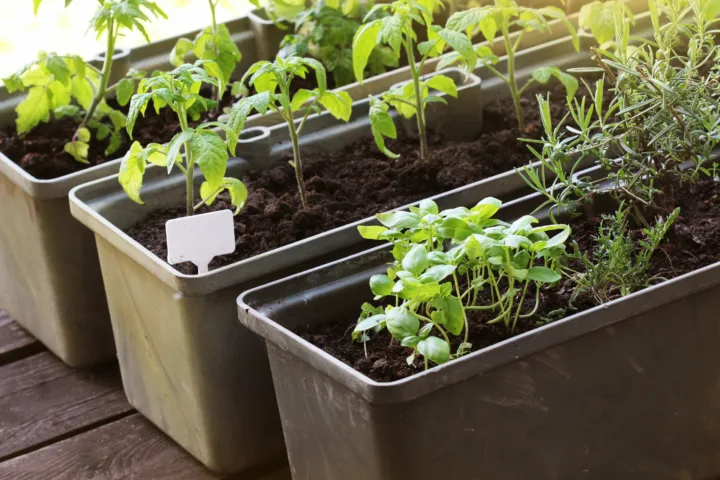
Kitchen herb cluster. Three matching two-gallon pots. Basil, rosemary, and chives. I keep them right outside the door so I snip while cooking. They need six hours of sun and regular water. Under fifteen dollars total if I start from seedlings.
One-pot salad bowl. A wide shallow container at least sixteen inches across. Loose-leaf lettuce, arugula, and a few radish seeds around the edges. I harvest outer leaves and the center keeps growing. Four to six hours of sun is enough.
Cherry tomato tower. One five-gallon or larger pot. One determinate or patio variety. A sturdy cage. I tuck basil around the base. Full sun is non-negotiable. The yield still shocks me every summer.
Pollinator pot. A large container packed with lavender, salvia, and trailing verbena. I plant in groups of three of each. Bees and butterflies show up within days. Low water once established.
Succulent spill. A shallow bowl or wide terracotta. Mix of upright and cascading types. I water only when the soil is bone dry. This one survives my forgetful weeks.
Vertical wall. Hanging pockets or stacked troughs on a railing. Strawberries or herbs work best. I check moisture often because these dry fast.
Sow a few radishes every two weeks in the salad bowl, extending harvests instead of producing one large crop at once.
Care Lessons I Learned the Hard Way
Drainage is not optional. Every container needs holes. If it does not have them, I drill. Sitting water kills more plants than drought in my experience.
Soil from the yard is a mistake. It compacts and carries pests. I stick to bagged potting mix designed for containers. Sometimes I mix in a bit of perlite for extra air.
Watering changes with material and weather. Terracotta and fabric need more frequent checks. Plastic holds longer. I stick my finger two inches down. Dry? Water deeply until it runs out the bottom. Shallow sips encourage weak roots.
Fertilizer leaches out of pots faster than garden beds. I use a diluted liquid feed every two weeks during active growth. Or I mix slow-release granules at planting time.
Winter is the real test. I group pots together against a wall for wind protection. Tender plants come inside. Some I just accept as annuals and start fresh in spring.
Frequently Asked Questions
What size container do I need for tomatoes? I never go smaller than five gallons for a productive plant. Smaller pots dry out too fast and limit root growth. Patio or dwarf varieties handle the restriction better than large indeterminate types.
Do plant container ideas work for indoor spaces too? Yes. I use many of the same upcycled and classic options inside. Just match the plant to the light. Snake plants and ZZ plants forgive low light and irregular water. Drainage trays become essential on wood floors.
How often should I repot? When roots circle the bottom or poke out the holes. Most of my plants stay happy for two seasons in the same pot if I refresh the top few inches of soil each spring.
Can I use regular garden soil in containers? I tried it once. The soil turned into concrete and the plants sulked. Stick with potting mix. It stays lighter and drains better.
What is the easiest plant container idea for absolute beginners? Start with a colander or a boot. Both need almost no prep. Plant something forgiving like herbs or a trailing annual. Success builds confidence faster than any tutorial.
I still walk out to the balcony every morning and feel a small jolt of pride. The space is mine. The plants answer to me. None of it required a yard or a big budget. Just a willingness to try ordinary objects in new ways and keep the ones that worked. Grab whatever is sitting unused in your house this weekend. Drill a few holes. Add soil. Plant something. Watch what happens.