
I started patio container gardening because I had zero dirt and a concrete slab that stared at me every morning. No yard. No raised beds. Just a sunny corner next to the back door and a stubborn belief that I could still grow something worth eating. That first season taught me more than any glossy magazine ever did. Plants died. Pots cracked. Watering schedules failed. Yet the survivors kept me going, and now my patio produces more herbs and tomatoes than I can give away.
Honestly? Most of the advice out there overcomplicates this. You do not need perfect conditions or expensive gear. You need a few solid habits and the willingness to move pots around when the sun shifts.
Why Patio Container Gardening Fits Real Life
I live in a place where the only outdoor space is a patio roughly the size of a parking spot. Digging was never an option. Container gardening let me claim that space without asking permission from landlords or neighbors. The biggest win for me has always been control. I decide the soil. I decide the location. I can drag a pot into shade during a heat wave or bring a struggling plant closer to the hose.
See, traditional gardening assumes you own the ground. Patio container gardening assumes you own the pots. That difference changes everything. Roots stay contained. Weeds stay minimal. Pests have fewer places to hide. And when the season ends, I simply empty a few containers and store them. No tilling. No regret.
I still remember the first time a neighbor walked over and asked where the tomatoes came from. I pointed at a cluster of five-gallon buckets against the railing. Their face said it all. You can grow real food in less space than most people waste on a single lawn chair.
Choosing Containers That Do Not Betray You
I used to buy pretty pots first and worry about function later. That phase cost me money and plants. Now I start with the plant’s needs and work backward.
Size Is Not Optional
Roots need room. Small pots dry out fast and force plants into survival mode. For herbs and salad greens I stick with containers that hold at least two to three gallons. Peppers and determinate tomatoes get five gallons minimum. Anything larger, like indeterminate tomatoes or zucchini, needs eight to ten gallons or more. I learned this the hard way when a cherry tomato in a four-gallon pot sulked all summer and produced three sad fruits.
Bigger pots also hold moisture longer. That single fact cut my watering time in half once I switched.
Materials That Survive Real Weather
Terracotta looks classic and breathes well, but it dries out faster than I can keep up with on hot days. Plastic holds water better and weighs less when I need to rearrange. Glazed ceramic stays pretty and resists cracking better than plain clay in freeze-thaw cycles. Fabric grow bags work great for temporary setups because they collapse for storage.
I mix them on purpose. A few heavy ceramic pots anchor the design. Lightweight plastic ones fill the gaps and move when the sun pattern changes. Drainage holes are non-negotiable. I drill extra ones if the pot comes without them. Roots sitting in water rot. Period.
The Soil Mix I Trust Every Season
Garden soil from the yard is a trap in containers. It compacts. It holds too much water or none at all. I never use it.
My current mix is simple and consistent. I start with a high-quality commercial potting mix that already contains some compost. Then I add extra perlite for drainage and a handful of slow-release organic fertilizer at planting time. Some seasons I mix in a bit of coco coir if I want more moisture retention without heaviness.
The goal is light, airy soil that drains freely yet does not dry to dust in two days. I top-dress with a thin layer of mulch once plants settle in. That mulch slows evaporation and keeps the surface cooler. FYI, I reuse the same soil for two seasons by refreshing it with compost and fertilizer. After that I dump it into a bigger bed elsewhere or compost it fully.
Do not reuse mix from diseased containers; refreshing soil cannot reliably remove pathogens, and it may spread last season’s problem to new patio crops.
Plants That Actually Perform in Patio Containers
I grow what I eat and what makes me smile when I walk outside. That dual purpose keeps the motivation high.
Edibles Worth the Space
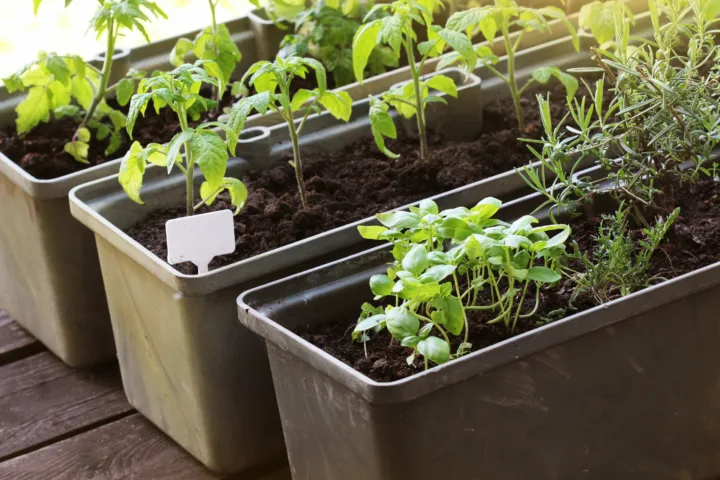
Cherry tomatoes rank highest for me. Varieties labeled “patio” or “determinate” stay manageable and still produce handfuls of fruit. Peppers of every kind thrive in five-gallon pots. Bush beans give reliable harvests without the sprawl of pole types. Leaf lettuce and arugula grow so fast I succession sow every couple of weeks in the same containers.
Herbs earn their keep daily. Basil, thyme, oregano, chives, and parsley sit closest to the kitchen door. Mint gets its own pot because it tries to take over everything. I harvest often. The plants respond by growing denser.
Color and Structure Without the Drama
For pure visual impact I lean on coleus, petunias, and sweet potato vine. Coleus gives bold foliage that lasts even when flowers fade. Petunias cascade over edges and keep blooming if I deadhead. Trailing sweet potato vine softens hard pot lines and fills gaps fast.
I follow a loose thriller-filler-spiller approach in larger containers. One taller plant in the center. Mounded plants around it. Trailing plants at the edges. It looks intentional even when I plant in a rush.
Watering and Feeding Without the Drama
Containers dry faster than ground soil. That is the main truth. I check moisture by sticking a finger two inches down. If it feels dry, I water deeply until it runs out the bottom. Shallow sprinkles do nothing useful.
In peak summer heat I water daily, sometimes twice if pots sit in full sun. Early morning is best. Less evaporation. Fewer fungal issues. I empty saucers after watering so roots never sit in standing water.
Fertilizer matters more in pots because nutrients wash out with every watering. I use a balanced liquid feed every ten to fourteen days during active growth. Half strength is plenty. Overfeeding creates lush leaves and few fruits. I also top-dress with compost mid-season for a slow nutrient boost.
Design Moves That Make the Patio Feel Alive
I group pots in odd numbers. Three or five together look more natural than even pairs. Varying heights creates layers. I put taller plants toward the back or center and shorter ones in front. Vertical space gets used with hanging baskets and a simple trellis against the railing for cucumbers or beans.
Color repetition ties everything together. I pick two or three main colors and repeat them across multiple containers. The eye reads it as a designed space instead of a random collection of pots.
Moving containers is half the fun. When one plant needs more sun or less, I shift it. That flexibility is the quiet superpower of patio container gardening.
Mistakes That Taught Me Faster Than Success
I once planted everything in matching black plastic pots because they were cheap. They overheated the roots on 95-degree days. Lesson learned: lighter colors or glazed surfaces stay cooler.
I also crowded plants early on. “More is better” turned into “none of them get enough air or light.” Now I respect spacing recommendations and thin aggressively.
Skipping drainage holes for the sake of looks almost killed an entire herb collection. Never again. And I used to water on a fixed calendar instead of checking the soil. Plants drowned or desiccated depending on the week’s weather. Finger test only from here on out.
Frequently Asked Questions
How much sun does patio container gardening really need? Most edible crops I grow want six or more hours of direct sun. Leafy greens and some herbs tolerate three to five hours. I track the light on my patio for a full day before planting so I match plants to the actual conditions.
Can I grow full-size vegetables with patio container gardening? Yes, if the containers are large enough. Determinate tomatoes, bush peppers, and compact cucumbers all produce well in five- to ten-gallon pots. I just choose varieties bred for limited space.
What is the biggest advantage of patio container gardening over in-ground beds? Portability and control. I move pots to chase better light or protect them from storms. Soil stays free of whatever problems exist in the ground below the patio.
How often should I replace the soil in my containers? I refresh with compost and fertilizer each spring and fully replace the mix every two seasons. Old soil packs down and loses structure.
Do I need special tools for patio container gardening? A watering can or hose with a gentle nozzle, a simple hand trowel, and a pair of pruners cover almost everything. I keep a bag of potting mix and fertilizer nearby so I never skip maintenance.
I still walk outside most mornings and feel a small jolt of satisfaction when I see green against the concrete. Patio container gardening gave me that. It does not require a perfect yard or endless free time. It requires attention to a few basics and the willingness to adjust as the season unfolds. Start with one or two pots of herbs right by the door. Taste the difference. Then expand. Your patio will never feel empty again.