
I used to kill container plants every summer. Not from pests or bad soil. From pure neglect. Life got busy, the heat cranked up, and my pots dried out faster than I could keep up. That changed when I started choosing drought tolerant container plants that actually thrive on less water.
Honestly? I should have done it years earlier.
These plants let me keep a full patio of color and texture without dragging the hose out every single day. They handle full sun, skipped waterings, and those brutal heatwaves that used to leave everything crispy. I still check on them, of course. But the margin for error is way bigger now. And that peace of mind is worth everything.
Why I Finally Switched to Tough Container Plants
See, container plants dry out faster than anything in the ground. Roots have nowhere to stretch for moisture. The pot itself heats up. Wind hits from all sides. I learned that the hard way after watching petunias and coleus collapse by mid-afternoon.
I needed plants that store water in their leaves or roots. Or ones that evolved in dry places and simply do not panic when the soil gets dusty. Succulents were the obvious starting point. But I wanted flowers too. And some height. And plants that still looked good when I left town for a long weekend.
The switch saved me hours every week. It also stopped the guilt spiral of watching expensive plants die. IMO, that alone makes the research worth it.
My Favorite Drought Tolerant Container Plants for Full Sun
I grow these in a mix of terracotta, plastic, and glazed pots on a west-facing patio that bakes from noon on. All of them have survived multiple dry stretches with only occasional deep watering.
Succulents That Almost Never Ask for Water
Hen and chicks sit at the top of my list. Those tight rosettes store water so well that I sometimes forget them for three weeks and they still look plump. They multiply on their own, so one pot becomes five over time. I tuck them into shallow bowls or the edges of larger containers.
Sedum (stonecrop) comes in upright and trailing forms. The trailing ones spill over the rim and add soft texture. They flower in late summer with little starry blooms that bees love. I water them maybe twice a month in peak heat and they keep going.
Jade plants give me that structural, almost sculptural look. Thick leaves hold moisture like tiny reservoirs. I have one in a tall pot that has gone a full month without water and still looked fine. Just do not overwater them. Rot is the real enemy here.
Ice plant surprised me. Those daisy-like flowers open in the sun and close at night. The fleshy leaves handle drought better than most flowering plants I have tried. It spreads nicely in wider containers.
Flowering Plants That Keep Blooming Through Dry Spells
Lantana is my color workhorse. Clusters of tiny flowers in orange, yellow, pink, or multicolored mixes keep coming all summer. It laughs at heat and dry soil once established. Butterflies show up constantly. I deadhead a little when I remember, but it does not demand it.
Moss rose (portulaca) carpets the surface of pots with bright, rose-like blooms. It needs almost no water and prefers the soil on the dry side. I use it as a spiller in mixed containers and it fills in fast.
Lavender brings scent and that soft gray-green foliage. Spanish lavender has held up best for me in pots. It wants sharp drainage and full sun. Water it deeply but infrequently. The bees go wild for it.
Russian sage adds height and those airy purple spikes. It handles dry conditions like a champ and looks elegant even when the rest of the garden is struggling. I grow the compact forms in larger pots so the roots have room.
Grasses and Architectural Accents
Purple fountain grass gives movement. The arching plumes catch the light and sway in the slightest breeze. It stays lush with minimal water once the roots settle in. I pair it with lower growers for contrast.
Agave is pure drama. Those stiff, sculptural leaves need almost nothing. A single plant in a big pot becomes a focal point that requires almost zero care. Just watch the spines if kids or pets are around.
I rotate a few of these every year depending on what catches my eye at the nursery. The core group stays the same because they deliver.
How I Set Up Containers So These Plants Thrive
Choosing the right plants is only half the battle. The setup matters just as much.
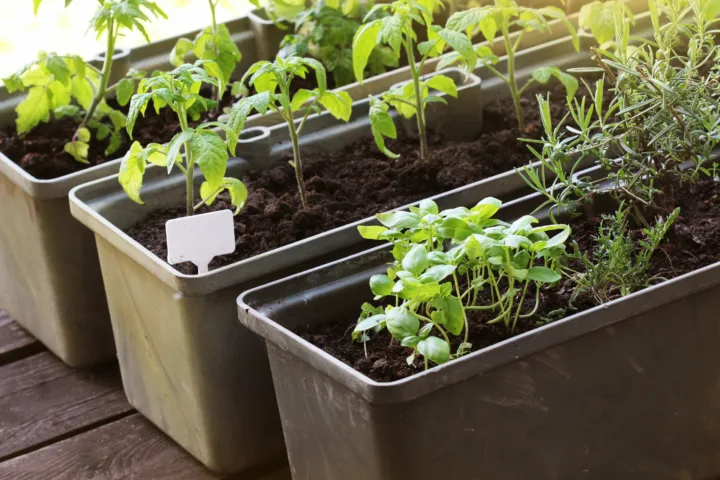
I always start with pots that have drainage holes. Always. No exceptions. Saucers stay empty so water does not sit around the roots.
Soil mix is key. I use a gritty, fast-draining blend. Regular potting soil holds too much moisture for these plants and leads to rot. I mix in perlite or coarse sand until it feels almost sandy. Some of my succulents get pure cactus mix.
Size of the pot makes a difference too. Small pots dry out lightning fast. I go bigger than I used to, especially for anything with a deep root system. More soil means more buffer against heat and missed waterings.
Mulch helps. A thin layer of gravel or crushed stone on top of the soil keeps the surface cooler and slows evaporation. It also looks tidy.
I water deeply when I do water. A light sprinkle does nothing. I soak until water runs out the bottom, then leave them alone until the top couple of inches feel dry. In the worst heat I might water once a week. In milder weather it stretches longer.
FYI, morning watering works best for me. The plants take it up before the sun gets brutal.
Combinations That Look Good and Need Less Care
I stopped planting single specimens and started mixing. A thriller, filler, and spiller approach works, but with drought-tolerant picks only.
One of my favorite pots this year holds Russian sage as the tall thriller, lantana as the colorful filler, and trailing sedum spilling over the edge. The whole thing stays interesting from spring through fall with almost no extra water.
Another simple combo: a central agave surrounded by hen and chicks and a few ice plants. Pure texture and form. Zero fuss.
For hanging baskets I rely on moss rose and trailing sedum. They handle the extra exposure better than most cascade plants.
I keep color schemes simple. Too many bright colors in one pot can look chaotic when the plants are stressed. Soft greens, silvers, and a few punches of color feel calmer and more intentional.
Mistakes I Made Before I Figured This Out
I overwatered at first. Old habits die hard. I treated these tough plants like the thirsty annuals I used to grow. Soft, yellow leaves and mushy stems taught me to back off.
I also used the wrong soil. Regular garden soil or moisture-holding mixes stay wet too long. Roots rot and the plant declines even if you are watering less.
Tiny pots were another error. They heat up and dry out so fast that even drought-tolerant plants struggle. Upsizing fixed that.
Finally, I planted too late in the season once. The plants never had time to establish before the real heat hit. Now I get them in the ground (or pot) earlier so the roots can settle.
Frequently Asked Questions
Do drought tolerant container plants still need some water? Yes. They handle dry spells far better than average plants, but they are not desert rocks. I still give them a deep soak when the soil dries out completely. The difference is frequency, not total neglect.
Can I grow these in partial shade? Most of the ones I listed want full sun to stay compact and bloom well. A few, like some sedums, tolerate light shade. Too much shade and they stretch and look weak.
How often should I fertilize drought tolerant container plants? Sparingly. I feed once in early spring with a diluted, balanced fertilizer and then leave them alone. Too much food pushes soft growth that needs more water.
Will these plants survive winter in containers? It depends on your zone and the plant. Many succulents and lavender need protection or a move to a sheltered spot. I treat annuals like moss rose and some lantanas as seasonal and start fresh each year.
What is the best pot material for drought tolerant container plants? I like terracotta for the classic look and good air flow, but it dries out faster. Glazed ceramic or plastic holds moisture a bit longer. As long as there is drainage, any of them work.
Final Thoughts From My Patio
I no longer dread heatwaves the way I used to. My containers stay full of life even when I get busy or the temperature climbs. The secret was simple: stop fighting the conditions and choose plants that already know how to handle them.
Start with two or three of the plants I mentioned. Give them the right soil and a pot with good drainage. Water deeply but less often. Watch how they respond.
You will spend less time hovering with a hose and more time actually enjoying the space. That trade-off feels pretty good after years of constant rescue missions. My patio looks better now than it ever did when I was watering every day. And that is saying something.