
I started cucumber container gardening after my backyard plot got taken over by a rogue zucchini plant that refused to share space. I had a sunny balcony and a stubborn craving for fresh cukes that actually tasted like something. Three seasons later, I pull more fruit from two big pots than I ever did from that crowded ground bed.
Honestly? The first year was a mess. I used pots that were too small. I let the soil dry out once. The plants sulked. I almost gave up. Then I fixed the basics and the harvests turned reliable. This is the exact system I use now.
Why Cucumber Container Gardening Works So Well for Small Spaces
Most people think cucumbers need a full garden bed. They don’t. The plants stay happy in pots as long as you give them the right size, the right soil, and steady water.
I grow mine on a second-floor patio that gets six solid hours of sun. No digging. No weeds from neighboring beds. I can move the pots if a heat wave hits or if a late cold snap shows up. That control is the real win.
Bush types stay neat. Vining types climb a simple trellis and still produce like crazy. Either way, the fruit hangs clean and straight. No more cukes sitting on wet soil and rotting.
Choosing the Right Container for Cucumber Container Gardening
Size is the first decision that actually matters. Skimp here and the plants never hit their stride.
I stick to these minimums:
- Bush varieties: 5-gallon pots that are at least 12 inches deep and 12 inches wide
- Vining varieties: 10-gallon pots or larger (15 gallons feels ideal once the vines take off)
Fabric grow bags are my current favorite. They drain freely and the roots get air pruning so they don’t circle. Plastic buckets work fine if you drill plenty of holes in the bottom. Terracotta looks nice but dries out faster, so I only use it when I know I can water twice a day in peak heat.
One plant per pot keeps the competition low. I tried crowding two bush plants in a 10-gallon bag once. Yields dropped and both plants looked stressed by midsummer. Lesson learned.
Best Cucumber Varieties I Actually Grow in Pots
Variety choice decides half the battle. Full-size garden vines turn into monsters in a container. Compact or bush types stay manageable and still give solid harvests.
Here are the ones that earned a permanent spot in my rotation:
- Bush Champion: Compact plants, full-size slicing fruit, strong disease resistance
- Spacemaster: Short vines, reliable production, handles cooler nights better than most
- Salad Bush Hybrid: Tiny plants that still crank out 8-inch slicers
- Diva: Thin-skinned, almost seedless, and parthenocarpic so it sets fruit without bees
- Arkansas Little Leaf: Compact leaves, high yields, no pollination needed
- Picklebush: Perfect for small pickling cukes if you want jars later
I plant two different varieties most years. One for fresh eating and one for pickling. That way the harvest stretches longer and I don’t get bored.
Soil Mix That Keeps Cucumbers Happy in Containers
Regular garden soil is a hard no. It compacts fast and drains poorly in a pot. I learned that the hard way when my first plants sat in soggy mud and the roots started rotting.
My go-to mix is simple:
- Two parts quality potting mix
- One part finished compost
- A handful of perlite for extra drainage
I also mix in a slow-release organic vegetable fertilizer at planting time. That covers the first few weeks. After the plants start flowering I switch to a liquid feed every 10 to 14 days. I keep the nitrogen moderate once fruit sets so the plants put energy into cukes instead of endless leaves.
The soil should feel like a wrung-out sponge. Moist but never soggy.
Planting Cucumbers in Containers the Way I Do It
I wait until night temperatures stay above 50°F and soil in the pot hits at least 60°F. In my zone that usually means two to three weeks after the last frost.
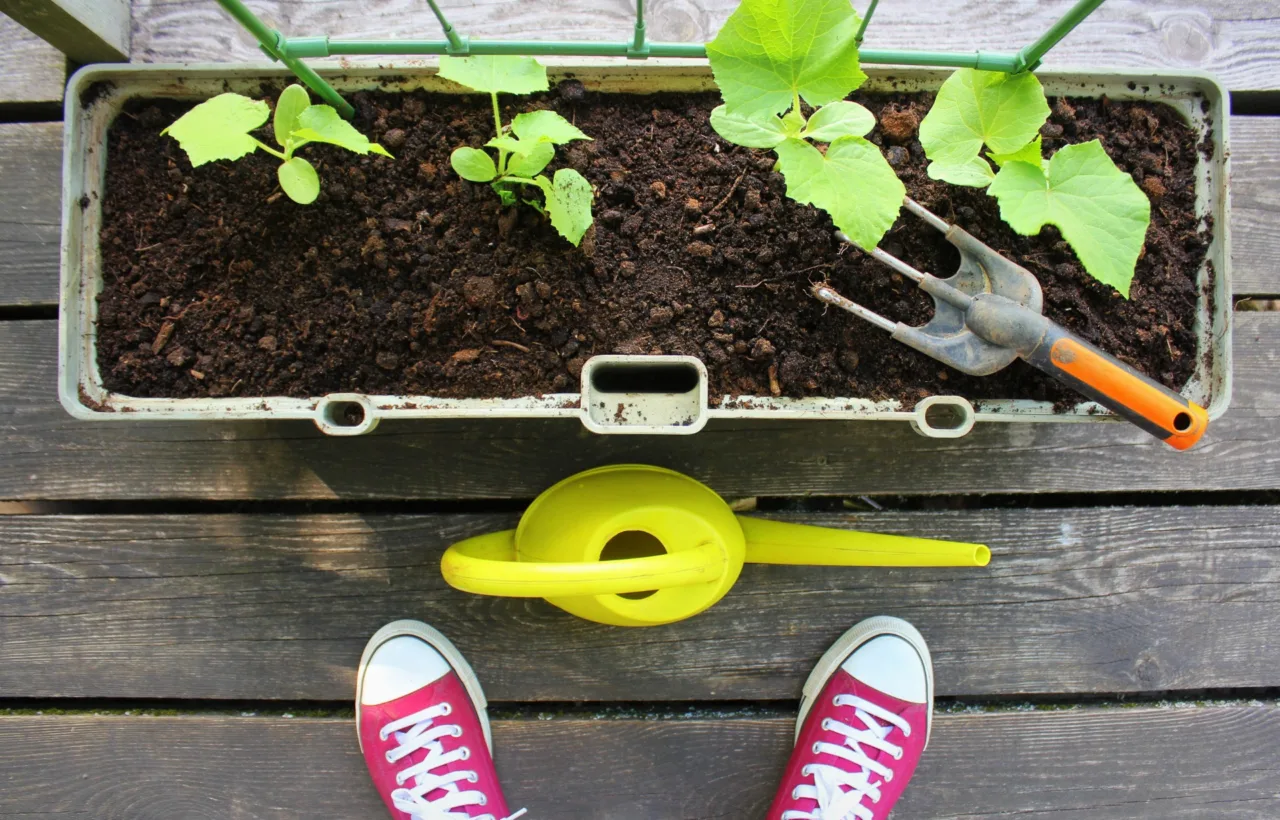
I sow seeds directly into the finished pots. Half an inch deep. Two or three seeds per pot. Once they sprout I thin to the strongest seedling. Transplanting works too, but cucumbers hate root disturbance so I try to avoid it.
I install the trellis the same day I plant. Waiting until the vines are already sprawling makes the job messy. A simple tomato cage or a couple of bamboo poles with string works fine for bush types. For true vines I use a 5- to 6-foot panel of cattle panel or a wooden lattice leaned against the railing.
Watering and Feeding for Steady Harvests
Inconsistent water is the fastest way to get bitter or misshapen fruit. Containers dry out faster than garden beds, especially on a windy balcony.
I check the top inch of soil every morning. If it feels dry I water until liquid runs out the bottom. On 90°F days that often means once in the morning and a light top-up in the evening. Mulch on top of the soil helps a lot. I use a thin layer of straw or shredded leaves.
Fertilizer schedule looks like this:
- Slow-release at planting
- Liquid feed every two weeks after true leaves appear
- Weekly feed once the first flowers show up
I stick with organic options. Fish emulsion or a balanced vegetable formula. Too much nitrogen early on gives you a jungle of leaves and almost no fruit. Ask me how I know.
Common Problems I Ran Into and How I Fixed Them
Powdery mildew showed up one humid July. I started watering only at soil level and increased air flow by spacing the pots farther apart. That cut the problem way down.
Yellow leaves usually meant I was under-watering or the pot had gotten too root-bound. Bigger pots solved most of it.
Bitter fruit? Almost always from letting the soil dry out between waterings. Steady moisture keeps the flavor mild.
Pollination can lag on a high balcony. That is why I now favor parthenocarpic varieties. They set fruit without bees. If I grow a standard type I give the flowers a gentle shake on calm mornings to move pollen around.
How I Harvest and Keep the Plants Producing
I pick cucumbers when they reach the size the variety is known for. Leaving them on the vine too long signals the plant to stop making new fruit. I check every other day once production starts.
A sharp pair of scissors or pruners works better than twisting. The stems are tender and snap easily.
I get the best yields when I keep the plants picked clean. One season I got lazy for a week and the vines slowed down hard. Consistent harvests keep the energy flowing into new flowers.
Frequently Asked Questions
How big of a pot do I need for cucumber container gardening? A 5-gallon pot works for bush types. I use 10 gallons or more for anything that vines. Depth of at least 12 inches matters more than the exact gallon number.
Can I grow cucumbers in containers on a balcony with limited sun? They need six to eight hours of direct light. Four hours will give you spindly plants and almost no fruit. Move the pots or choose a different crop if the light is weak.
Do I need to trellis cucumbers grown in pots? Bush types can sprawl a little, but even they stay healthier with a small cage. Vining types must climb or they turn into a tangled mess on the patio floor.
How often should I water cucumber plants in containers? Check daily. Water whenever the top inch of soil feels dry. In hot weather that can mean once or twice a day. Never let the pot dry out completely.
What is the easiest cucumber variety for beginners doing cucumber container gardening? I start most new growers with Bush Champion or Salad Bush Hybrid. Both stay compact, produce well, and forgive a few watering mistakes.
Final Thoughts From My Patio
Cucumber container gardening turned a tiny outdoor space into a reliable source of crisp, flavorful fruit. The plants ask for three things: enough room for roots, steady moisture, and decent sun. Get those right and the rest falls into place.
I still lose a plant now and then to a heat spike or a forgotten watering. That is part of growing. The difference now is that most of my pots deliver solid harvests from midsummer straight into early fall.
Grab a big pot, fill it with a decent mix, and plant a couple of bush seeds this weekend. By the time the first real heat arrives you will be slicing cukes that taste better than anything from the store. That first crunch is still my favorite moment of the season.