
I spent two full summers staring at a bare concrete balcony that made me feel defeated every time I stepped outside. Honestly? It looked like a storage unit someone forgot to clean. Then I started experimenting with container planting ideas that fit my limited space and even more limited free time. What followed was a complete shift. My balcony went from sad to something I actually want to sit in. I want to share exactly what worked for me so you can skip the trial and error I put myself through.
Why Containers Became My Only Real Option
I live in a place with no yard. Zero. Just a narrow balcony that gets strong afternoon sun and the occasional gust of wind that tries to knock everything over. Traditional garden beds were never on the table. Containers gave me control I never had before.
I could move plants around when the light changed. I could bring tender ones inside if a cold snap hit. And I could start small without committing to a whole landscaping project. That freedom mattered more than I expected.
See, I used to think containers were just a temporary fix. Something people did while they waited for a real garden. I think that’s the wrong way to go about it. Containers aren’t a consolation prize. They’re a different kind of garden that rewards attention in ways ground beds never did for me.
Check your balcony’s structural load limits before adding multiple heavy, wet containers, especially when grouping large pots on stands.
The Thriller-Filler-Spiller Formula That Changed My Results
I wasted money on random plant combinations before I learned this simple structure. Once I started using it, every pot looked intentional instead of chaotic.
Thriller sits in the center or back. It gives height and a clear focal point. I reach for something upright and bold.
Filler surrounds the thriller. These plants mound and add bulk so the pot doesn’t look sparse.
Spiller trails over the edges. This softens the hard lines of the container and makes the whole thing feel finished.
I plant them in that order every time. Thriller first, then fillers around it, then spillers tucked along the rim. The difference shows up fast. Within two weeks the pot starts looking full instead of empty.
Here are the specific combinations I keep coming back to.
Pair thriller, filler, and spiller plants with similar sunlight and watering needs, otherwise one role may thrive while another struggles.
Full-Sun Favorites
My sunniest pots get this mix:
- Thriller: a compact ornamental grass or upright salvia
- Filler: lantana or dwarf zinnias
- Spiller: sweet potato vine or calibrachoa
The grass gives structure that lasts even when flowers fade. Lantana keeps pumping out color in heat. Sweet potato vine tumbles over the side and softens everything. I have one of these on the corner of my balcony right now. It still looks good in late July.
Part-Shade Workhorses
For spots that only get morning light I switch it up:
- Thriller: a caladium or small hosta
- Filler: coleus or begonias
- Spiller: creeping Jenny or ivy
Caladium leaves steal the show with their bold patterns. Coleus fills the middle with color that doesn’t need flowers. Creeping Jenny spills bright chartreuse that catches the eye. This combo has survived two seasons for me with almost no drama.
I rotate the same pots each year and just swap the annuals. The permanent plants stay put. That saves both money and effort.
Edible Container Planting Ideas I Rely On Every Year
I wanted more than just pretty leaves. I wanted something I could eat. Growing food in containers turned out easier than I expected once I chose the right varieties.
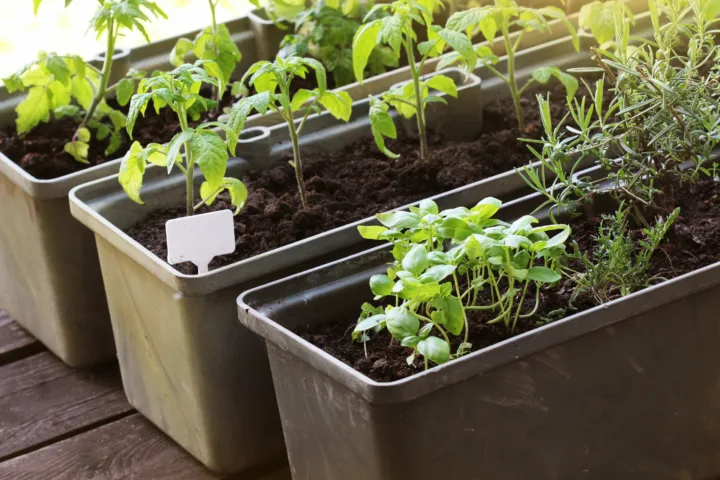
Cherry tomatoes in a large pot with a simple cage give me handfuls of fruit all summer. I plant one tomato plant in the center, then tuck basil and a few trailing nasturtiums around the edges. The basil thrives in the same conditions. Nasturtiums spill over and the leaves and flowers are edible too. Bonus.
Peppers do well in the same size pot. I grow two or three compact plants together and harvest both sweet and hot varieties from one container. Herbs live in smaller pots I keep near the kitchen door. Thyme, oregano, and chives all stay productive if I keep them watered and snip them regularly.
Strawberries in hanging baskets surprised me most. The fruit hangs over the edge, which makes picking easy and keeps the berries cleaner. I have two baskets and they produce enough for breakfast a few times a week in peak season.
FYI, I always use potting mix made for containers rather than garden soil. Garden soil packs down too hard and stays wet too long. The lighter mix drains better and keeps roots happier.
Install tomato cages before planting, because pushing supports into established roots can damage the container’s only tomato plant.
Small-Space Moves That Actually Make a Difference
My balcony is narrow. Every square foot counts. I learned a few placement tricks that made the space feel larger instead of crowded.
I group pots in odd numbers. Three or five together look more natural than two or four. I also vary the heights. Some pots sit on simple plant stands or even upside-down empty pots. That creates layers so the eye moves up and down instead of just across a flat line of containers.
Vertical space matters too. I hang two baskets from the railing and mount a simple wall planter on the only solid wall. Those vertical pieces pull the garden upward and free the floor for a small chair.
I keep the color palette limited. Too many colors fight each other in a small area. I stick to two or three main shades and let the foliage do the rest of the work. The result feels calmer and more intentional.
One more thing that helped: I stopped trying to fill every inch. Empty space between groups of pots lets the plants breathe and gives me room to walk. Overcrowding made the balcony feel smaller. Leaving gaps made it feel more open.
How I Keep Containers Looking Good Without Constant Work
Containers dry out faster than garden beds. That is the main truth I had to accept. In summer heat I check soil every morning by sticking a finger in an inch deep. If it feels dry I water. If it still feels moist I wait. Overwatering killed more of my early plants than underwatering ever did.
I mix a slow-release fertilizer into the potting mix when I plant. Then I add a liquid feed every couple of weeks during peak growth. That keeps the plants from looking tired by midsummer.
Deadheading spent flowers keeps the blooms coming. I just pinch them off when I water. It takes almost no time and the plants reward the effort.
Every spring I dump the old mix from the previous year into a big bucket, mix in some fresh potting soil and compost, and reuse most of it. Completely replacing the soil every single year felt wasteful. Refreshing it works fine for me.
I also accept that some plants are temporary. Annuals give me color for one season. I enjoy them fully and replace them the next year without guilt. Perennials and woody plants stay longer and form the backbone.
Do not reuse mix from diseased containers; sanitize pots first, since refreshed soil cannot reliably eliminate lingering pathogens.
Frequently Asked Questions
How many plants should I put in one container? I pack them tighter than I first thought was wise. A full look happens when the plants almost touch at planting time. They fill in quickly. Leave a little room at the rim for watering.
Do I need special soil for container planting ideas to work? Yes. Regular garden soil becomes dense and waterlogged in pots. A quality potting mix stays lighter and drains better. I never skip this step anymore.
Can I grow vegetables and flowers together in the same pot? I do it all the time. Just match their light and water needs. Tomatoes with basil and trailing flowers work especially well for me.
How often should I water containers in hot weather? Most of mine need water every day once summer temperatures climb. Larger pots hold moisture longer than small ones. I check rather than follow a rigid schedule.
What size pot works best for beginners? I start with anything at least 12 inches across. Smaller pots dry out too fast and limit root growth. Bigger pots forgive more mistakes while you learn.
Final Thoughts From My Own Balcony
I still walk outside some mornings and feel a little surprised that the space looks this good. The same concrete that once felt empty now holds color, texture, and actual food I can pick with my hands. Container planting ideas gave me that without requiring land I don’t have or skills I never learned in school.
Start with one pot if that feels less overwhelming. Use the thriller-filler-spiller approach so it looks intentional from day one. Water when the soil tells you it needs it. And give yourself permission to change things as you go. Plants grow. So do the people who tend them.
My balcony still has its limits. Wind still tries to tip things over on certain days. But now I have something living out there that responds when I show up. That feels like enough.