
I spent two full seasons staring at a sad concrete slab before I landed on container garden design ideas that finally made the space feel alive. My balcony was six feet by ten. It got decent sun. And yet every plant I stuck in a random pot looked lonely and half-dead by July.
Honestly? I almost gave up.
Then I stopped treating containers like afterthoughts and started treating them like the whole garden. That shift changed everything for me. What follows is the exact approach I use now. No theory. Just the stuff that worked in real life on a small, windy, rental-friendly patio.
The First Thing I Got Wrong About Scale
I used to buy a dozen little pots. They dried out fast. They looked cluttered. They never created any sense of presence.
See, the real move is fewer containers, bigger ones.
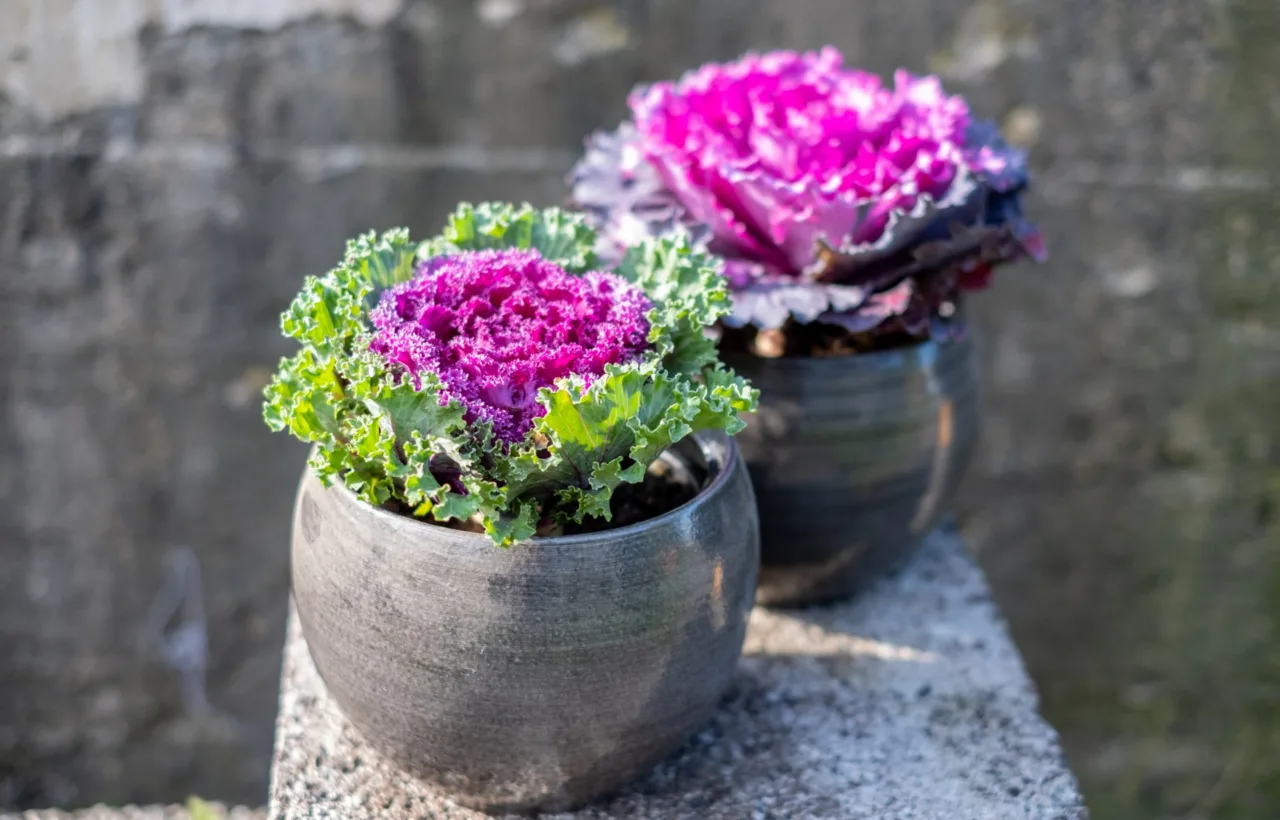
I switched to three or four pots in the 16- to 24-inch range. Suddenly the plants had room to root properly. The whole arrangement read as intentional instead of scattered. One oversized statement planter can carry an entire corner. I learned that the hard way after wasting money on a collection of tiny terracotta that never filled out.
Bigger pots hold moisture longer. That alone cut my watering time in half.
The Thriller-Filler-Spiller Formula I Still Use Every Spring
This is the one piece of advice that shows up everywhere for a reason. I ignored it for years. Then I tried it once and never looked back.
The structure is simple:
- Thriller: one tall, upright plant that gives height and drama
- Filler: two or three mounding plants that bulk out the middle
- Spiller: trailing plants that cascade over the rim
I plant them in that order. Thriller goes in the center or slightly off-center if the pot will be viewed from all sides. Fillers go around it. Spillers get tucked at the edges so they can tumble freely.
My current favorite combination in a 20-inch pot: a purple fountain grass as the thriller, two coleus in different leaf colors as fillers, and sweet potato vine plus creeping Jenny as the spillers. It looks full by week three and keeps going until frost.
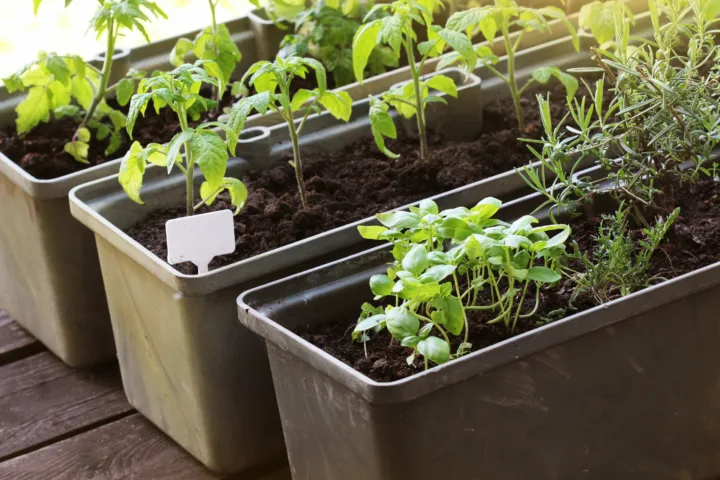
FYI, the formula works just as well with edibles. I run a cherry tomato as the thriller, basil and parsley as fillers, and trailing strawberries as the spillers. It feeds me and looks good doing it.
Install a tomato cage before planting the edible version, so later support does not disturb basil, parsley, or trailing strawberries.
How I Group Containers So They Don’t Look Random
Single pots rarely carry a space. Groups do.
I arrange pots in odd numbers. Three or five. I vary the heights deliberately. Sometimes I stack an empty overturned pot underneath a smaller one to create a riser. Sometimes I just use different sized vessels that share the same material or color family.
My go-to grouping right now sits against the railing:
- One tall ceramic in charcoal
- Two medium terracotta that match each other
- One low wide bowl in front
The tall one holds a dwarf Japanese maple. The mediums hold mixed annuals. The bowl holds herbs I snip every time I walk by. The whole cluster feels like one composition instead of four separate decisions.
I move the group around once a month. Containers give you that freedom. If the light shifts or the seating arrangement changes, I just slide things. No digging required.
Photograph the grouping from your usual seating height, then adjust the tallest pot until it frames, rather than blocks, the view.
Vertical Container Garden Design Ideas That Saved My Floor Space
Floor space is precious on a balcony. I ran out of it fast.
So I went up.
Railing planters became my best friend. I mounted two long troughs on the outside of the railing (with landlord permission and proper brackets). They hold trailing nasturtiums and cascading petunias that soften the edge without stealing any walking room.
Wall-mounted pockets came next. I hung a simple fabric pocket system on the only solid wall. Herbs live there now. Basil, thyme, oregano. They stay within arm’s reach of the kitchen door and free up the floor entirely.
Hanging baskets finish the vertical layer. I hang two from the ceiling joists. One holds a big Boston fern that thrives in the partial shade. The other holds a mix of calibrachoa that blooms nonstop.
Going vertical multiplies growing area without adding footprint. That single principle let me keep adding plants long after the floor was “full.”
Outdoor railing planters can act like sails; secure them for gusts and verify wet-soil weight before mounting them outside the railing.
Edible Containers I Actually Eat From
Pretty is nice. Food is better.
I keep a dedicated edible cluster near the door. One large pot holds a determinate tomato and a couple of basil plants. Another holds peppers. A third is pure salad: loose-leaf lettuce, spinach, and radishes that I harvest in succession.
The key is matching pot size to the crop. Tomatoes need at least 5 gallons. Peppers do fine in 3 to 4. Leafy greens can live in shallower boxes as long as the soil stays moist.
I water these more often than the ornamental pots. Edibles are hungrier. I also feed them every two weeks with a diluted liquid fertilizer. The payoff is real: I pick tomatoes for lunch most days in August without leaving the balcony.
IMO, mixing a few edible pots into the overall design keeps the whole thing from feeling purely decorative. It becomes useful.
Sow small batches of lettuce, spinach, and radishes every two weeks to keep the salad container harvest continuous.
Color and Texture Choices That Feel Calm Instead of Chaotic
Early on I threw every bright color into one pot. It looked like a carnival exploded.
Now I pick a tight palette and stick to it.
One season I went all silvery greens and soft purple. Dusty miller, lavender, purple sage, and silver dichondra. The effect was quiet and cohesive. Another year I stayed in the chartreuse-to-deep-green range with only white flowers. It felt cooler and more modern.
Texture matters as much as color. I always pair something spiky with something soft. A grassy thriller next to a fuzzy-leaved filler next to a smooth trailing vine. The contrast makes the whole container more interesting even when the flowers take a break.
I also repeat plants across multiple pots. The same trailing vine appears in three different containers. That repetition ties the whole patio together without looking matchy-matchy.
Mistakes I Made So You Can Skip Them
I drowned plants by using pots without drainage holes. Never again. Every container needs at least one hole, preferably several. I raise pots on feet or bricks so water can escape freely.
I used regular garden soil once. It compacted into concrete. Now I stick to quality potting mix with added perlite for drainage.
I overplanted. Plants need room to grow. Crowding leads to weak stems and constant competition for water. I follow a rough guide of one thriller, three to five fillers, and three to seven spillers depending on pot size.
I ignored weight. Wet soil is heavy. On a balcony I now check the load limits and stick to lighter fiber-clay or plastic pots for anything large.
And I forgot about winter. Most of my annuals get composted. The few hardy perennials and the Japanese maple move against the wall for protection. Containers make that easy.
Dark plastic containers can heat root zones quickly on sunny balconies, so place them where afternoon shade protects the potting mix.
Frequently Asked Questions
How often should I water container gardens? I check the soil with my finger every morning in summer. If the top inch is dry I water thoroughly until it runs out the bottom. Smaller pots need it daily. Larger ones can go two or three days.
Can I use the same container garden design ideas for shade? Yes. I just swap the plant list. Hostas, ferns, coleus, and impatiens handle my shadier corner beautifully. The thriller-filler-spiller structure still applies.
What’s the best size pot for beginners? Start with at least one 16-inch pot. Anything smaller dries out too fast and never looks substantial. I wish someone had told me that on day one.
Do I need special soil for container garden design ideas that include vegetables? Regular potting mix works fine if I mix in a bit of compost. I avoid heavy garden soil. Good drainage matters more than fancy blends.
How do I keep containers looking good all season? I deadhead spent flowers weekly and pinch back leggy growth. A mid-season fertilizer boost helps the later flush. And I accept that some plants will fade. I just replace them.
I still move pots around every few weeks. The ability to rearrange is half the fun. My patio no longer feels like a leftover space. It feels like a garden I can change whenever the mood hits.
Start with one big pot and the thriller-filler-spiller mix. Get that right and the rest follows. You’ll know the moment it clicks because you’ll catch yourself sitting out there longer than you planned. That’s when you realize the containers stopped being decoration and started being the place itself.