
I spent three summers watching basil turn yellow and crispy on my windowsill. The mint took over everything. My rosemary looked like it had given up on life. I blamed the light. I blamed the soil. I even blamed the weather. Then I looked at the pots themselves and realized the real problem sat right there in plain sight.
The right herb container changes everything. I learned this the hard way after cycling through too many cute little pots that looked great for about a week. Now my kitchen stays stocked with usable leaves instead of sad, wilted stems. This is the guide I wish someone had handed me when I first started.
Why the Herb Container Size Matters More Than the Pretty Color
I used to grab whatever pot matched my decor. Big mistake. Herbs need room for roots to stretch. Tiny pots dry out in hours and leave the plant stressed.
Most kitchen herbs do best in containers at least 8 to 12 inches across. Basil and parsley want that full range. Thyme and chives can handle 6 to 8 inches if the drainage is solid. Mint needs its own roomy pot because it spreads like it owns the place.
See, a bigger pot holds moisture longer. It buffers the temperature swings that hit a sunny windowsill or balcony. I switched my basil to a 10-inch plastic pot last spring. The difference showed up in two weeks. Fuller leaves. Fewer yellow edges. Actual flavor when I snipped some for pasta.
Rule I follow now: if the pot feels like a decoration first, it is probably too small for real growth. Bigger wins almost every time.
Materials That Work (And the Ones That Fought Me)
I tried terracotta first because it looked classic. It dried out so fast in summer heat that I watered twice a day. My balcony gets wind. The soil turned to dust by afternoon. Not fun.
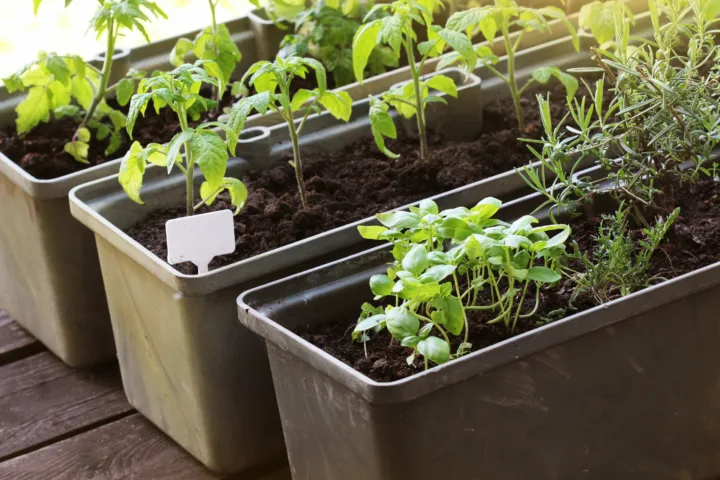
Plastic pots became my default for beginners and for anything that likes steady moisture. They stay lighter. They hold water better. They move easily when the sun shifts. IMO, plastic is the smart starting point if you want fewer daily checks.
Terracotta still has its place. Mediterranean herbs like rosemary, thyme, and oregano love the extra airflow through the clay walls. Just know you will water more often in hot weather. Glazed ceramic sits in the middle. It holds moisture like plastic but weighs more. Always check for real drainage holes. Decorative pots without holes turn into root-rot traps.
Here is the quick comparison I use:
- Plastic: Lightweight, holds moisture, good for beginners and indoor setups
- Terracotta: Breathable, dries fast, best for drought-tolerant herbs in cooler spots
- Glazed ceramic or wood: Attractive and solid, but heavier; only if drainage is excellent
I keep most of my annuals in plastic now. The woody perennials get terracotta when I have the time to babysit them.
On a windy balcony, choose plastic for basil before upgrading aesthetics: wind increases evaporative loss, making terracotta’s drying effect harder to manage.
Drainage Is Non-Negotiable
I ignored this once. The soil stayed soggy. The roots smelled funky. The plant died. Never again.
Every herb container needs open drainage holes. No exceptions. Water has to escape or the roots drown. I skip the old advice about putting rocks in the bottom. That just raises the water table and makes the problem worse. Use the same potting mix all the way down.
If you fall for a pretty pot with no holes, drop a nursery pot with holes inside it. Lift the inner pot out when you water so excess drains. Simple fix.
Self-watering containers can help if you forget sometimes. They still need airy soil and real overflow drainage. I use one for my basil during heat waves. It cuts the daily watering chore without turning the roots into soup.
Empty saucers after watering; standing runoff can keep the container base saturated even when the soil surface feels appropriately dry.
Soil That Does Not Betray You
Regular garden dirt packs down hard in pots. Skip it. I use a light potting mix designed for containers. It drains well yet holds enough moisture between waterings.
My current blend looks like this:
- High-quality potting soil as the base
- A handful of perlite or coarse sand for airflow
- A scoop of aged compost for nutrients
I refresh the top couple of inches each spring with more compost. Every three or four years I dump the whole pot and start fresh. Roots need that reset.
Herbs That Actually Thrive in Containers
Almost any herb can live in a pot if you match the size and care. Some make life easier than others.
These have performed best for me:
- Basil: Needs heat, sun, and consistent moisture. One plant per 10-inch pot keeps it happy.
- Parsley: Deep roots. Give it depth and it rewards you for months.
- Chives: Tough and forgiving. Smaller pots work fine.
- Thyme and oregano: Prefer drier conditions. Terracotta suits them.
- Rosemary: Wants room and excellent drainage. Bigger pot from the start.
- Mint: Always alone. It will take over any shared space.
I group herbs with similar needs. Mediterranean types (rosemary, thyme, oregano, sage) share a large pot happily. Moisture lovers (basil, parsley, cilantro) stay together in another. Mint gets its own fortress.
Indoors I stick to chives, parsley, mint, and basil under a bright window. Outdoors the woody ones shine.
Cilantro often bolts in heat, so treat it as a cool-season companion rather than a permanent basil-style windowsill crop.
My Current Herb Container Setup
I keep six pots on the kitchen sill and two larger ones on the balcony. Plastic 10-inch pots for the basil and parsley. A wide terracotta for the thyme and oregano mix. One dedicated mint pot that I move outside in summer.
Each pot sits on a simple saucer so water does not wreck the wood. I water when the top inch of soil feels dry. In summer that means every other day for the plastic pots. The terracotta needs a daily check.
I fertilize lightly once a month with diluted fish emulsion during the growing season. Too much food makes the leaves bland. Less is better.
Harvesting keeps the plants bushy. I snip no more than a third of the plant at a time. For basil I pinch the tips regularly so it does not bolt into flowers too fast.
Last year this setup gave me enough fresh herbs for daily cooking from May through October. No store-bought cilantro that wilted in two days. No sad dried flakes from a jar.
Apply diluted fish emulsion after watering, not to dry mix, to reduce the chance of root irritation in small sill containers.
Common Mistakes I Made So You Can Skip Them
I crowded too many plants in one pot early on. The roots competed and everything stayed small. Now I give each plant real space or stick to compatible groups.
I also watered on a fixed schedule instead of checking the soil. Some days the pots stayed wet. Other days they turned bone dry. Touch the soil. That is the only reliable method.
Small black pots in full sun overheated the roots. I switched to lighter colors or moved them to morning sun and afternoon shade. The plants recovered fast.
Over-fertilizing was another quiet killer. The growth looked lush but the flavor disappeared. Half-strength monthly is plenty.
Frequently Asked Questions
What size herb container do most kitchen herbs need? Most do best in 8 to 12 inch pots. Larger is almost always safer than smaller because it holds moisture longer and gives roots room to grow.
Do I really need drainage holes in every herb container? Yes. Without them the roots sit in water and rot. Drill holes if the pot does not have them or use an inner pot that drains.
Can I grow different herbs together in one container? You can if they share the same water and light needs. Keep mint alone. Pair the dry-loving Mediterranean types and keep the thirstier ones separate.
Is plastic or terracotta better for a beginner herb container? Plastic is easier for most beginners. It holds moisture better and weighs less so you can move it around. Terracotta works well once you get comfortable with more frequent watering.
How often should I water herbs in containers? Check the top inch of soil. Water when it feels dry. In hot weather that can mean every day or two. Cooler weather stretches it longer.
Final Thoughts From My Windowsill
I no longer kill every basil plant that crosses my path. The shift happened when I stopped treating the pot like an afterthought. The right herb container size, material, and drainage turned a constant frustration into something I look forward to each morning.
Start simple. Grab a solid plastic pot with real holes. Fill it with decent potting mix. Plant one or two herbs that you actually cook with. Water when the soil tells you to. Snip often.
You will make mistakes. I still do. The difference is that now the plants bounce back instead of giving up. Fresh leaves on demand beat the grocery store every single time. Go pick a pot and get growing.