
I spent three summers staring at empty pots on my north-facing porch. The space stayed cool and dim, perfect for me after work, but every plant I tried turned leggy or just quit. Then I got serious about shade plants container gardening. Everything changed.
Honestly? I felt like a failure at first. Friends posted sunny balcony jungles while my pots sat bare. I bought the wrong things. I overwatered. I under-watered. I learned the hard way that most “pretty” annuals from the big-box store want sun I simply don’t have.
See, shade isn’t a death sentence for containers. It just needs different players. Once I stopped fighting the light and started choosing plants that actually prefer it, those same pots turned lush. Foliage got bold. Color showed up. Maintenance dropped. I still water, but the plants finally cooperate.
This isn’t theory. These are the exact shade plants container combos that work on my porch right now, plus the mistakes that taught me what to avoid.
Why Most Shade Container Attempts Fail
People treat shade the same as sun. That’s the trap.
I used to grab whatever looked colorful at the nursery and hope for the best. The tags said “part shade,” so I figured my porch counted. It didn’t. Many of those plants still wanted four or more hours of direct light. Mine got maybe one on a good day.
Shade containers need plants that handle low light without stretching. They also need soil that drains well because shade stays wetter longer. Overwatering kills more shade pots than drought ever does.
I switched my approach. First I measured the actual light. Then I matched plants to that light. The difference showed up in weeks, not months.
Don’t guess the light. Watch the spot for a full day. Note when sun hits and for how long. That single step saved me more money than any fancy fertilizer.
My Go-To Shade Plants for Containers
These are the ones that keep showing up in my pots year after year. I grow them because they perform, not because they’re trendy.
Label each repeat performer with its container location, since nearby shade spots can differ enough to change long-term performance.
Hostas That Stay Compact
Hostas made me a believer. The big garden ones can swallow a bed, but container-sized varieties stay polite. I plant ‘Blue Mouse Ears’ and ‘Mini Skirt’ in 12-inch pots. The leaves unfurl thick and waxy. Color holds even in deep shade.
I once lost a whole pot of hostas to slugs. Now I keep the containers off the ground and check the undersides of leaves every few days. A quick sprinkle of iron phosphate pellets handles the rest. Hostas also hate winter freezes in pots. I move mine to a sheltered corner or wrap the containers when temperatures drop.
Ferns for That Woodland Feel
Ferns fill space without demanding attention. Autumn fern gives me copper new growth that turns deep green. Japanese painted fern adds silver and burgundy. Both stay happy in containers as long as the soil stays moist but never soggy.
I learned to group three fern pots together. One tall, two shorter. The texture looks intentional instead of sparse. Ferns also handle the cooler nights better than most flowering plants. They just keep going.
Coleus for Instant Color
Coleus is the cheat code. No flowers needed. The leaves do all the work. I stick with the ColorBlaze series because they hold their color in shade and don’t get leggy as fast as older types.
Last summer I mixed a chocolate-leaf coleus with a chartreuse one in the same pot. The contrast jumped even on cloudy days. Coleus wants regular water and a light feed every couple of weeks. Pinch the tips and it stays bushy. I treat it as an annual here, but the show lasts from spring until frost.
Impatiens That Actually Bloom
Impatiens get a bad reputation for mildew in some regions. The newer varieties hold up better. I plant Rockapulco doubles in hanging baskets under the porch overhang. They bloom nonstop in full shade. The flowers look almost too perfect, but they keep coming.
I water them more than the ferns. Impatiens wilt fast when dry, then bounce back once they get a drink. That dramatic flop taught me to check the soil daily in hot weather, even in shade.
Caladiums for Big Leaves
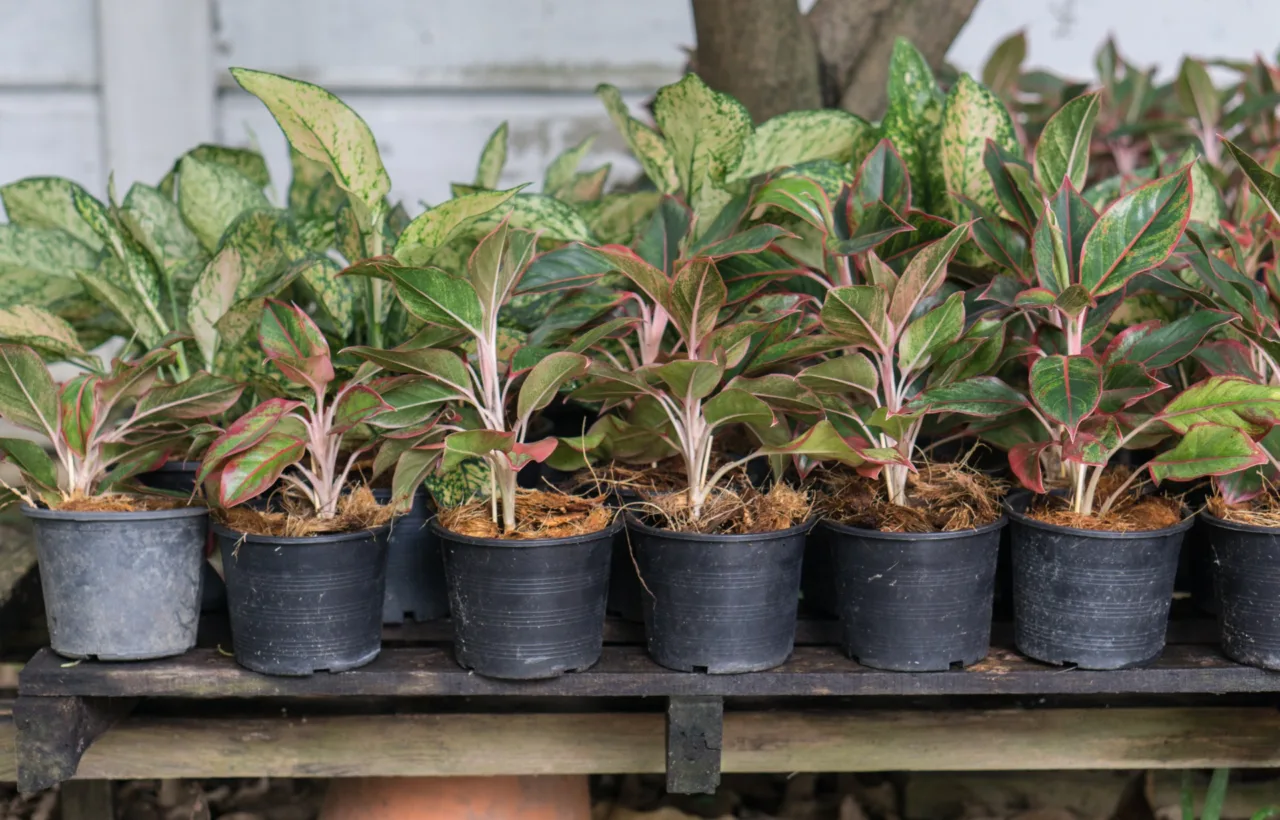
Caladiums bring drama. The leaves look painted. Red veins on green. White centers with pink edges. I start the tubers indoors in spring and move the pots outside once nights stay above 55 degrees.
They hate cold feet, so I keep them in plastic pots that warm up faster. When fall arrives I dig the tubers and store them dry for next year. One investment lasts seasons.
Heuchera and Coral Bells
Heuchera gives me foliage that holds color all season. ‘Palace Purple’ and ‘Caramel’ both do well in my shade pots. The leaves stay dense. Tiny flower spikes appear in summer but I grow them for the leaves.
They handle a bit more sun than pure shade plants, which helps on the edges of the porch. Drainage matters here. Heuchera roots rot if the pot stays wet.
How I Build a Shade Container That Looks Full
I use the thriller-filler-spiller method, but I adapt it for shade.
- Thriller: Something upright. A tall coleus, a small hosta, or a fern with height.
- Filler: Mid-height plants that bulk up the middle. Impatiens or heuchera work.
- Spiller: Trailers that soften the edges. Creeping Jenny (the chartreuse kind) or ivy both handle shade.
I plant tighter than I do for sun containers. Shade growth is slower, so I pack them in for instant fullness. One plant per six inches of pot diameter is my rule of thumb. An 18-inch pot gets three solid plants.
Soil is simple. I mix regular potting mix with a handful of compost and a little perlite. Shade stays damp, so extra drainage helps. I skip the moisture-control mixes. They hold too much water for my climate.
Fertilizer stays light. Half-strength liquid feed every two weeks during active growth. Too much and the plants push soft growth that attracts pests.
Offset the thriller slightly from center, then angle fillers and spillers toward the open sides for a fuller-looking composition.
Real Mistakes I Made So You Don’t Have To
I once planted a full sun coleus in deep shade. It survived but looked washed out. Lesson learned: read the tag and then adjust for your actual light.
I also used a pot with one single drainage hole. Water sat at the bottom. Roots rotted. Now every container gets multiple holes or I drill extra ones myself.
Winter killed more plants than anything else. Pots freeze solid. Roots die. I now treat most of my shade containers as annual displays and move the hardier perennials (hostas, heucheras) to a protected spot or plant them in the ground for the cold months.
Slug damage hit the hostas hard the first year. I switched to copper tape around the pot rims and the problem dropped. Simple fix.
Copper tape works best on a clean, dry rim, with no leaves or stems creating a bridge over the barrier.
Watering Shade Containers Without Guesswork
Shade pots dry slower than sun pots. That’s the whole point. I stick my finger two inches into the soil. If it feels cool and damp, I wait. If it feels dry, I water thoroughly until it runs out the bottom.
Hanging baskets dry faster because of air flow. I check those every day in summer. Ground-level pots can go two or three days between waterings depending on the weather.
I water in the morning so any wet leaves dry before night. Night watering invites fungus in shade.
Seasonal Swaps That Keep Things Interesting
Spring starts with pansies and violas in the shade pots. They handle cool weather and give early color. When heat arrives I pull them and drop in the heat lovers: coleus, impatiens, caladiums.
Fall brings another shift. I tuck in ornamental kale or late-season pansies for cool-weather interest. The pots never sit empty.
I keep a few evergreen options for winter structure. A small boxwood or a hardy fern in a protected corner holds the space until spring returns.
Frequently Asked Questions
What are the easiest shade plants container options for beginners?
Hostas, ferns, and coleus rank at the top for me. They forgive mistakes and still look good. Start with those three and you’ll build confidence fast.
How often should I fertilize shade plants in containers?
I feed lightly every two weeks with a balanced liquid fertilizer during the growing season. Shade plants grow slower, so they need less than full-sun pots. Skip the heavy doses.
Can I leave shade container plants outside all winter?
Most of mine stay outside only if they are hardy perennials and the pot is protected from hard freezes. I move the tender ones indoors or treat them as annuals. Roots in pots freeze faster than roots in the ground.
Do shade plants container setups need special soil?
Regular high-quality potting mix works. I add a bit of perlite for extra drainage because shade holds moisture longer. Avoid garden soil. It compacts and stays too wet.
Which shade plants container combos look the fullest with the least work?
A tall fern, a mid-height coleus, and a trailing creeping Jenny fill a pot fast and keep going with basic care. That trio has rescued more of my empty corners than anything else.
I still walk out to the porch some evenings and just stand there. The pots look alive now. Leaves catch what little light there is. Color shows up where I never expected it. Shade stopped feeling like a limitation.
You can do the same. Pick one container. Choose plants that match the actual light you have. Water when the soil asks for it. Watch what happens.
The empty pots don’t have to stay empty.