
I started container gardening ideas out of pure desperation. My balcony measured maybe eight feet by four. Concrete everywhere. Zero soil. I wanted green things so badly I nearly cried looking at other people’s yards.
Honestly? Those first pots looked pathetic. One half-dead basil. Two sad petunias that gave up after a week. I almost quit.
Then I stopped copying fancy magazine photos and started testing what survived my actual life. Now my little outdoor space feeds me salads, herbs, and enough flowers to make the neighbors pause. You can do the same.
These container gardening ideas come straight from my trial-and-error seasons. No perfection required. Just plants that grow when you give them half a chance.
Why I Ditched the Ground and Never Looked Back
Ground gardens demand space most of us don’t have. Containers fix that. I move them when the sun shifts. I bring the tender ones inside when a cold snap hits. Weeds almost never appear.
The biggest win? Control. My soil stays light and rich. Drainage happens on my terms. I water what needs water and leave the rest alone.
See, people think containers limit you. I think that’s the wrong way to go about it. Containers free you. You pick the spot. You pick the soil. You pick the plants that match your light and your schedule.
My patio went from blank to productive in one spring. Yours can too.
The Thriller-Filler-Spiller Formula I Use Every Time
Every good pot follows the same simple pattern. I learned it the hard way after planting three tall things that just stood there looking awkward.
Thriller sits in the middle or slightly off-center. Tall. Bold. The plant that catches your eye first. I reach for ornamental grasses, upright coleus, or a small dwarf tomato.
Filler fills the middle ground. Medium height. Bushy. These plants make the pot look full instead of sparse. Think basil, compact marigolds, or calibrachoa.
Spiller tumbles over the edge. Softens the hard lines of the pot. Creeping Jenny, sweet potato vine, or trailing petunias do the job perfectly.
I plant them all at once. The thriller goes in first. Fillers next. Spillers last so their stems hang free. Within three weeks the whole thing looks intentional.
One of my favorite combinations: a purple fountain grass as thriller, lime coleus as filler, and chartreuse sweet potato vine as spiller. Bright. Tough. Needs almost no fuss.
Pair plants with similar water needs and vigor, otherwise a thirsty sweet potato vine can overwhelm slower-growing herbs or flowers.
Best Plants That Actually Thrive in My Containers
Not every plant loves life in a pot. Roots need room. Soil dries faster. Heat bounces off concrete. I stick to varieties bred for containers or ones that stay compact by nature.
Vegetables That Deliver
I grow food because store tomatoes taste like disappointment. These work for me:
- Bush or patio tomatoes. One plant in a five-gallon pot gives me more fruit than I can eat fresh. ‘Tumbling Tom’ trails nicely. Determinate types stay shorter.
- Peppers. Both sweet and hot. They handle heat better than most. Three plants in a large trough keep me stocked all summer.
- Leafy greens. Lettuce, spinach, arugula. I sow them in wide shallow pots. Cut-and-come-again style means continuous harvests. They bolt slower in part shade.
- Radishes and green onions. Tiny roots. Fast results. Perfect for the leftover corners of bigger pots.
- Strawberries. Hanging baskets keep the fruit clean and out of reach of most pests. The runners spill over the sides and look pretty even before the berries form.
Herbs That Never Quit
Herbs taught me the real joy of container gardening ideas. Snip what you need. The plant grows back denser.
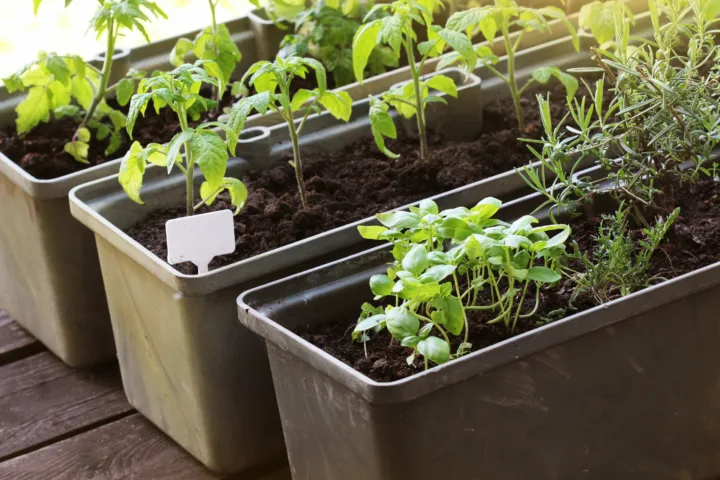
Basil, chives, parsley, and mint live right outside my kitchen door. Mint stays in its own pot because it tries to take over everything. Rosemary and thyme prefer the drier side of the balcony where the sun hits hardest.
I harvest constantly. That keeps them bushy and stops them from flowering too early.
Flowers and Foliage for Color
Petunias, calibrachoa, and verbena bloom nonstop if I deadhead. Coleus gives me foliage color when flowers take a break. Succulents handle the hottest, driest spots where nothing else survives.
I mix edible and ornamental in the same pot sometimes. Purple basil next to orange marigolds. Cherry tomatoes cascading over the side of a pot filled with trailing lobelia. Looks good. Feeds me.
Containers I Actually Use and Why
Material matters more than style. Porous pots dry out fast. Plastic and glazed ceramic hold moisture longer.
I keep a mix:
- Fabric grow bags for tomatoes and peppers. Roots get air. They never get waterlogged. Cheap and fold flat for storage.
- Terracotta for herbs and succulents. Pretty. Breathes. I water more often in summer.
- Large plastic or resin pots for mixed displays. Lightweight. Easy to move. Drainage holes are non-negotiable.
- Hanging baskets and wall planters for vertical space. My balcony railing holds three of them.
Repurposed items work too. An old colander lined with coco coir became a strawberry planter. Tin buckets hung on the fence hold herbs. I drill holes in everything that needs them.
Size counts. Bigger pots hold more soil and stay moist longer. I rarely use anything smaller than twelve inches across for vegetables. Herbs and flowers can go smaller.
Reserve heavy glazed or terracotta pots for stable spots, especially on balconies, and use fabric bags where seasonal rearranging matters.
How I Set Up a Container So It Survives
Bad soil kills more plants than anything else. Garden dirt turns to concrete in a pot. I never use it.
I fill every container with a quality potting mix. Sometimes I mix in extra perlite for drainage and a bit of compost for food. Leave an inch of space at the top so water doesn’t run over the rim.
Drainage holes come first. Always. I add a layer of broken pottery or coarse gravel only in the very largest pots. Most of the time the mix alone drains fine.
Watering is the daily habit. Containers dry out faster than ground beds. I stick my finger in the soil. If the top inch feels dry, I water until it runs out the bottom. Hot days mean daily checks. Cooler weather stretches the time.
Fertilizer keeps things going. Potting mix runs out of nutrients after a few weeks. I use a balanced liquid feed every two weeks during the growing season. Slow-release granules at planting time help too.
Sun matters. Most vegetables and flowers want six hours. Leafy greens and some herbs forgive less. I watch the light on my balcony for a few days before I plant. Then I match the plant to the spot.
Raise balcony containers slightly on pot feet or slats, keeping drainage holes clear and preventing wet pots from damaging the surface.
Vertical Tricks That Multiplied My Growing Space
My balcony has walls and a railing. I use both.
Wall-mounted planters hold herbs at eye level. A simple trellis behind a large pot lets cucumbers or pole beans climb. Hanging baskets turn empty air into productive space.
Stacked pots create height without taking floor space. I place a smaller pot on an overturned empty one or on bricks. Different levels make the whole arrangement look fuller.
One year I trained a determinate tomato up a small tomato cage inside the pot. The fruit hung at perfect picking height. No sprawling vines stealing room.
Vertical growing changed everything for me. Suddenly the same square footage produced three times the harvest.
Seasonal Swaps Keep Things Interesting
Containers make seasonal changes easy. I refresh the top layer of soil and swap plants when the weather shifts.
Spring starts with pansies, violas, and early greens. Summer brings heat lovers: tomatoes, peppers, petunias, coleus. Fall means more greens, ornamental kale, and late-blooming asters. Winter is quiet. I move the hardiest pots against the wall and cover them on the coldest nights.
I keep a few evergreen options too. Dwarf conifers and some succulents stay outside year-round in my climate. They give structure when everything else dies back.
The ability to change the look without digging new beds keeps me excited. My patio never looks the same two months in a row.
Mistakes I Made So You Don’t Have To
I overwatered at first. Roots sat in soggy soil and rotted. Now I check before I water.
I bought pots that were too small. Plants got root-bound and stressed. Bigger is almost always better.
I planted sun lovers in shade and vice versa. They struggled. Matching the plant to the light fixed that fast.
I forgot to fertilize. Growth stalled. Regular feeding brought everything back.
I crowded too many plants in one pot. Airflow suffered and disease showed up. Now I follow spacing guidelines and thin if needed.
Every mistake taught me something useful. The plants bounced back once I adjusted.
My Current Favorite Combinations
These three setups work hard for me right now.
The salad bowl. A wide shallow pot holds mixed lettuce, spinach, and radishes. I cut leaves for dinner several times a week. New growth keeps coming.
The pizza pot. One large container with a bush tomato, basil, and oregano. Everything I need for a simple sauce sits together. The scent alone makes me happy.
The color cascade. Thriller of upright salvia. Fillers of trailing petunias and calibrachoa in matching tones. Spiller of sweet potato vine. It looks full from the first week and keeps blooming until frost.
I change the exact plants each year, but the structure stays the same. Reliable. Pretty. Productive.
Frequently Asked Questions
What are the easiest container gardening ideas for complete beginners? Start with herbs in individual pots or a simple mixed flower pot using the thriller-filler-spiller method. Basil, chives, and petunias forgive a lot of early mistakes and give quick results.
How often should I water container plants? Check the soil daily in hot weather. Water when the top inch feels dry. Most of my pots need water every day or two in summer and less often when temperatures drop.
Can I grow vegetables successfully with container gardening ideas on a balcony? Yes. Bush tomatoes, peppers, leafy greens, and strawberries all produce well in the right size pots with enough sun. I harvest from my balcony every week from late spring through fall.
Do I need special soil for containers? Regular garden soil packs too tightly. Use a bagged potting mix made for containers. It drains well and stays light enough for roots to grow freely.
What size container works best? Bigger usually wins. Aim for at least five gallons for tomatoes and peppers. Herbs and flowers can manage in smaller pots, but larger ones dry out slower and need less frequent watering.
I still walk out to my balcony most mornings and feel a small rush of pride. What started as a desperate experiment now feels like a real garden. Messy sometimes. Imperfect always. Alive.
Pick one pot this weekend. Fill it with good mix. Add a couple of plants that match your light. Water them. Watch what happens.
That’s how it starts. One container at a time. The rest grows from there.