
I started growing container fruit trees because my patio measures about twelve by eight feet and the soil under the concrete is pure clay. No room for a traditional orchard. No decent dirt. I still wanted real fruit I could pick myself.
Honestly? The first two seasons felt like a string of quiet failures. Leaves yellowed. Fruit dropped. One tree just quit. Then I stopped copying random advice and paid attention to what my own pots actually needed. Now I harvest lemons in winter and figs in summer from the same small space. This is what worked for me.
Why I Turned to Container Fruit Trees
Space forced the choice. Apartments, balconies, rented yards, and city lots all share the same limit. You cannot dig a big hole. You can still grow fruit.
I also gained control. I move the pots when frost threatens. I change the soil mix when something looks off. I water exactly when the surface dries. Garden soil stays put and does whatever the weather decides. My containers listen to me.
See, the mobility part surprised me most. One hard freeze used to wipe out any citrus I tried outdoors. Now I roll the pots into the garage for a few months and they bounce right back in spring. That alone kept me going after the early losses.
The Best Container Fruit Trees I Actually Grow
I stick to trees that stay manageable and produce without constant drama. Full-size trees in pots just fight the container. Dwarf or naturally compact types settle in and fruit.
Check the rootstock and mature height on the label, not the tree’s current size. A young “dwarf” can still outgrow a patio pot.
Meyer Lemon
This one earns its keep every year. My Improved Meyer lemon sits in a fifteen-gallon pot and still gives me fruit nearly year-round once it settled. The flowers smell like pure happiness. The fruit tastes sweeter than grocery lemons. I bring it inside before the first hard frost. It has never minded the move.
Figs
Brown Turkey and similar types love root restriction. Mine fruits better in a pot than any in-ground fig I ever tried at a friend’s place. Fifteen to twenty gallons works fine. I leave it outside in my zone with root protection and it keeps producing. Self-fertile. Low fuss. Perfect starter tree if you want results fast.
Columnar Apples and Dwarf Peaches
These stay narrow enough for a balcony railing line. I run two columnar apples side by side for better pollination. The peaches stay short and give full-size fruit. Both need a solid twenty-gallon pot once mature. They handle cold better than citrus, so they stay outside with a little insulation around the pot.
Blueberries and Pomegranates
Blueberries demand acid soil and a wide pot. I give them twenty-plus gallons and they reward me with handfuls of berries. Pomegranates stay shrubby and tough. Both handle my summer heat without complaint.
I avoid anything that needs a giant rootstock or takes a decade to fruit. Life is short. I want harvests while I still remember why I planted the thing.
Choosing Pots and Soil That Do Not Betray You
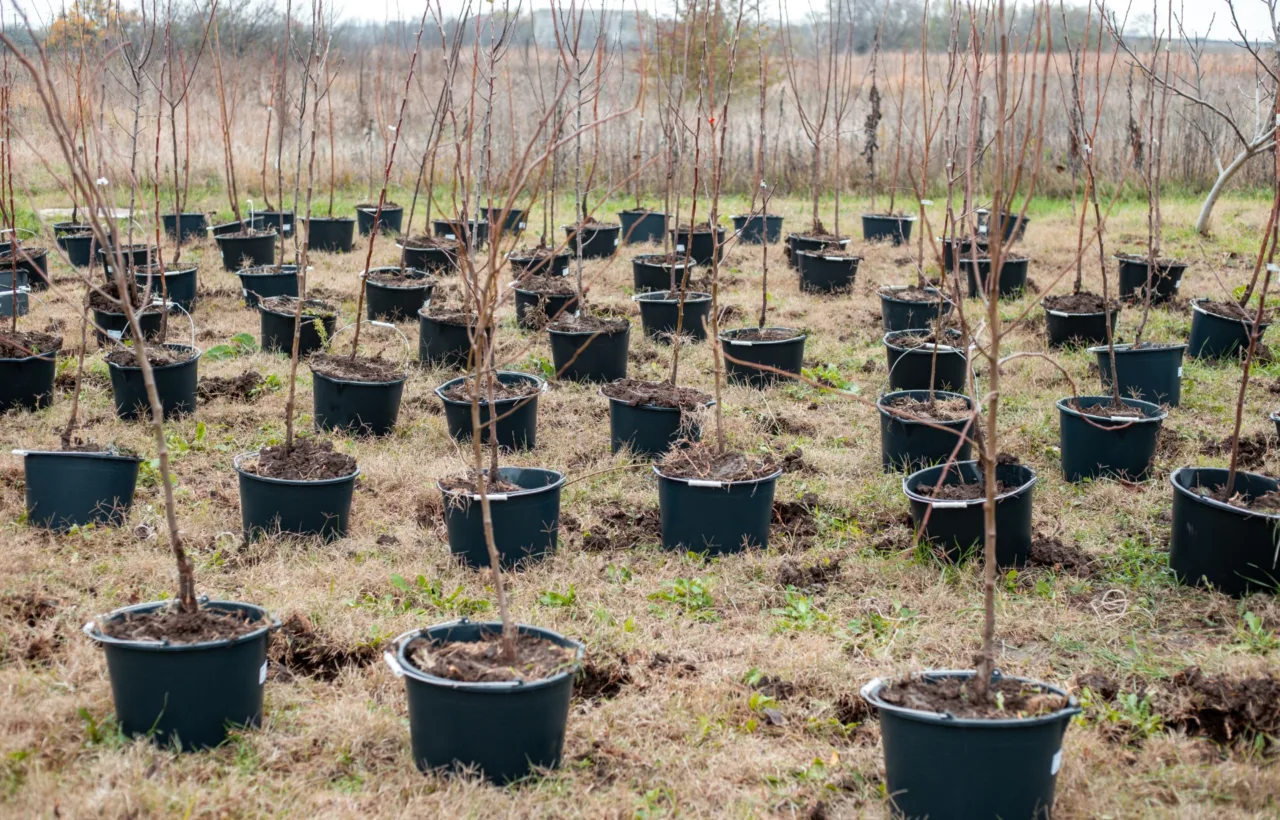
Size matters more than looks. I start young trees in five to ten gallons and step them up every couple of years. Mature trees live in fifteen to twenty-five gallons depending on the type. Go smaller and the roots choke. Go too big too soon and the soil stays wet forever.
Drainage holes are non-negotiable. I drill extra ones if the pot looks stingy. Fabric grow bags work great for figs and blueberries because they air-prune roots. Plastic holds moisture better for citrus. I skip the gravel layer at the bottom. It creates a water table that sits too high. Mesh over the holes is enough.
Soil recipe I use now:
- Equal parts quality potting mix
- Perlite
- Coco coir
For blueberries I swap in more peat or pine bark to keep the pH low. Never garden soil. It packs down and kills drainage. I top-dress with compost every spring and replace the top few inches when the mix looks tired.
Keep blueberries separate from alkaline-loving trees: shared potting mixes or lime-containing amendments can quickly raise their root-zone pH.
Watering and Feeding Without the Guesswork
Containers dry out faster than ground. In summer heat I check the top inch or two every day. Dry? I water until it runs out the bottom. Soggy? I wait. Overwatering killed more of my early trees than any pest.
I feed through the growing season because nutrients wash out of pots. Balanced slow-release in spring. Liquid feed every few weeks after that. Citrus gets a formula with extra iron and micronutrients. Too much nitrogen and I get leaves instead of fruit. I learned that the hard way.
Pruning stays simple. Late winter I cut out dead or crossing wood and keep the center open. Citrus gets light shaping any time. Root pruning every few years keeps the tree from circling itself into a knot. I just slide the root ball out, trim the outer edges, and refresh the mix.
Once monthly, flush each container with extra water to carry accumulated fertilizer salts out through the drainage holes.
Winter Care That Kept My Trees Alive
Hardy trees stay outside. I push the pots against the house wall, mulch the top heavily, and wrap the sides with burlap or bubble wrap on the coldest nights. Roots suffer more than branches in a pot.
Tender ones move inside. Citrus goes to a bright window or under a grow light. Figs and pomegranates drop leaves and rest in a cool garage around forty degrees. I water sparingly. They wake up ready when spring returns.
I used to leave everything outside and hope. That hope cost me two trees. Now I treat winter as part of the plan instead of a surprise.
Mistakes I Made and Fixed
I started with pots that looked pretty but held almost no soil. Roots hit the walls in months. Growth stalled. Fruit never came. Bigger pots fixed that.
I watered on a schedule instead of checking the soil. Some weeks the mix stayed soaked. Roots rotted. Now the finger test rules.
I used garden dirt once. Once. It compacted into concrete. Lesson learned.
I also chased fancy varieties that needed perfect conditions. Simple self-fertile trees that tolerate pots gave me the first real harvests. Fancy can wait until the basics work.
Frequently Asked Questions
Do container fruit trees really produce much fruit? Yes. Mine do. Yields stay smaller than in-ground trees, but the fruit tastes better and arrives fresher. A mature Meyer lemon or fig in a good pot still fills a bowl regularly.
What size pot do I need for container fruit trees? Start small and step up. Most mature trees settle into fifteen to twenty-five gallons. Columnar types can stay a bit smaller. Always prioritize drainage and width over height.
Can I grow container fruit trees indoors year-round? Citrus can live inside with strong light. Most others need outdoor seasons and some winter chill. I move mine in only for protection, not permanent indoor life.
How often should I repot container fruit trees? Every two to three years or when roots circle the pot. I root-prune at the same time and refresh the soil. Skipping this slowly starves the tree.
Are container fruit trees harder than regular garden trees? They need more frequent water and feed because the soil volume is limited. Once you build the habit, the control and mobility make them easier in small spaces.
I still check my pots every morning with coffee in hand. Some days the only harvest is a single ripe fig or a lemon for tea. Those mornings feel better than any big supermarket run. Start with one solid pot and one reliable tree. Pay attention to the soil and the seasons. The fruit follows.