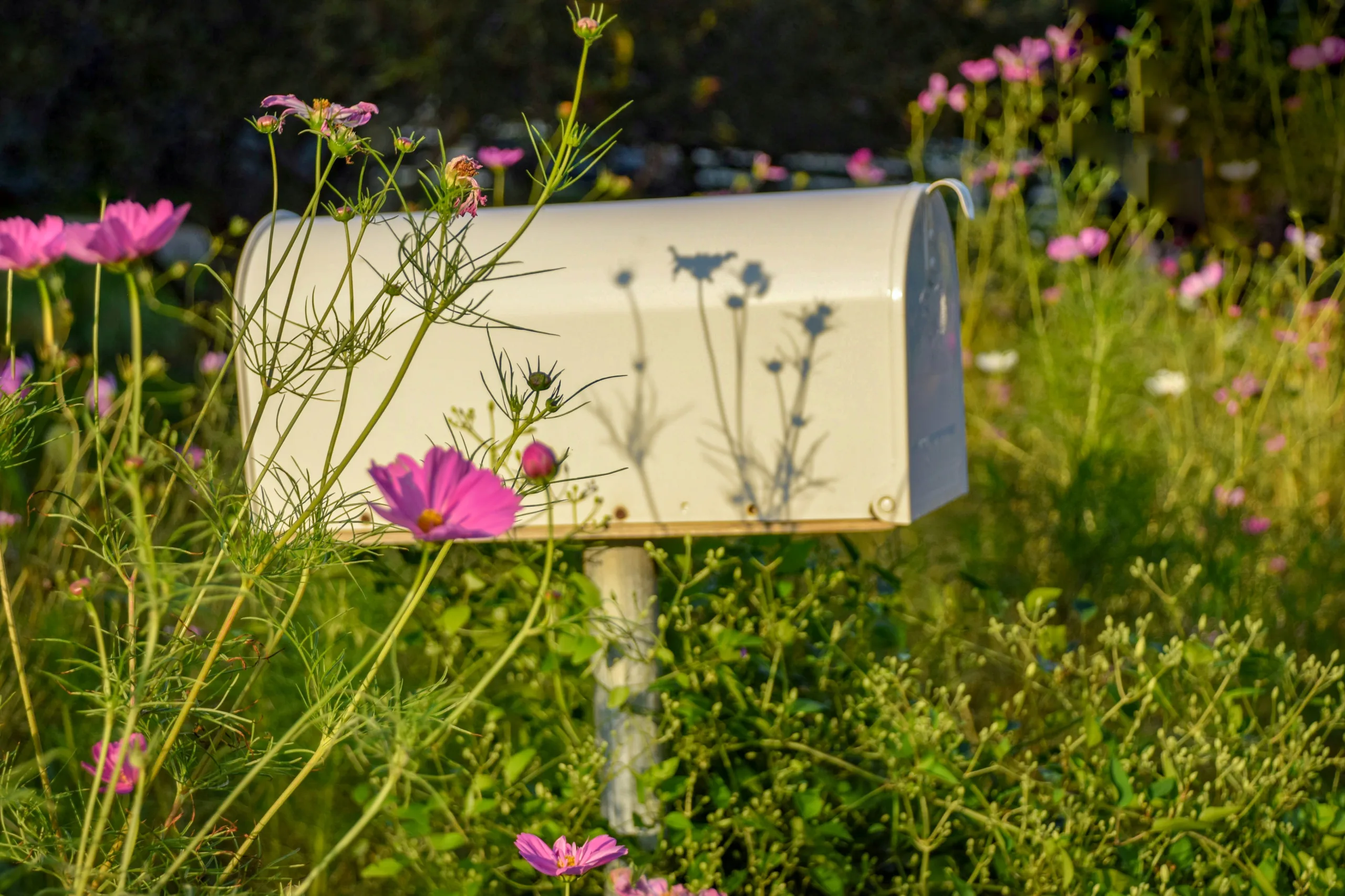

The mailbox planting ideas that last are compact, drought-tough, and easy for a carrier to reach. A 3-foot bed of sturdy perennials, one low evergreen, and a clean edge will do more for curb appeal than a ring of thirsty annuals that collapse in July. Curbside soil is usually compacted, hot from pavement, and salted or plowed in winter. Plant for those conditions first, then add color. Keep the door, flag, and house numbers visible, and leave enough space that no one has to shove through stems to drop off mail.
Check Clearance Before You Buy a Single Plant
Pretty plants fail this job when they hide the box or snag a sleeve. The U.S. Postal Service wants the bottom of a curbside box 41 to 45 inches above the road surface and the door 6 to 8 inches back from the curb. Vegetation cannot block that reach. If a carrier has to fight through roses or tall grass, delivery can stop until the path is clear.
Keep mature plants 12 to 18 inches away from the post and farther from the door if the carrier stays in a vehicle. Address numbers need a clean sightline from the street. Tall plants belong behind the box as you face it from the road, never in front of the opening.
Call 811 a few business days before you dig, even for a shallow flower ring. Utility lines often run along the curb strip, and a shovel can hit them faster than you expect. Check HOA rules and local right-of-way limits too. Many communities cap plant height near the street or ban vines on the post.
Choose Plants for Heat, Salt, Shade, and Deer
Match the plant to the strip you actually have, not the garden in your head. Most mailbox sites get harsh afternoon sun and reflected heat from asphalt. Some sit in the shadow of a tree or garage. Winter salt and piled snow change the shortlist again.
Use the USDA Plant Hardiness Zone Map before you fall in love with lavender or rosemary. A plant that thrives two zones warmer will look brave in May and dead in March. When in doubt, pick a variety rated for your zone or one zone colder.
| Plant | Site it handles | Mature height | Main tradeoff |
|---|---|---|---|
| Sedum ‘Autumn Joy’ | Hot, dry, poor soil | 18–24 in. | Looks plain until late summer |
| Catmint ‘Walker’s Low’ | Sun, deer pressure, long bloom | 18–24 in. | Needs a haircut after the first flush |
| Creeping thyme | Gravel, edging, light footsteps | 2–4 in. | Rots in wet clay |
| Dwarf boxwood ‘Green Gem’ | Formal look, winter structure | 24–36 in. | Must stay trimmed off the door |
| Blue fescue or compact daylily | Heat, mixed beds, low effort | 12–24 in. | Daylilies can attract deer |
Coneflower, black-eyed Susan, Russian sage, yarrow, and compact salvia also earn their keep in full sun. In part shade, coral bells, liriope, Japanese forest grass, and hosta work if deer are not a nightly problem. Skip anything with thorns, aggressive runners, or a habit of covering the flag.
Five Mailbox Planting Ideas Worth Copying
You do not need a designer layout. You need one clear shape, two or three plant types, and an edge that keeps grass from creeping in.
The Drought Ring for Full Sun
Cut a circle 3 to 4 feet across. Put one upright plant slightly behind the post, such as compact Russian sage or ‘Autumn Joy’ sedum. Fill the middle with catmint or coreopsis. Edge with creeping thyme or low sedum so the bed looks finished from the street. This is the workhorse among mailbox planting ideas because it blooms for months and asks for little water after the first season.
The Evergreen Frame for Winter
A mailbox that goes bare from November to April looks abandoned. Plant one or two dwarf evergreens behind or beside the post, then tuck flowering perennials in front. Dwarf boxwood, ‘Blue Star’ juniper, or a tight mugo pine hold the shape when everything else dies back. Keep the evergreen shorter than the box and at least a forearm’s length from the door.
Two Heavy Planters When You Cannot Dig
Some strips are solid clay, full of utilities, or owned by the city. Two matching pots on either side of the post solve that without a shovel. Use containers wide enough that they will not blow over, and fill them with potting mix, not yard dirt. Mix a small upright grass or dwarf evergreen with a trailing plant such as calibrachoa or creeping sedum. Water planters more often than in-ground beds. They dry out fast next to pavement.
A Shade Bed That Still Looks Intentional
Shade mailbox gardens fail when people jam sun plants into a dark corner and wait. Use foliage first. Coral bells, hosta, ferns, and liriope give color without demanding six hours of sun. Add impatiens or begonias only if you will water them. Keep the tallest leaves behind the box so the bed still reads as layered from the street.
Build a Small Bed That Does Not Bake or Sour
Grass right against the post always looks unfinished, and turf roots fight flowers for water. Remove the sod, loosen the soil, and mix in compost so the first inches drain instead of turning to concrete. A low raised ring of brick or wall block helps where road salt and plow slush collect. Twelve inches of better soil beats a deep hole in dead clay.
Follow a simple order:
- Mark a 3- to 4-foot bed and call 811.
- Strip grass, loosen soil, and add compost.
- Set plants with the tallest behind the box and the lowest at the street edge.
- Leave 12 to 18 inches of open space at the door.
- Mulch 2 inches deep, keeping mulch off stems and the post.
Water deeply for the first two months, then taper off if you chose drought-tolerant plants. A soaker session once or twice a week beats a daily sprinkle that never reaches the roots. Do not run irrigation lines over marked utilities.
Skip These Plants Next to the Post
Some favorites become a nuisance the minute they sit beside a delivery box. Thorny roses, blackberries, raspberries, barberry, and prickly pear can scratch a carrier who is just trying to open the door. Aggressive vines such as English ivy, trumpet vine, and unbound climbing roses swallow the flag and pry at hardware.
Bee-heavy plants right against the opening create a different problem. Bee balm, large lavender masses, and untrimmed mint pull pollinators into the exact spot a hand has to reach. Pollinator plants belong in the bed, just not smashed against the latch. Mint, bishop’s weed, and unbound ribbon grass will leave the circle and claim the lawn.
The consequence is not only an unkempt look. Overgrown or hazardous plantings can delay mail and force a midseason teardown when you already have better things to do.
Frequently Asked Questions
What plants work for most mailbox planting ideas?
Drought-tolerant perennials that stay under about 24 inches in front of the box: sedum, catmint, compact daylilies, coreopsis, creeping thyme, and dwarf ornamental grasses. Add one small evergreen if you want winter structure. Choose varieties that match your sun exposure and hardiness zone rather than whatever is blooming at the garden center that weekend.
How far should plants sit from a mailbox?
Give the post 12 to 18 inches of breathing room and more space at the door if the carrier reaches from a truck. Mature growth should never cover the door, flag, handle, or house numbers. If you have to push stems aside to collect mail, the plants are too close.
Can I use a mailbox planter box instead of a garden bed?
Yes, if digging is off-limits or the soil is hopeless. Choose a stable planter that does not block the door or reduce the box height below USPS range. Use potting mix, a compact plant list, and a saucer or drainage plan so water does not stain the sidewalk. Planters need more summer watering than a mulched in-ground ring.
What if deer treat my curb like a buffet?
Lean on scented or textured plants deer usually skip: lavender, catmint, Russian sage, yarrow, ornamental grasses, and many sedums. Hostas, tulips, and tender annuals are easy snacks. No plant is fully deer-proof when food is scarce, so keep the bed small enough that a few missing stems do not wreck the whole design.
Will an HOA allow plants around the mailbox?
Often yes, if the planting stays low, tidy, and clear of the street. Many associations limit height near the curb or want a submitted plant list. Native and drought-tolerant designs are easier to approve than vegetables, tall grasses, or vines on the post. Read the guidelines before you buy, not after the plants are in the ground.
Start With One Ring and One Tough Plant
Do not rebuild the whole frontage because a Pin looked lush. Stake a small circle, leave the carrier a clear reach, and plant three things that can handle heat without weekly heroics. If the first season looks sparse, that is normal. Perennials fill in. Annuals can punch color into the gaps later.
The mailbox is the first thing people see and the one spot you cannot hide behind a fence. Give it plants that earn their keep, then walk away and let the hose stay in the garage.