
I never thought my skinny apartment balcony could hold more than a lonely chair and a sad drying rack. Then I started my narrow balcony garden, and everything shifted. That three-foot-wide strip became the greenest part of my day. Fresh basil for pasta. Cherry tomatoes I could pick while checking emails. A quiet corner that actually felt like mine.
Honestly? I almost gave up after the first month. The wind knocked over my pots. Soil dried out in hours. Plants yellowed for no clear reason. But I stuck with it. Now I step outside every morning and feel a little proud. This is what worked for me.
Assessing the Real Limits of a Narrow Space
I measured my balcony three times before buying a single pot. Width: just under three feet. Length: about eight feet. Depth was the real constraint. I could walk sideways, but that was it.
Sunlight mattered most. My balcony faces east. Morning light hits hard for about four hours. Afternoon shade keeps things cooler. I tracked it with my phone compass and a simple notebook. Full sun plants went near the outer edge. Shade lovers hugged the wall.
Weight rules stopped me cold at first. My building has limits on what you can place on railings and floors. Wet soil gets heavy fast. I chose lightweight options from day one. Plastic pots. Fabric grow bags. Nothing ceramic that could crack or tip.
Wind was the sneaky enemy. Higher floors catch more of it. Tall plants toppled. Soil dried faster. I learned to place heavier pots against the wall and use low growers on the outer edge.
See, the key is knowing your exact conditions before you spend a dollar. Guessing leads to dead plants and wasted money.
Recheck the four-hour morning-sun pattern in summer and winter, because nearby buildings and changing sun angles can shift which plants belong at the outer edge.
Choosing Plants That Actually Survive a Narrow Balcony Garden
I started with herbs. They forgive mistakes and give quick wins. Basil, thyme, parsley, and chives all did well in my morning sun. Mint stayed in its own pot because it spreads like crazy.
Vegetables came next. Cherry tomatoes in a hanging basket gave me more fruit than I expected. Bush beans stayed compact. Leafy greens like lettuce and kale produced steady harvests. I avoided sprawling vines that needed too much floor room.
Flowers added color without demanding much. Marigolds kept pests away. Nasturtiums trailed nicely over the railing. Petunias filled gaps with bright blooms.
For shade spots I used ferns and begonias. They filled the darker corner near the door and made the whole space feel softer.
Here’s what I plant now every season:
- Herbs: Basil, thyme, parsley, chives, oregano (separate pot)
- Veggies: Cherry tomatoes, bush beans, lettuce, kale, peppers
- Flowers: Marigolds, nasturtiums, petunias
- Shade options: Ferns, begonias, ivy
I keep it simple. Three or four types at a time. Overloading the space just creates more work and less success.
Group basil, parsley, and chives together for more frequent watering, while keeping thyme and oregano in a drier, faster-draining pot.
Containers and Layout Tricks That Saved My Floor Space
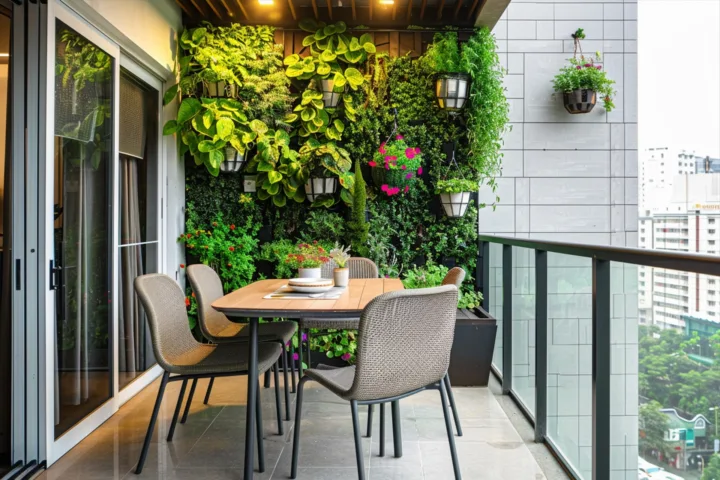
Floor space is gold on a narrow balcony. I stopped placing every pot on the ground after week two. Vertical thinking changed everything.
Railing planters became my favorite. They hang over the edge and free up the floor completely. I use them for herbs and trailing flowers. Just check that your railing can handle the weight when wet.
Fabric grow bags work great too. They fold flat when empty and weigh almost nothing. I line them along the wall side for taller plants.
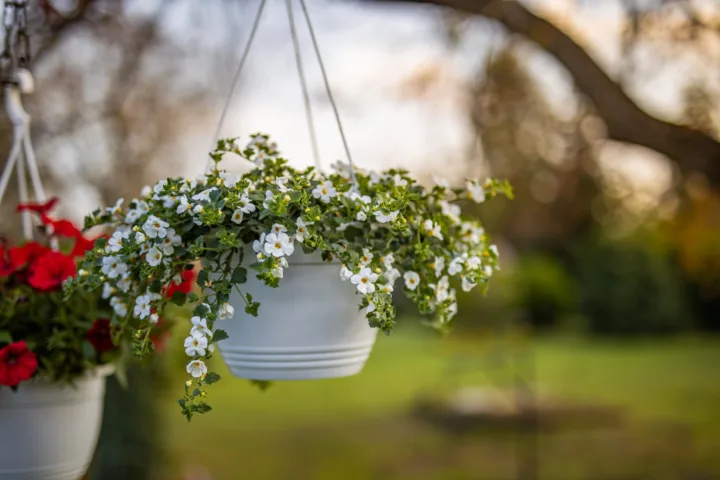
Hanging baskets from the ceiling or wall hooks give me another layer. Spider plants and cherry tomatoes thrive up high. The drip lands in a tray below so neighbors stay happy.
Tiered stands stack three levels of pots in the footprint of one. I put mine against the wall. Low growers at the bottom. Medium in the middle. Trailing plants on top.
I avoid heavy terracotta. It cracks in cold snaps and adds unnecessary weight. Lightweight plastic or resin pots in neutral colors look clean and move easily when I need to clean or rearrange.
One layout rule I follow: leave a clear walking path down the middle. Even if it is only eighteen inches wide. Clutter kills the joy.
Secure hanging baskets against balcony-wall movement, especially on higher floors, because wind can turn a swinging basket into a railing or window hazard.
Watering Without Losing My Mind
Containers dry out fast. Wind and sun make it worse. At first I lugged a heavy watering can from the kitchen twice a day. That got old quick.
Self-watering pots helped a lot. They hold a reservoir at the bottom. I fill them every few days instead of every morning. Saucers under regular pots catch overflow and keep the floor dry.
I keep a collapsible watering can on the balcony. It stores flat against the wall. On hot weeks I water early morning and again in the evening if needed.
Fertilizer stays light. A balanced liquid feed every two weeks during peak growth is enough. Too much salt builds up in containers and burns roots.
Honestly? Consistency beats perfection. Missing one day is fine. Missing a week is not.
Flush container soil with plain water occasionally to move fertilizer salts below the root zone, especially after repeated liquid feeding in hot weather.
Mistakes I Made and How I Fixed Them
I crowded everything at the start. Pots touched. Roots competed. Airflow suffered. Powdery mildew showed up. Now I leave breathing room between plants.
I chose the wrong tomato variety once. Indeterminate types grew tall and wild. They needed constant tying. Determinate or patio types stay compact and produce just as well.
I ignored drainage. A pretty pot without holes sat full of water after rain. Roots rotted. Every container now has holes or I drill them myself.
I forgot about winter. Some plants can stay out if they are hardy. Most of mine move inside or get replaced each spring. I store empty pots and bags under a cover so they last longer.
These lessons cost me a few plants and some frustration. They also taught me faster than any guide.
When powdery mildew appears, isolate the affected pot, remove infected leaves, and improve airflow before treating nearby plants.
Making the Space Feel Like More Than Just Plants
A narrow balcony garden works better when it feels usable. I added a slim folding stool that tucks against the wall. Morning coffee happens out there now. A small outdoor rug defines the sitting spot without blocking the path.
String lights hang along the railing for evening. Battery ones so I skip the outdoor outlet hunt. Privacy comes from taller plants and a simple bamboo screen on one side. It softens the view of the building next door.
I keep tools in a small waterproof box under the stool. Gloves, pruners, and a trowel stay ready. No more hunting indoors mid-task.
The goal is not a showroom. It is a spot I actually want to use.
Seasonal Adjustments That Keep Things Alive
Spring is planting time. I start seeds indoors for tomatoes and basil, then move them out after the last frost risk. Summer means more water and occasional shade cloth on the hottest days. Fall is harvest and cleanup. I pull spent plants and empty bags. Winter is rest. Hardy herbs stay. Everything else waits for next year.
I rotate a few pots each month so every plant gets its share of light. It takes five minutes and prevents one side from growing weak.
Frequently Asked Questions
Can I really grow food in a narrow balcony garden? Yes. Herbs and compact vegetables thrive if you match them to your light and use the right containers. I harvest basil and cherry tomatoes regularly from mine.
How much weight can a typical balcony hold? It varies by building. Check your lease or ask management. I stick to lightweight pots and avoid overloading any one spot.
What if my balcony gets almost no sun? Focus on shade-tolerant plants like ferns, begonias, and leafy greens. They still look good and some produce usable leaves.
Do I need special soil? Regular potting mix works. I add a bit of perlite for drainage. Never use garden soil from the ground. It compacts and drains poorly in pots.
How do I stop plants from drying out so fast? Self-watering containers and consistent morning checks help the most. Group plants with similar needs together so watering stays simple.
Final Thoughts From My Own Skinny Space
My narrow balcony garden started as a frustration project. Now it is the first place I go when I need a reset. A few pots. Some vertical height. Plants that match the light. That is the whole formula.
You do not need a big yard or perfect conditions. You need to start small, watch what happens, and adjust. I still lose a plant now and then. I still forget to water on busy weeks. But the wins keep coming.
Grab a couple of railing planters this weekend. Put in something you actually want to eat or look at. Watch it grow. That first harvest or bloom will tell you everything you need to know.