
A small patio becomes a garden when you plant in layers, not when you add more paving. Useful patio planting ideas start with one check: how many hours of direct sun hit the space between late morning and midafternoon. Six hours or more is full sun and favors herbs, geraniums, and compact tomatoes. Less than that is part shade, where hostas, ferns, coleus, and salad greens hold up better. After you know the light, choose pots with drainage holes, group them in threes, and give each cluster one tall plant, one mid-height filler, and one trailer. That is the working formula. What follows is how to pick plants for color, food, or privacy and how to pot them so they survive heat.
Match Plants to the Light You Actually Get
Guessing the light is the fastest way to waste a garden-center run. Stand on the patio at 10 a.m., noon, and 3 p.m. and note where the sun lands. A west-facing slab can cook plants that looked fine in a shaded nursery aisle. A north-facing courtyard can starve a petunia that needs six hours of direct sun to bloom.
Full sun means at least six hours of direct light. Part shade is roughly three to six hours, often morning sun with afternoon cover. Deep shade under a roof overhang is stricter. Few flowering annuals thrive there, so lean on foliage: coleus, caladium, hosta, fern, and heuchera.
Climate matters as much as the clock. Look up your location on the USDA Plant Hardiness Zone Map before you buy a shrub meant to last more than one season. A plant hardy in the ground can still fail in a pot because container roots get colder than bed soil.
If the patio is a heat trap against brick, choose rosemary, lavender, lantana, portulaca, zonal geraniums, and dwarf grasses. If it stays cool and damp, plant hostas, impatiens, begonias, and parsley instead.
Ready-to-Copy Patio Planting Ideas by Job
Pretty is not a plan. Decide what the planting should do, then choose plants that can do that job in your light.
Color and scent next to seating
For a sunny seating corner, one 16- to 20-inch pot of lavender or rosemary, two mid-size pots of geraniums or salvias, and a trailer of thyme or sweet alyssum will smell good when you sit down. Lavender still looks tidy after bloom because the silver foliage stays.
For shade, skip a flower-only mix. Coleus, a compact hosta, and a trailing begonia give color without six hours of sun. Keep the palette tight. Two flower colors plus several greens look calmer than a rainbow of singles against the house.
Edibles within arm's reach of the kitchen
Herbs earn their space because you use them. Basil, chives, and parsley belong by the door. Rosemary and thyme like the hottest, driest corner. Mint gets its own pot. It will take over a mixed planter.
Salad greens and Swiss chard tolerate four to six hours of sun and sulk less in afternoon shade than tomatoes do. Compact cherry tomatoes and peppers need at least five gallons of mix, full sun, and steady water. A hanging basket of nasturtiums adds edible flowers without another pot on the floor.
Screening without building a fence
One oversized pot in a corner does more for privacy than six tiny pots along the edge. Use an 18- to 24-inch container with a dwarf arborvitae, compact hydrangea, clumping ornamental grass, or star jasmine on a slim trellis. Evergreens keep January from looking empty. Grasses add movement, which makes paving feel less like a parking pad.
| Job on the patio | Full sun (6+ hours) | Part shade or shade | Pot note |
|---|---|---|---|
| Fast color | Geranium, petunia, lantana, zinnia | Begonia, impatiens, coleus, caladium | Same water needs in one pot |
| Kitchen herbs and food | Basil, rosemary, thyme, cherry tomato | Lettuce, parsley, chives, Swiss chard | Tomatoes need 5 gallons or more |
| Year-round shape | Lavender, rosemary, dwarf conifer | Boxwood, hosta, fern, heuchera | Bigger pot buffers heat and cold |
| Soft privacy | Tall grass, rosemary in a trough | Hydrangea, jasmine on a trellis | One large corner pot beats minis |
Do not mix drought-tolerant lavender with thirsty basil in the same container. You will water for the needy plant until the dry-loving one rots.
How to Arrange Pots So a Small Patio Looks Lush
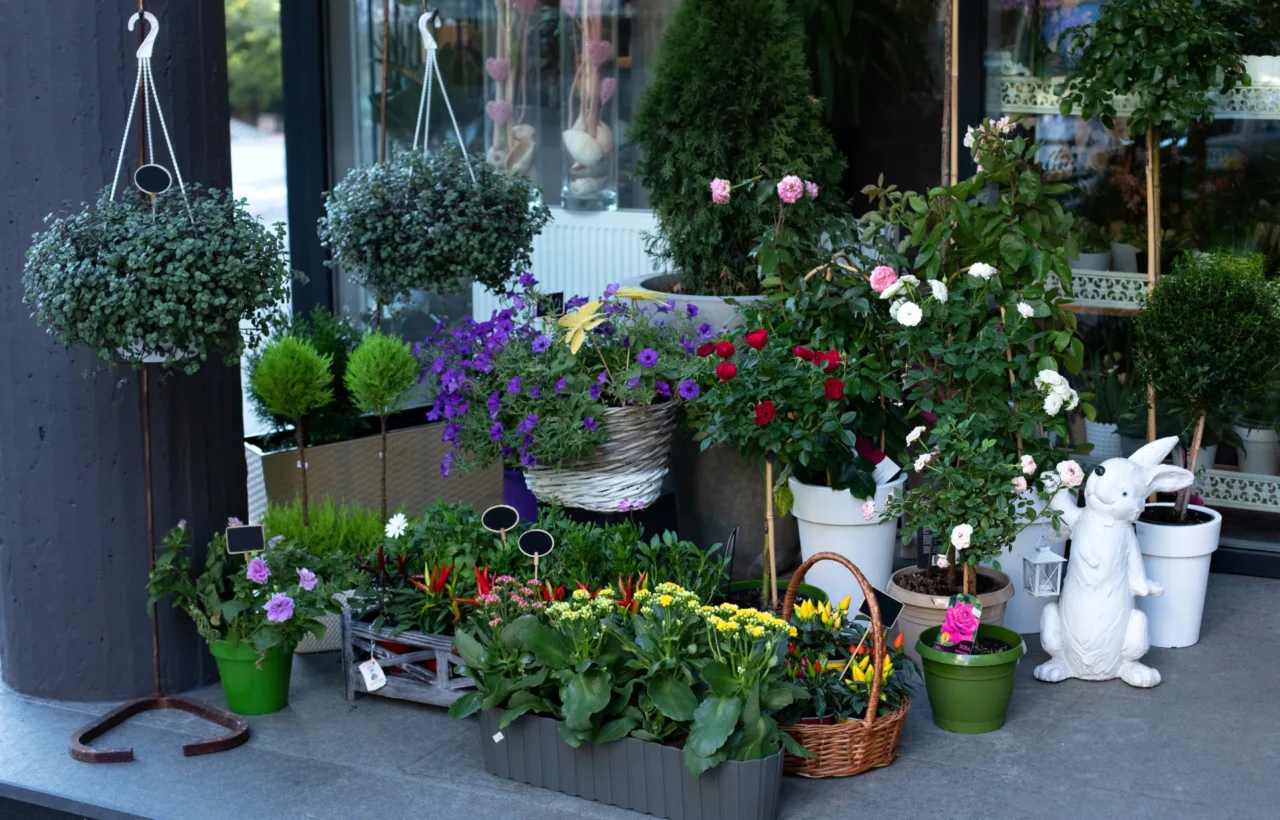
Scattered pots read as clutter. A tight cluster reads as a garden. Leave walking room first, then plant the leftover edges and corners.
Use one tall plant, one filler, and one trailer
This recipe stops a pot from looking like one bloom on a stick. The tall plant gives height: a dwarf grass, upright rosemary, or a small canna in a warm climate. The filler is the mid-height body: coleus, geranium, heuchera, or a mound of basil. The trailer softens the rim: thyme, sweet potato vine, bacopa, or a trailing begonia.
You can build that mix in one large pot or split it across three pots of different heights. The eye still needs a high point, a middle, and an edge that breaks the hard line of the container.
Group containers in odd numbers
Three pots of mixed heights beat five matching ones in a row. Set the tallest pot slightly back and off-center. Bring the smallest pot forward. Lift one container on a stand so trailers show.
Keep pathways clear. Plants that snag chairs get shoved aside, and the design falls apart. On a tiny patio, add a trellis pot or hanging basket instead of another floor container. Matching pairs still make sense when you flank a door.
Pot Size, Mix, and Drainage That Keep Roots Alive
Patio plants fail in July more often than they fail in April. Heat, small pots, and soggy saucers do most of the damage.
Choose the pot for the mature plant. Small annuals can live in a 10- to 12-inch pot. Mixed plantings want 14 to 16 inches. Shrubs, grasses, and dwarf trees need 18 to 24 inches and real depth. A pot that is too small dries out between morning and dinner, then the plant stalls.
Use potting mix, not dirt from a bed. Garden soil packs down and cuts off air. Illinois Extension is blunt: do not fill pots with unmodified garden soil. A light mix of peat or coconut coir, compost, and perlite stays open enough for roots. Leave about an inch below the rim so water does not sheet off.
Every pot needs drainage holes. Raise containers on pot feet so water can leave. Empty saucers after watering. Standing water cooks roots in summer and stains stone.
Leave gravel out of the pot
Rocks in the bottom do not improve drainage. They shrink the soil volume and push the wet zone higher, closer to the roots. Holes plus a porous mix drain a pot. Gravel does not. Cover holes with mesh if you want to keep mix from washing out.
Water until it runs out the bottom, then wait until the top inch or two feels dry. Small pots in full sun may need that every day in a heat wave. Large pots and shade plantings can wait longer. Feed containers during the growing season. Nutrients wash out of pots faster than they do in beds.
Mistakes That Leave Patio Plantings Sparse
Most thin-looking displays come from a short list of avoidable errors.
- Buying six tiny pots instead of two generous ones. Small containers dry out, blow over, and never create a canopy.
- Matching a plant to the tag photo without checking afternoon sun. A sun petunia on a covered porch gets tall and flowerless.
- Using cachepots with no holes, then watering on a schedule. Roots sit in a hidden puddle and collapse in a week of heat.
- Planting for May color only. When the pansies fade, the patio goes empty unless an evergreen or foliage plant is holding the structure.
- Ignoring winter for anything you hoped would return. Treat tender plants as seasonal, or protect hardy ones as if they live two zones colder.
Terracotta dries fast, which helps Mediterranean herbs and hurts thirsty annuals. Plastic and fiberglass hold moisture longer. Glazed ceramic can crack if it stays wet and freezes.
If the patio sits on a deck, mind the weight. Wet soil is heavy. Place large pots near posts, use pot feet so water does not sit on the boards, and do not fill giant planters with garden soil to save money.
Frequently Asked Questions
What patio planting ideas work in shade?
Foliage first, flowers second. Coleus, hostas, ferns, heuchera, caladiums, and wax or Dragon Wing begonias handle low light better than most sun annuals. Impatiens still bloom in shade if you keep them watered. For food, grow lettuce, parsley, chives, and mint. Put the largest pot in the brightest pocket you have, even if that is only morning sun.
How big should a patio pot be?
Go larger than the nursery pot the plant arrived in. Herbs can live in 1- to 3-gallon containers. Mixed flower pots water more evenly at 14 inches wide or more. Patio tomatoes and peppers want five gallons minimum. Dwarf shrubs need 18 to 24 inches so the soil volume buffers heat and cold.
Can patio plants stay outside in winter?
Only if the plant, the pot, and your climate agree. Penn State Extension notes that container roots can reach air temperature, so treat potted plants as two hardiness zones colder than the same plant in the ground. Use frost-proof containers. Group pots against a wall, wrap them, or move them to an unheated garage. Clay often cracks in freeze-thaw weather.
How often do patio containers need water?
There is no weekly schedule that fits every pot. Check the mix with a finger. Water when the top inch or two is dry, and water deeply until it drains. In full summer sun, small pots can need water daily. Shade, larger soil volume, and a bark mulch on the surface stretch the gap. Do not leave water sitting in saucers.
Which plants stay tidier near a dining table?
Compact evergreens, rosemary, and tidy grasses drop less mess than big deciduous shrubs. Avoid plants that shed sticky fruit or a carpet of petals over plates unless you like the cleanup. If you want flowers near seating, choose varieties that hold their blooms after a windy afternoon.
Plant One Cluster This Weekend
Walk the patio once and mark the sun. Then buy three pots that share a style but not a height, fill them with potting mix, and plant one job only: scent by the chairs, salad by the door, or a tall screen in the ugliest corner.
Resist filling every square foot. A clear path and one abundant grouping look more finished than a dotted line of leftovers. Next season you can add a climber. Right now, give the space a high point, a soft edge, and plants that can live in the light you actually have.