
The front of a house looks finished when plants stay in scale with the windows and leave a little air along the wall. Strong foundation planting ideas use three layers: taller evergreen anchors at the corners, mid-size shrubs in the middle, and low plants at the walkway edge. Skip the old row of identical clipped blobs. Match plants to the sun on each wall, pick compact cultivars that will not cover first-floor glass, and make the bed deep enough to look intentional. That mix gives you curb appeal in every season without turning the house into a hedge.
Read the House Before You Buy a Single Shrub
Walk the front with a tape measure and a phone camera. Note which walls get afternoon blaze, which stay dim, and where downspouts dump water. A south or west bed can cook plants that would thrive on the north side. Soil under a wide eave often stays dry because rain never reaches it, so those spots need drought-tolerant plants or a drip line.
Look at the architecture next. A symmetrical colonial can handle mirrored plantings at the door. A ranch, bungalow, or split-level usually looks better with looser groupings and a taller plant at each outer corner, not a soldier line under every window. Clemson Extension notes that modern houses do not need a continuous shrub skirt to hide the foundation. Covering every inch of masonry is an old habit, and in humid weather it can trap moisture against siding.
Check your USDA plant hardiness zone before you fall for a pretty tag. A shrub that thrives two states south may sulk or die after one hard winter.
Space Plants for Windows, Airflow, and the Wall
Plant for the size on the tag in five years, not the size in the pot today. A useful rule is to set a shrub at least half its mature width away from the house. Small shrubs usually need about 2 to 3 feet of clearance. Medium and large shrubs need more. Garden Design recommends beds 6 to 8 feet deep, with larger shrubs 5 feet or more from the foundation and a 1- to 3-foot gap you can walk for painting, inspections, and pruning.
Use the window-sill test
Any plant sitting under a window should mature below the sill. Aim for about one-third to one-half the window height. A 4-foot window wants a plant that tops out around 16 to 24 inches, not an arborvitae that thinks it is a privacy screen. Screening plants belong at corners, along a property line, or beside an ugly utility box. They do not belong under glass.
Keep water and pests from using your plants as a bridge
Grade the bed so runoff moves away from the wall. Keep mulch 8 to 12 inches off the slab so it cannot hide termite tubes or hold damp wood against masonry. LSU AgCenter guidance also warns against digging in the treated soil band right next to a slab, often the first 8 to 12 inches. Plant the shrubs farther out and leave that inner strip as gravel, bare soil, or a thin mulch-free inspection path.
Layered Foundation Planting Ideas You Can Copy
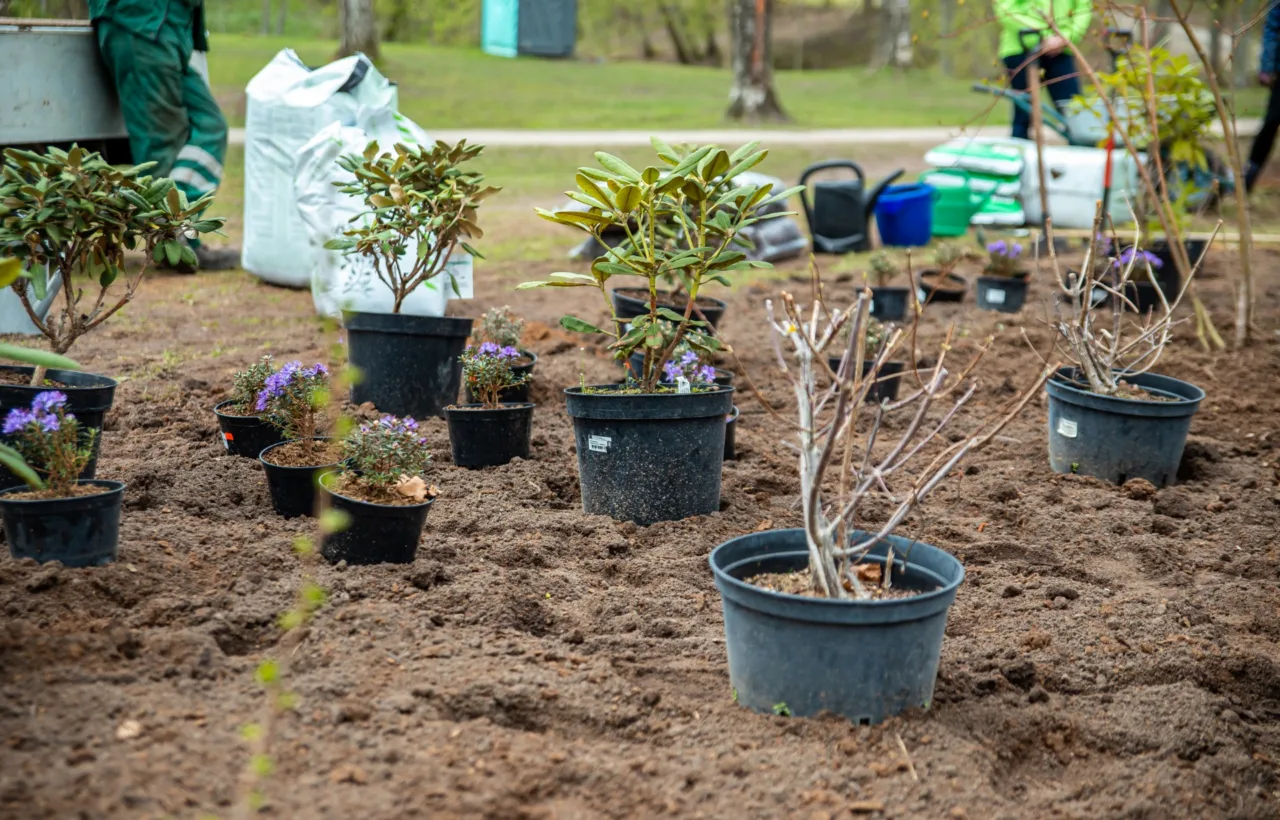
Think in rows, then repeat a few plants so the bed looks designed instead of collected. A simple mix many designers still use is about half evergreens for winter bones, a quarter flowering or deciduous shrubs, and a quarter perennials. Repeat one foliage color or one bloom color at least three times.
| Front condition | Corner anchors | Mid layer | Front edge |
|---|---|---|---|
| Sunny traditional facade | Dwarf boxwood or inkberry holly | Compact panicle hydrangea | Catmint or low sedum |
| Shady north or east wall | Dwarf yew or pieris | Oakleaf hydrangea | Hosta and heuchera |
| Informal ranch or cottage | Narrow dwarf arborvitae at corners only | Spirea or abelia | Sedge and daylily |
| Hot, dry west wall | Dwarf juniper | Russian sage or lavender | Creeping thyme or sedum |
Sunny walls that bake after lunch
Use plants that can take heat without flopping. Compact panicle hydrangeas such as Little Lime stay in the 3- to 5-foot range in many climates and do not need the acidic soil bigleaf types demand. Pair them with a tight evergreen so winter does not look empty. Catmint, dwarf spirea, and low sedum handle reflected heat from sidewalks better than thirsty woodland plants.
Shady walls that stay cool and damp
North beds reward foliage first. Oakleaf hydrangea gives summer cones, burgundy fall leaves, and peeling bark in winter. Hostas and heucheras fill the front without blocking light through the glass. Pieris or a compact rhododendron can supply spring bloom if your soil is acidic and drainage is decent. If the soil stays soggy, inkberry holly is a tougher evergreen than boxwood.
Formal houses versus casual ones
Match the haircut to the house. Formal facades can take rounded boxwood or clipped inkberry flanking the door, with a repeated white or pale bloom in between. Casual houses look strained when every shrub is sheared into a ball. Let spirea arch a little. Let a small ornamental grass move. Keep the tallest plants at the corners so the entry stays open and the roofline still reads.
Plants That Earn a Front-Yard Spot
A good foundation plant stays compact, looks like something in more than one season, and tolerates the odd mix of reflected heat, dry eaves, and compacted builder soil. Confirm mature height and width on the tag, then check the zone.
Reliable workhorses include dwarf or blight-resistant boxwood, inkberry holly, dwarf yew, compact abelia, dwarf spirea, oakleaf hydrangea, compact panicle hydrangea, pieris, catmint, heuchera, hosta, and low sedges. If you want boxwood’s shape, look for cultivars with documented blight resistance, such as selections in the NewGen series, or skip boxwood and use inkberry. University of Wisconsin Extension lists several less-susceptible cultivars and recommends buying from suppliers that inspect stock.
Leave these off the front wall unless you have an unusually deep bed and a plan for hard pruning:
- Full-size arborvitae and Leyland cypress under windows
- Forsythia, burning bush, and other wide, fast shrubs
- Running bamboo and aggressive vines against siding
- Shade trees closer than their mature canopy will allow
- Anything billed as “fast privacy” when you only need a 2-foot skirt
I’d choose the smaller cultivar every time. Constant shearing is not a design style. It is a warning that the plant is in the wrong place.
Mistakes That Make a New Bed Look Old Fast
These problems show up in year three, when the pots that looked cute at the nursery finally hit their stride.
- Planting by current pot size, then living with blocked windows and wet siding.
- Running one species in a straight line, which looks dated the first winter it has no flowers.
- Ignoring sun. A hosta on a west wall scorches. A lavender on a north wall sulks and opens the door to rot.
- Piling mulch against stems and the foundation, which hides pests and keeps wood damp.
- Making the bed too skinny. A 2-foot strip cannot hold layers, so everything gets shoved against the wall.
University of Florida guidance is blunt about another failure: planting too deep. Keep the root flare visible. A buried flare is a slow way to lose a shrub you just paid for.
Frequently Asked Questions
How far from the house should foundation plants go?
Give shrubs at least 2 to 3 feet, and more if the plant will get wide. Measure from the wall to the center of the plant, using half the mature width as a starting point. You should be able to walk behind the foliage to paint, check for pests, and water the root zone instead of the siding.
What are the simplest foundation planting ideas for a beginner?
Pick one evergreen for corners, one flowering shrub for the middle, and one low perennial for the front. Repeat that trio down the bed. Three kinds of plants, used more than once, look calmer than twelve one-offs from a weekend nursery run.
Can I plant right against a concrete foundation?
Keep a clear strip next to the wall. Plants pressed to masonry block airflow, hold moisture, and can hide termite shelter tubes. Groundcovers can sit closer than shrubs, but even those need a gap and should not climb untreated wood.
What should I plant under windows?
Choose dwarf shrubs and perennials that stay below the sill at maturity. Compact boxwood, low inkberry, heuchera, catmint, and small hostas fit many windows. If a plant will need yearly hatchet work to keep the view, it does not belong there.
Do I need evergreens in a foundation bed?
You need winter structure, and evergreens are the easiest way to get it. A bed of only hydrangeas and roses looks rich in July and bare in January. Mix enough evergreen foliage that the house still has a frame after leaf drop.
How deep should the planting bed be?
Aim for 6 to 8 feet from the wall to the lawn or walk when the lot allows it. A deeper bed lets you stack heights without crowding the foundation. If the walk sits closer than that, use fewer plants and stricter dwarf cultivars instead of cramming a full three-row plan into a sliver.
Finish One Wall Before You Redesign the Whole Yard
Start at the front door and one corner. Get the grade right, mark mature widths with spray paint, and plant the anchors first. Live with that stretch for a season before you copy it down the rest of the facade. The house should stay the star. The plants are the frame, and a good frame never covers the picture.