
Most new roses stall because the planting idea and the planting hole do not match. Start with a style that fits your sun, soil, and space, then set the plant at the right depth and spend the first season building roots. That is the useful core of rose planting ideas and how to grow them without a lot of extra fuss.
Roses reward that order. They want morning sun, soil that drains after rain, and enough elbow room for air to move through the leaves. Get those three things right and the rest of rose care gets simpler.
Pick the Rose Style Before You Dig
A planting idea is not a Pinterest mood board. It is a job description for the plant.
A hybrid tea wants a tidy bed and regular cutting. A shrub rose can sit in a mixed border and still look generous. A climber needs a sturdy support from day one. A patio or miniature rose belongs in a large pot if your only sunny spot is a patio slab.
Match the plant to the work you actually want it to do:
- A mixed border if you want color without a formal rose garden.
- A large container if the only good sun sits on paving.
- A fence, arch, or pillar if you need height and a little drama.
- A short hedge of repeat-flowering shrubs if you want a low wall of bloom.
Skip the old rule that roses must live alone in bare soil. Companions such as lavender, catmint, hardy geraniums, and alliums hide bare stems and help keep soil from splashing onto leaves. Leave 12 to 18 inches between the rose crown and the nearest neighbor so roots are not fighting for the same drink.
When and Where Roses Actually Settle In
Sun comes first. Most garden roses want at least six hours of direct light, with morning sun doing the most good because it dries dew before fungal spots get a foothold. The RHS notes that some varieties cope with about four hours, but bloom and disease resistance usually drop as shade increases.
Soil should stay moist without sitting wet. A simple test: fill a hole with water. If it still stands after two hours, plant in a raised bed or a pot instead. Roses like a slightly acidic, loamy mix, often around pH 6.0 to 6.5. Compost helps clay open up and helps sand hold water. Do not create a rich pocket in poor ground and call it done. Roots will circle that pocket and stall later.
Timing depends on what you bought and how cold winter gets. Bare-root roses go in while dormant, from late fall through early spring, as long as the ground is not frozen or waterlogged. Container roses can go in whenever the soil is workable, though spring and fall are kinder than midsummer heat. University of Missouri Extension advises spring planting where winter routinely drops below -10°F.
| Setup | Best use | Space to leave | Watch-out |
|---|---|---|---|
| Mixed sunny border | Shrub and floribunda roses | 2 to 3 ft between plants | Crowding invites black spot |
| Large pot, 18 in or wider | Patio, miniature, compact shrubs | One rose per pot | Pots dry out fast in heat |
| Arch, fence, or pillar | Climbers and ramblers | 8 to 10 ft between climbers | Weak support snaps under wet bloom |
| Formal row | Hybrid teas for cutting | 2.5 to 3 ft apart | Needs more pruning and feeding |
Keep roses out from under greedy trees. Tree roots steal water, and the canopy steals morning light.
How to Plant Roses Step by Step
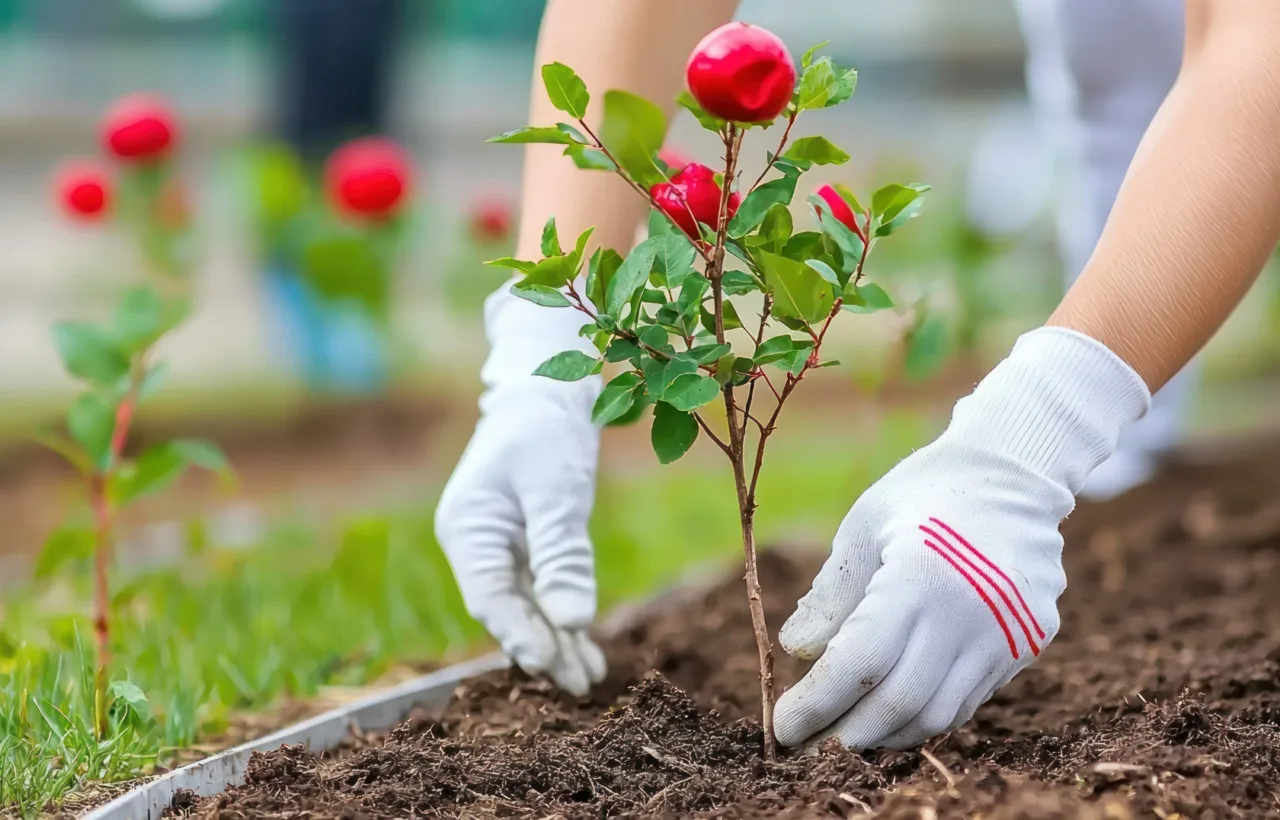
The hole matters more than the fertilizer. Dig wide, set the graft at the right height for your climate, and water until the soil slumps around the roots.
- Soak a bare-root rose for several hours, up to overnight, so the roots plump up. Water a potted rose in its container before you knock it out.
- Dig a hole about 18 inches wide and 12 to 16 inches deep, or twice as wide as a container root ball. Mix the backfill with compost, not a heap of fresh manure right against the roots.
- Make a small soil cone in the hole for bare roots and spread the roots down the sides. Tease circling roots on a potted plant so they point outward.
- Set the bud union, the knobby graft where the named rose meets the rootstock, at soil level in mild winters. In cold-winter areas, bury it 2 to 4 inches. Own-root roses have no graft knob. Plant those at the same depth they grew before.
- Backfill halfway, water hard to collapse air pockets, then finish filling. Water again. Mulch 2 inches deep, pulled back from the canes so the crown stays dry.
If you cannot plant a bare-root rose the day it arrives, keep the roots damp in a cool place or heel the plant into a temporary trench. Dry roots are the quiet killer of mail-order roses.
Do not feed a brand-new plant with a strong granular fertilizer on planting day. Roots need water and contact with soil first. A sprinkle of mycorrhizal fungi on bare roots is a reasonable extra if you already have it. It is not a substitute for sunlight and drainage.
Three Planting Ideas That Work in Real Yards
A mixed border that does not look like a rose museum
Place one or three shrub roses toward the middle of a bed that already gets full morning sun. Keep the tallest rose at the back if the bed sits against a fence. Thread catmint or hardy geranium around the skirts, then add a few alliums for spring height.
This layout works because the companions cover the woody ankles of the rose after the first flush fades. It also keeps you from packing roses shoulder to shoulder, which is how black spot travels.
A container that can actually grow a rose
Choose a pot at least 16 to 20 inches across, with real drainage holes. Use a quality potting mix, not garden soil packed into a pot. Set the rose so the finished soil sits an inch below the rim, which leaves room to water.
Patio and compact shrub roses handle this better than a big hybrid tea. Water until water leaves the drainage holes, then wait until the top couple of inches feel dry. In hot weather a pot can need water daily. That is not you being fussy. That is a small volume of soil doing a big job.
A climber that earns its arch
Put the support in before the rose. A floppy cane trained after the fact never looks as settled. Plant the rose 12 to 18 inches away from a wall or post, angled slightly toward the support, so air can move behind the canes.
Fan the first stems out wide rather than tying them into a pole. Horizontal training makes more flowering laterals. Leave 8 to 10 feet between vigorous climbers if you want a full cover instead of a tangle.
First-Year Growing Habits That Matter
The first summer is root year, even if a few flowers show up. Water deeply at the base, not over the leaves. Established garden roses often need about 1 inch of water a week, including rain. New plants need more frequent soaks until you see steady new growth.
Morning watering is the habit that pays off. Wet leaves sitting into the night give black spot an easy start. A soaker hose under mulch beats a sprinkler every time.
Hold off on heavy feeding until the plant is pushing several inches of new growth. After that, a balanced rose fertilizer during the growing season is enough. Stop feeding late in the season in cold climates so the plant can harden for winter.
Deadhead spent blooms on repeat-flowering types to keep the plant from wasting energy on hips. Leave the first-year pruning light. Remove only dead, snapped, or crossing wood unless the grower already cut the bare-root canes short, which many do before shipping.
Planting Mistakes That Quietly Ruin New Roses
Planting where an old rose just came out is the mistake people make with the most confidence. Rose replant disease, also called rose sickness, can leave a new plant stunted even when the hole looks perfect. The RHS advice is practical: swap the soil in a hole about 2 feet wide and at least 1 foot deep, use fresh soil from elsewhere in the garden, and consider lining the hole with a bottomless cardboard box so the new roots start in clean ground.
Crowding is a close second. Catalog photos compress mature size. A floribunda that will be 3 feet wide cannot sit 12 inches from its neighbor and stay healthy.
The other regular problems are overhead watering, a graft left high in a cold climate, and a pot that is too small. Each one looks minor on planting day. Each one shows up later as yellow leaves, weak canes, or a plant that never quite takes.
If a newly planted rose wilts in afternoon heat but perks up by morning, it is usually thirsty, not doomed. If it stays limp and the soil is soggy, drainage is the problem, and no amount of plant food will fix it.
Frequently Asked Questions
How deep should I plant a rose?
Find the bud union, the swollen knob above the roots on a grafted rose. In mild-winter gardens, set it at soil level. In cold-winter gardens, bury it about 2 to 4 inches so winter does not kill the named variety and leave only the rootstock. Own-root roses go in at the depth they grew before.
Can I plant a new rose where an old rose grew?
You can, but the new plant often sulks. Replace the soil in a wide hole with fresh soil from a part of the garden that has not grown roses. A cardboard-box liner and mycorrhizal fungi on the roots give the plant a cleaner start while the surrounding soil settles.
How often do I water after planting?
Water thoroughly at planting, then keep the root zone evenly moist for the first six to eight weeks. That usually means a deep soak two or three times a week in dry weather, not a daily sprinkle. Potted roses dry faster than garden plants and may need water every day in heat.
When should I fertilize a newly planted rose?
Wait until you see solid new growth. Strong fertilizer against tender roots can burn them. Compost in the backfill is enough at planting. After the plant is growing, feed during the growing season and stop late enough that cold-climate plants can harden off.
How far apart should I plant roses?
Give hybrid teas about 2.5 to 3 feet. Shrubs often need 3 feet or more. Climbers want 8 to 10 feet if you expect them to cover a structure. Airflow is part of rose planting ideas and how to grow plants that keep their leaves in humid summers.
Can roses grow in shade?
A little afternoon shade helps in hot climates. Deep shade does not. If the spot gets less than four hours of direct sun, choose a different plant or move the rose. Sparse bloom and more disease are the usual result, not a charming woodland look.
Plant One Rose Well, Then Add the Next
If you have a sunny strip and one healthy plant, plant that one this weekend. Do not wait until you have designed a whole rose garden. A single well-sited shrub in a mixed bed, or one climber on a sound arch, teaches you more than a row of rushed holes.
Check the sun at 9 a.m., dig a wide hole, set the graft for your winter, and water the soil, not the leaves. The romantic part comes later, after the roots have done the unglamorous work.