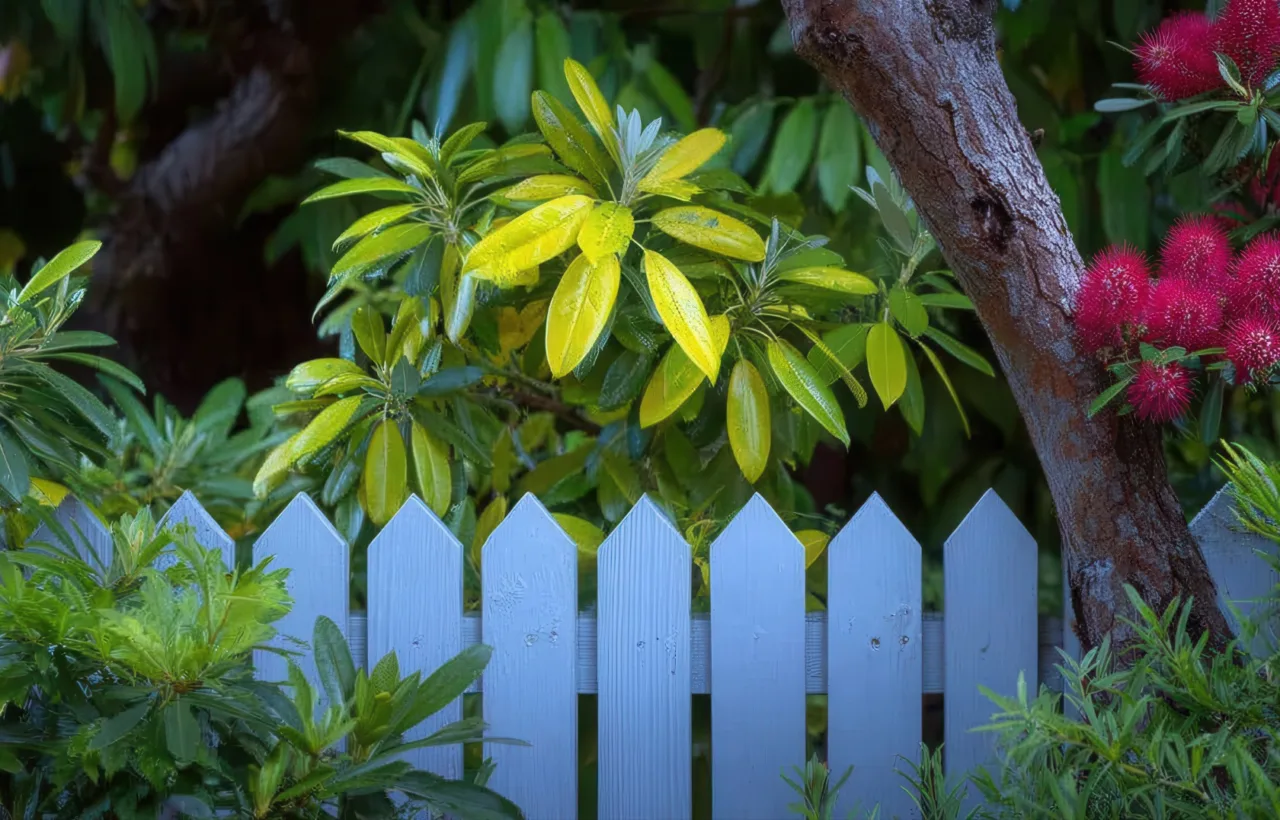

A fence looks finished when plants sit in layers a little away from the boards, not jammed against the wood. That is the practical core of garden fence planting ideas that actually last: give roots moisture, give timber air, and give your eye a tall layer, a middle layer, and something low. Start with sun hours and bed width, then pick a job for the line. Privacy, color, food, or a soft screen that still shows the fence. Climbers belong on wires or a slim trellis set off the surface so you can stain, repair, and keep damp foliage from sitting on the wood. Get those choices right and even a skinny strip can look generous by the second season.
Start With the Fence, the Sun, and the Strip of Soil
Walk the line before you buy a single plant. Note how many hours of direct sun the soil gets in midsummer, which side of the fence you are planting, and how wide the usable bed really is once you leave a gap at the base.
A tall solid fence casts a rain shadow. Soil right against the boards stays dry even after a storm, which is why climbers sulk when they are stuffed into that dusty strip. Plant climbers 30 to 45 cm out from the base so roots can find water and stems can lean toward the support.
Check your USDA Plant Hardiness Zone before you fall for a catalog photo. A star jasmine that thrives in a warm coastal yard will not behave the same way in a cold inland garden.
Solid wood and vinyl privacy fences
These fences already block the view, so plants should soften the hard line rather than add another wall. Keep a 12 to 24 inch buffer so air can move and you can still paint or replace a panel.
Avoid self-clinging vines on timber. Aerial roots and adhesive pads trap moisture and make later repairs miserable. Train twining plants on a standalone trellis or horizontal wires fixed a short distance off the boards.
Open picket, rail, and chain-link fences
Open fences are planting gold because stems can weave through the gaps. Hydrangeas, weigela, and roses look charming when blooms spill through rails.
Chain link disappears fastest under twining climbers such as coral honeysuckle or a well-chosen clematis. Set plants a few feet apart and train new shoots sideways. Horizontal training covers more fence and usually produces more flowers than a single stem racing for the top.
Layer Plants So the Border Looks Deep, Not Stingy
A single row of matching shrubs reads as a hedge, not a garden. Depth is what makes a fence line feel designed.
Put the tallest plants toward the fence: ornamental grasses, climbing roses on support, columnar evergreens, or tall perennials such as hollyhocks and foxgloves. Place medium shrubs or long-blooming perennials in front. Finish with a low edge of groundcover, herbs, or a tidy path of mulch so you can reach everything without trampling soil.
If you take one measurement seriously, make the bed as deep as you can spare. A border under 18 inches will always look skimpy unless you go almost entirely vertical with climbers and slim upright plants. A metre of depth, where you have it, gives plants room to overlap and hide the bare ankles of taller stems.
Mulch after planting. It holds moisture in that dry fence-side soil and keeps weeds from turning your new border into a weekly chore.
Garden Fence Planting Ideas by What You Want the Line to Do
Match the planting method to the job. Pretty photos that ignore width, sun, and maintenance are how people end up with a rotting panel and a sad row of mismatched shrubs.
| Goal | Useful bed width | Plant mix that works | What to watch | | Hide an ugly fence | 2 to 4 ft | Evergreen shrubs plus one trained climber | Leave a service gap; skip self-clingers on wood | | Soften the line, keep fence visible | 18 to 30 in | Grasses, perennials, and a few pots | Avoid wide trees that will shove posts later | | Grow food along the boundary | 2 to 3 ft | Espalier fruit, beans, cucumbers, or figs in warm zones | Needs sun and room to harvest without bruising fruit | | Make a dark, dry strip livable | 2 to 3 ft | Hostas, ferns, astilbe, climbing hydrangea | Water at the root zone; the fence steals rainfall | | Get color in year one | Any width you have | Annual climbers over a permanent backbone | Annuals vanish in frost; keep the long-term layer |
Repeating a short sequence of plants along the fence looks calmer than a different species every three feet. Pick three to five plants that share the same water needs, then repeat them. Your future self, standing there with pruners, will be grateful.
Cover the Fence With Climbers Without Trapping Moisture
Climbers give you height without stealing lawn. They also cause most of the fence damage people complain about later.
Use a support that stands slightly off the fence. A slim trellis, tensioned wires, or a cattle-panel rectangle set 4 to 12 inches forward lets air move and keeps stems from wedging between boards. If the fence is already leaning or the posts are soft, repair it first. Plants grown over a failing panel make replacement slower and more expensive.
Safer choices for most home fences include clematis (plant it a little deeper than other climbers), climbing roses tied in loosely, coral honeysuckle (Lonicera sempervirens), and climbing hydrangea in shade. Annual sweet peas and morning glories give a first-season curtain while slower plants settle.
Skip the plants that turn into a project with teeth. English ivy can force panels apart as stems thicken, hide damp wood, and keep spreading at ground level. Chinese and Japanese wisteria look romantic for two weeks and then become heavy, woody cables that twist through mesh and girdle trees. Running bamboo and English ivy also wander under or through a fence and become the neighbor’s problem. Check your local invasive list before you buy anything sold as “fast cover.”
Tight Spaces, Shade, and Other Awkward Fence Lines
Not every yard offers a sunny four-foot border. That is fine. The planting just has to change shape.
When the bed is barely two feet wide
Go up, not out. Use columnar shrubs, upright grasses such as Calamagrostis, and climbers on a narrow frame. Pots lined along the fence work when soil is terrible or you rent. Group them in odd numbers and keep the palette tight so it reads as a border, not a garage-sale collection.
Edible vertical crops earn their keep in a slim sunny strip. Pole beans, cucumbers, and espaliered dwarf apples use the fence as a workhorse instead of a backdrop.
Shade on the north side of a tall fence
This is the strip people plant with sun roses, then blame themselves when everything fries or fades. Choose plants that already like low light: hostas, ferns, astilbe, bigleaf or oakleaf hydrangea, and climbing hydrangea. Keep the soil richer and more consistently moist than the sunny side, because the rain shadow is worse in shade too.
If the fence is metal and west-facing, it can radiate heat that scorches leaves. Set plants a little farther out and choose drought-tough species such as lavender, Russian sage, or ornamental grasses rather than thirsty woodland plants.
Mistakes That Make a Fence Planting Look Sparse or Fail
Most failures come from the same handful of decisions. Avoid these and the border has a real chance.
- Planting flush against the boards, where soil stays dry and wood stays wet.
- Choosing a wide tree for a narrow strip, then watching roots lift posts five years later.
- Mixing thirsty hydrangeas with Mediterranean herbs in the same drip line.
- Letting one aggressive vine “just cover it for now,” then discovering you cannot open a gate.
- Piling mulch or soil against timber, which invites rot at the gravel board.
Water new plantings at the root zone, not over the fence face. Overhead spray keeps panels damp and wastes water on leaves. A simple drip line along the bed is quieter, kinder to wood, and easier to hide under mulch.
Frequently Asked Questions
How far from a fence should I plant?
Give climbers about 12 to 18 inches, preferably closer to 18 inches, so they sit outside the rain shadow. Shrubs need a similar buffer plus room to reach mature width without pressing the panels. Large trees belong several feet back, not in the fence bed, or roots and trunks will lean on posts.
What should I plant along a shady garden fence?
Start with foliage that looks good without much sun: hostas, ferns, Japanese forest grass, and hydrangeas that tolerate part shade. Add climbing hydrangea if you want height on a north-facing fence. Skip lavender, most roses, and sun-hungry annuals unless that “shade” still gets a long stretch of morning light.
Will climbing plants damage a wooden fence?
They can if they cling directly to the timber, trap moisture, or grow into gaps and thicken. Twining plants on an offset trellis are much easier on wood than self-clinging ivy or heavy woody vines. Keep the base of the fence clear and prune so air can still move behind the leaves.
Can I grow vegetables as garden fence planting ideas?
Yes, if the line gets enough sun and you can reach both sides of the crop. Vining beans and cucumbers use the fence as a trellis. Dwarf apples, pears, and figs can be trained flat on wires. Leave a path for harvest and do not plant food where fence stain or runoff from treated wood is a worry.
What covers a fence fastest without becoming a nuisance?
Annual climbers such as sweet peas give cover in one season and then leave. For a longer-term screen, a moderate clematis or coral honeysuckle trained sideways beats a “miracle” vine from the bargain rack. Fast and permanent often means invasive, so speed should not be the only filter.
Plant One Repeatable Section First
Do not try to landscape the whole boundary in a weekend. Mark a six- to eight-foot trial section, improve the soil, set the support off the fence, and plant one tall layer, one middle layer, and one low edge.
Live with that stretch through a season of heat, rain, and neglect. If the plants still look like they belong together, repeat the same recipe down the line. A fence border that you can maintain is the one that still looks intentional in October, which is the only version worth pinning.