
I spent years staring at a bare concrete wall on my tiny balcony and feeling stuck. My apartment had zero yard space. I wanted plants. Badly. So I turned that empty wall into a full balcony wall garden that now feeds me herbs, softens the city noise, and makes me smile every morning when I step outside.
Honestly? The first attempt looked sad. A few hanging pots that dried out in two days. I almost gave up. Then I changed my approach and things clicked.
This is the full story of what worked for me. The mistakes. The plant wins. The simple systems that keep it alive without constant fuss. If your balcony feels too small or too harsh for real plants, stick with me. I figured out a way that fits real life.
Why a Balcony Wall Garden Changed Everything for Me
Floor space on my balcony measures maybe six by four feet. That’s it. Pots on the ground ate the whole area and still left me wanting more green. Going vertical fixed that problem cold.
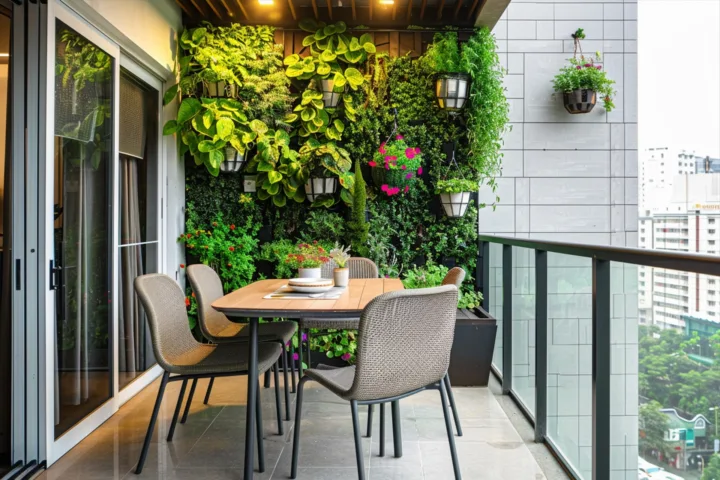
I attached planters, shelves, and a couple of simple frames right to the wall. Suddenly I had room for twenty plants instead of five. The floor stayed open for a chair and a small table. Morning coffee next to living leaves feels different. Better.
Wind hits hard up here on the fifth floor. Sun blasts the west side most afternoons. Those conditions killed my early attempts. Once I matched the plants to the reality of the space, everything calmed down.
See, a balcony wall garden does more than look pretty. It blocks some of the street noise. It cools the air a bit in summer. And it gives me fresh basil and mint without a trip to the store. I harvest something almost every week now.
My Step-by-Step Setup That Actually Lasted
I started with the wall itself. Most apartment balconies have rules about drilling. Mine does. So I checked the lease first and stuck to removable options.
Removable hardware still needs a load check: saturated planters, shelves, and frames can strain balcony walls or railings unexpectedly.
Choosing the Right Supports
I used a mix of these:
- Over-the-rail hangers for the front edge
- Command strips and heavy-duty hooks for lighter pots on the wall
- A freestanding ladder-style shelf leaned against the wall for heavier plants
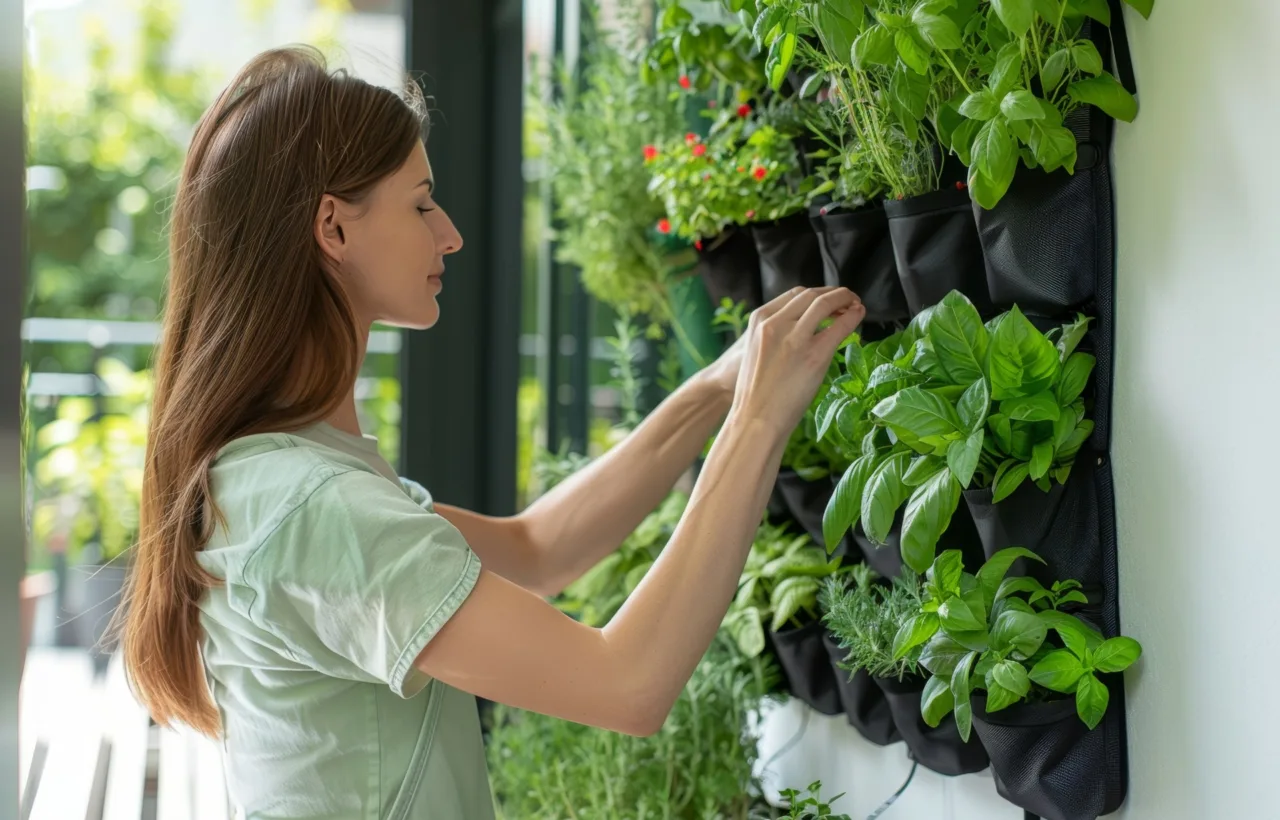
- Pocket planters made from recycled fabric that hang like a shoe organizer
The ladder shelf turned out to be my favorite. No holes in the wall. Easy to move if the landlord ever complains. I put the biggest pots on the bottom rungs and lighter ones higher up.
Weight matters more than people think. Wet soil gets heavy fast. I stick to plastic and fabric containers. Ceramic looks nice but feels like a liability on a windy day.
Soil and Drainage That Don’t Fail
Regular garden soil packs down and holds too much water. I mix my own now:
- Two parts lightweight potting mix
- One part perlite for drainage
- A handful of slow-release fertilizer pellets at the start of each season
Every pot needs a drainage hole. I learned that the hard way when roots rotted in a sealed decorative container. Now I double-pot when I want a pretty outer shell. Inner plastic pot with holes sits inside the pretty one. Excess water drips into a saucer I empty once a week.
Plants That Survive Real Balcony Conditions
I tried everything. Some thrived. Some turned to mush. Here’s what stays alive for me year after year.
Herbs That Keep Giving
Basil, mint, oregano, and chives sit at eye level on the middle shelves. I snip them constantly for cooking. They grow fast and forgive the occasional missed watering. Mint spreads like crazy so I keep it in its own pot.
Rosemary handles the wind better than most. It likes the full sun side of my wall and needs almost no fuss once established.
Flowers and Foliage for Color
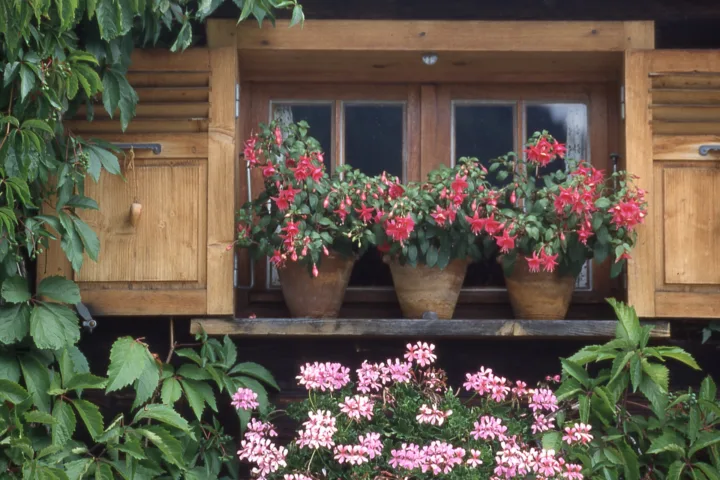
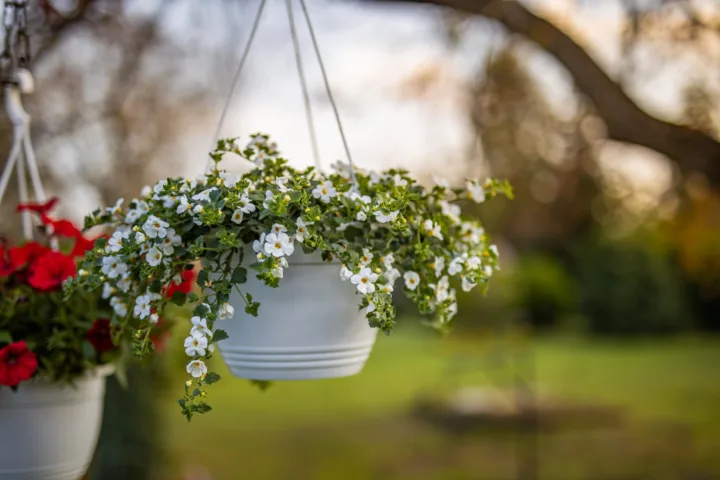
Petunias cascade over the edges of higher pots and bounce back after rain. Trailing nasturtiums add bright orange and edible leaves. For the shadier spots near the building wall I use pothos and spider plants. They hang down and soften the hard edges.
Succulents live on the top shelf where the sun hits hardest. They need almost nothing. I water them every ten days in summer and less in cooler months.
Edibles That Actually Produce
Cherry tomatoes in a tall fabric grow bag against the wall gave me handfuls of fruit last summer. I chose a compact variety and tied the stems to the ladder rungs as they grew. Peppers worked too. Both need consistent water and the hottest spot available.
I stay away from big leafy greens that bolt in heat. They demand more attention than I want to give on busy weeks.
Watering Without Losing My Mind
Carrying jugs of water from the kitchen sink got old fast. I solved it with a few cheap tricks.
A collapsible watering can stores flat against the wall when not in use. I fill it in the bathtub once or twice a week. Self-watering pots help on the lower shelves. They hold a reservoir underneath so the plants drink when they need it.
In the peak of summer I water every other day. Wind and sun dry things out quicker than you expect. I check the soil with my finger. If the top inch feels dry, I give it a drink. Overwatering killed more of my early plants than underwatering ever did.
Mulch on top of the soil helps too. A thin layer of fine bark keeps moisture in and stops the surface from crusting.
Add a water-level mark to each reservoir so you can distinguish an empty self-watering pot from soil that simply looks dry.
Common Mistakes I Made So You Don’t Have To
I crowded everything at first. Plants need airflow. Now I leave a few inches between pots so leaves can breathe and pests stay away.
I ignored the microclimate. The side closest to the building stays cooler and gets less light. The outer edge gets blasted. Matching plants to those spots saved me a lot of dead leaves.
I bought cheap plastic pots that cracked after one winter. Now I choose thicker ones or fabric bags that fold up for storage if I ever need to clear the balcony.
And I forgot about the neighbors below. Water drips. I learned to empty saucers and water early in the morning so nothing falls on their space.
Maintenance That Fits a Busy Week
I spend maybe twenty minutes a week on the whole setup once everything is established. Pinch herbs to keep them bushy. Pull any yellow leaves. Rotate a couple of pots so all sides get light.
In fall I cut back the annuals and bring the tender ones inside if frost threatens. The rosemary and some of the succulents stay out year-round here. Your climate might differ. Watch the forecast and move things as needed.
Fertilizer happens once a month in the growing season. I use a diluted liquid feed in the watering can. Nothing fancy.
Pests show up sometimes. Aphids love the tender new growth. A quick spray of soapy water usually clears them. I check the undersides of leaves every time I water.
How the Garden Feels After Two Full Years
The wall that used to look blank now feels alive. Birds stop by. Bees visit the flowers. I sit out there more than I ever did before. Friends notice and ask how I did it. I tell them the truth. Start small. Use the wall. Choose tough plants. Keep the system simple.
IMO the best part is the quiet pride. I grew this. From a bare wall to something that feeds me and looks good. No big budget. No special skills. Just consistent small actions.
You can do the same. Pick one section of wall this weekend. Hang three pots. Plant something that matches your light. Watch what happens.
Frequently Asked Questions
How much sun does a balcony wall garden need to work? Most of my plants do fine with four to six hours of direct light. Full sun herbs and tomatoes want the brightest spot. Shade lovers handle the dimmer areas near the building without complaint.
Can I build a balcony wall garden if my lease forbids drilling? Yes. I used freestanding shelves, over-the-rail hangers, and adhesive hooks rated for outdoor use. No holes required. Just stay under the weight limits your building sets.
What if my balcony gets strong wind? Group heavier pots lower down. Choose compact plants over tall spindly ones. A simple privacy screen on one side cuts the worst of the gusts and protects the greeneries.
How often should I fertilize the plants in my balcony wall garden? Once a month during active growth works for me. I skip it in winter when everything slows down. Too much fertilizer burns the roots faster than too little.
Do I need special tools to get started? No. A watering can, a few hooks or a shelf, good potting mix, and the plants themselves cover the basics. I added a small pair of pruning shears later for tidy cuts.
I still walk out every morning and check on the leaves. Some days a new flower opens. Other days I just breathe the minty air and feel glad I didn’t quit after those first failed pots. Your wall is waiting. Give it a chance.