
I never thought my skinny city balcony could grow anything more exciting than a lonely spider plant. Then I started a balcony container garden, and everything shifted. Now I step outside and grab fresh basil, cherry tomatoes, and a few flowers that actually look happy. This isn’t some grand backyard project. It’s real life on a small slab of concrete, and it works if you keep things simple.
I almost gave up in the first month. Honestly? The wind knocked over two pots and my lettuce bolted so fast I wanted to cry. See, I treated it like a regular garden at first. That was the wrong way to go about it. A balcony container garden needs different rules. Once I switched my approach, the plants started cooperating.
Why I Chose Containers Over Everything Else
Containers saved me. I live in a rental. Digging into the building’s flooring was never an option. Pots let me move plants around when the sun shifts or the weather turns nasty. They also keep the weight manageable if I choose the right ones.
I learned the hard way that soil weight adds up fast. A big ceramic pot filled with wet dirt can stress a balcony. Plastic, fabric grow bags, and lightweight resin became my go-to choices. They drain better and don’t crack when temperatures swing.
Here’s what I look for every time I buy a new pot:
- Drainage holes. No exceptions. I drill extra ones if needed.
- Size that matches the plant’s mature roots. Tiny pots dry out in hours. Bigger ones hold moisture longer.
- Light materials. Fabric bags fold flat for storage. Plastic stays light even when full.
I keep a couple of terracotta ones for looks, but only for plants that like drier soil. Everything else stays light.
One liter of water weighs about one kilogram, so a 10-liter container can add roughly 10 kilograms after watering.
Assessing My Balcony Before I Planted a Single Seed
Sunlight decides almost everything. I spent two full days watching where the light hit and for how long. My balcony gets about five solid hours of direct sun in the afternoon. That rules out full-shade lovers and some heavy fruiting veggies, but it works great for herbs, greens, and compact tomatoes.
Wind was the other big factor. Gusts dry out soil faster and knock over tall plants. I started grouping pots against the wall for a windbreak. I also used railing planters that clip on securely. They free up floor space and stay put.
Weight limits matter more than most people admit. I checked with the building manager. Then I spread the load. Heavy pots go near the building wall. Lighter ones sit toward the edge. Rolling caddies help me move things without straining my back.
Attach a secondary safety tether to railing planters, especially on windy balconies, so one failed clip cannot send a pot over the edge.
The Soil Mix That Actually Worked for Me
Garden dirt from the park will kill your plants in containers. It packs tight and holds too much water. I use a quality potting mix every single time. Sometimes I blend in a bit of compost for extra nutrients.
I add a layer of coarse gravel or broken pottery at the bottom of deeper pots. That keeps the drainage holes clear. For fabric bags I skip the gravel. They breathe on their own.
Watering is where most beginners mess up. Containers dry out faster than ground beds. I stick my finger in the soil every morning. If the top inch feels dry, I water thoroughly until it runs out the bottom. Self-watering pots help on busy weeks, but I still check them.
Fertilizer is non-negotiable. Potting mix runs out of food pretty quick. I use a balanced liquid feed every two weeks during the growing season. Half strength works better than full strength for most of my plants. Overfeeding burns roots faster than underfeeding starves them.
A gravel layer does not improve drainage in containers and can raise the saturated zone; prioritize unobstructed holes and a well-aerated potting mix.
Plants That Thrive in My Balcony Container Garden
I started small on purpose. Three pots. One herb mix, one leafy green, one flowering plant. Success with those gave me the confidence to expand.
Herbs That Never Fail Me
Basil, mint, and parsley top my list. Basil loves the afternoon sun and rewards me with leaves for pasta almost daily. Mint spreads like crazy, so it gets its own pot. I never plant it with anything else. Parsley sits happily in partial shade and keeps producing if I keep harvesting.
Thyme and oregano trail nicely over the edges of railing planters. They handle the wind better than most soft herbs.
Vegetables Worth the Effort
Cherry tomatoes changed the game. I choose determinate or dwarf varieties so they stay compact. A five-gallon fabric bag with a simple stake or cage keeps them upright. I water consistently and feed regularly. The payoff is handfuls of sweet fruit right outside my door.
Lettuce and other salad greens grow fast in shallow containers. I succession plant every few weeks so something is always ready to cut. Spinach and arugula do the same. Peppers need more heat and sun, but a compact variety in a decent-sized pot produces well once it gets going.
Beans and peas climb. I use a small trellis or string them up the railing. They take vertical space instead of floor space, which is perfect.
Flowers for Color and Pollinators
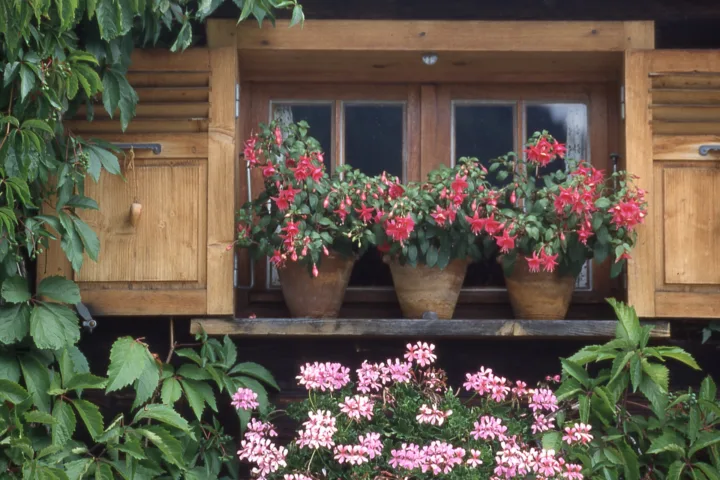
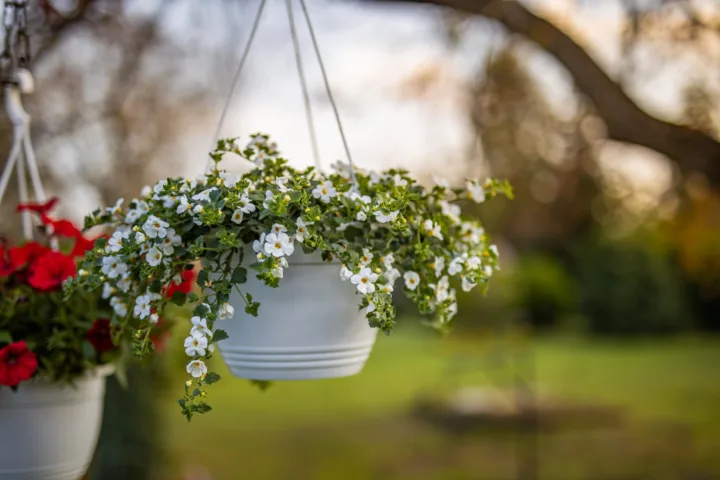
Petunias and calibrachoa spill over the sides of hanging baskets. Geraniums handle heat and look cheerful even when I forget to deadhead for a day or two. I tuck a few marigolds near the veggies. They look good and seem to keep some pests away.
I avoid anything that needs constant staking or massive root space. Space is limited. Choices have to stay realistic.
Space-Saving Tricks That Made My Setup Work
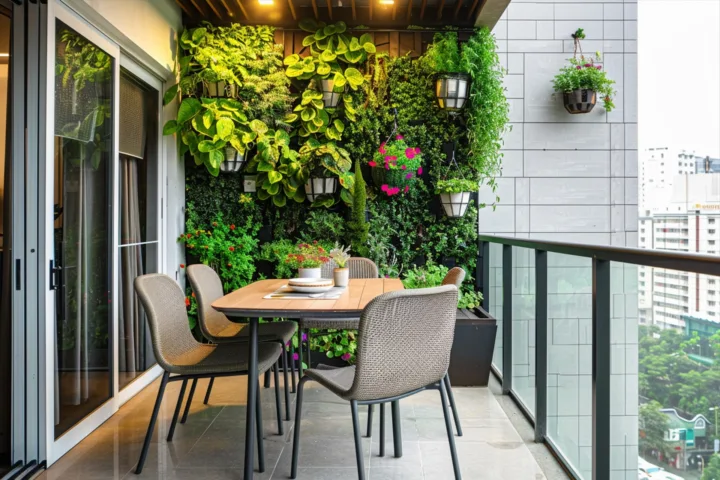
Vertical is the answer when the floor fills up. Hanging baskets, wall-mounted planters, and railing boxes triple the growing area without adding much weight.
I group plants by water needs. Thirsty ones sit together so I don’t overwater the drought-tolerant ones. Taller plants go toward the back or against the wall so they don’t shade everything else.
I rotate pots every couple of weeks. The side facing the sun gets even light. This keeps plants from leaning hard in one direction.
In winter I bring the most valuable plants inside or protect them with a simple cover. Some herbs and greens keep producing longer than I expected if I shield them from the worst frost.
Common Mistakes I Made (So You Don’t Have To)
I overcrowded pots at first. Roots competed and everything stayed small. Now I give each plant the space the label recommends, or a little more.
I ignored the wind for too long. Tall plants snapped or tipped. Staking early and using heavier bases fixed that.
I watered on a schedule instead of checking the soil. Some pots stayed soggy. Others dried out completely. Finger test every time now.
I bought cheap soil once. The plants looked sad within weeks. Quality potting mix costs a few dollars more and saves the whole season.
My Seasonal Routine for the Balcony Container Garden
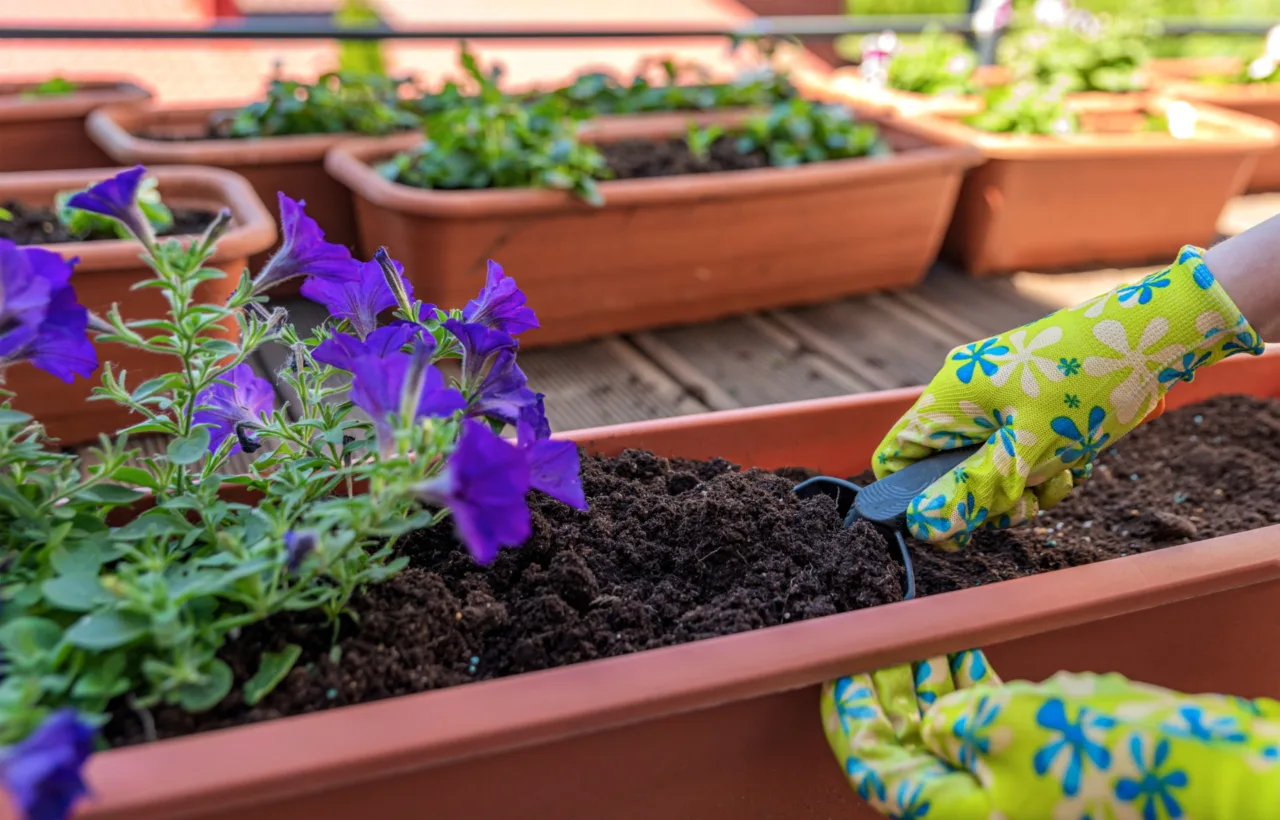
Spring starts with fresh soil and new plants or seeds. I clean the pots, check drainage, and set everything up before the last frost date.
Summer means daily checks. Heat and wind demand more water. I harvest often to keep plants producing. Deadheading flowers keeps them blooming.
Fall is harvest and cleanup time. I pull spent plants, empty some pots, and move the hardiest ones to protected spots. Fabric bags get emptied, washed, and stored flat.
Winter is planning. I sketch next year’s layout and order seeds while the balcony rests.
Frequently Asked Questions
How much sun does a balcony container garden really need? Most vegetables and flowering plants want at least four to six hours of direct light. Herbs and leafy greens can manage with less. I watch my specific balcony and match plants to the light I actually get.
Can I grow a balcony container garden if I’m a complete beginner? Yes. Start with three or four easy plants like basil, lettuce, and a cherry tomato. Success builds fast when the first harvest happens.
What size containers work best? Bigger is usually better for moisture and root space. Five-gallon bags or pots handle tomatoes and peppers. Smaller ones suit herbs and salad greens. Always match the mature plant size.
Do I need special soil for a balcony container garden? Regular garden soil stays too dense. Use a bagged potting mix made for containers. It drains properly and keeps roots healthy.
How often should I water? Check the soil every day in hot weather. Water when the top inch feels dry. Containers dry out much faster than ground gardens, especially on windy balconies.
I still walk out there some mornings and feel surprised that this little space feeds me and looks good at the same time. A balcony container garden doesn’t need to be perfect or huge. It just needs consistent attention and the right plants for the conditions you have. Start with what fits your light and your schedule. Expand only when the first pots make you smile. That first ripe tomato or handful of basil will convince you faster than any advice I can give.