
I spent two summers staring at a bare concrete balcony and feeling slightly defeated. Then I decided to turn that plain space into a cottage garden balcony. The shift happened fast once I stopped treating it like a problem and started treating it like a tiny plot of possibility.
Honestly? The first version looked sparse and a bit sad. I overthought every pot and planted one lonely plant per container. That approach failed. What worked was packing things in, mixing flowers with herbs, and letting the whole thing get a little messy on purpose.
See, a cottage garden balcony does not need a backyard. It just needs containers, the right plants, and a willingness to let things spill and lean into each other. I live in a rented apartment with strict weight limits and limited sun. Still, I managed to create something that smells good, looks abundant, and makes me smile every time I step outside.
Why a Cottage Garden Balcony Works in Tiny Spaces
Most people assume cottage gardens require sprawling beds and stone paths. I used to think that too. Then I realized the style thrives on density and variety rather than size.
I started by treating each pot as a miniature border. One tall plant in the middle, a couple of fillers around it, and something that trails over the edge. Suddenly the balcony stopped looking empty.
The style forgives mistakes. Plants self-seed a bit. Colors blend. You do not need perfect symmetry. That relaxed quality makes it perfect for balconies where space and rules limit what you can do.
I focused on three things from the beginning:
- Layered planting that creates height and movement
- Soft color palettes that feel romantic instead of chaotic
- A mix of flowers, herbs, and a few edibles so the space feels useful as well as pretty
Those choices turned a narrow strip of concrete into a place I actually want to sit.
Before treating every pot as a miniature border, verify balcony load limits, especially after watering and seasonal planting changes.
Choosing Containers That Feel Lived-In
Pots matter more than I expected. Sleek modern ones looked wrong. They felt too clean for the cottage vibe I wanted.
I hunted for weathered terracotta, galvanized metal tubs, and a few vintage-style enamel buckets. Mismatched sizes worked better than a matching set. The collection now looks like it grew over time rather than arriving all at once from a store.
I coated a few new terracotta pots with plain yogurt and left them in a shady spot for a week. They developed a soft, aged look that made the planting feel established right away. FYI, that trick still makes me laugh every time I see the result.
Weight is a real issue on balconies. I stick to lighter materials where possible and place the heaviest pots against the wall or near structural supports. Drainage holes are non-negotiable. I add a layer of broken pottery or gravel at the bottom of every container before filling with soil.
Terracotta dries faster than galvanized metal or enamel, so group containers by material to simplify watering without losing the collected look.
The Plants That Actually Deliver the Cottage Look
I tried a lot of combinations. Some flopped. The ones that stuck share a few traits: they spill, sway, or self-seed a little, and they mix well with neighbors.
Here is what I plant most often now:
- Foxgloves and cosmos for height and that classic cottage silhouette
- Sweet peas trained on a small trellis or railing for fragrance and vertical interest
- Geraniums and salvias as reliable mid-level color
- Bacopa, creeping Jenny, and trailing thyme to soften the edges
- Lavender and sweet alyssum for scent and a sense of softness
- Herbs like oregano, rosemary, and chives tucked among the flowers
- A few strawberries or leafy lettuce for that useful, slightly wild feel
I pack each large pot with one structural plant, two or three fillers, and at least one trailer. The density creates that overflowing look immediately instead of waiting months for plants to fill in.
Color stays mostly soft. Blush pinks, lavender blues, soft whites, and an occasional deeper plum. Bright primary colors feel too sharp for the mood I want. One summer I stuck almost entirely to whites and pale purples. At dusk the balcony glowed in a quiet way that still surprises me.
Foxgloves are toxic if eaten, so keep them away from children and pets, and separate them clearly from edible herbs and strawberries.
Vertical Tricks That Multiply the Space
Floor space on my balcony is limited. I learned to go up.
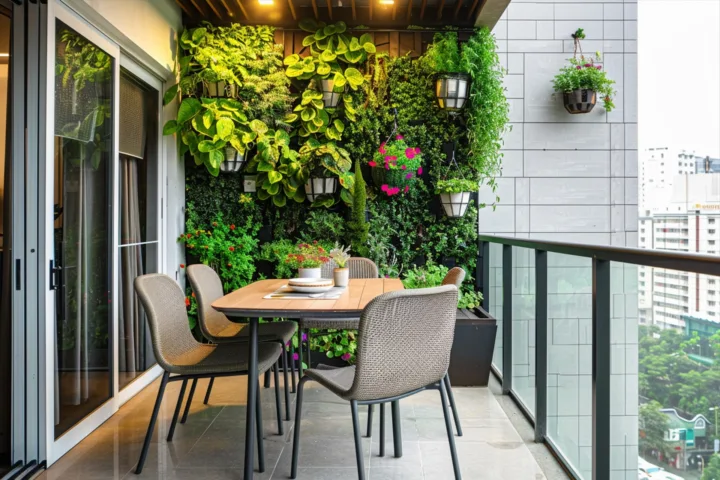
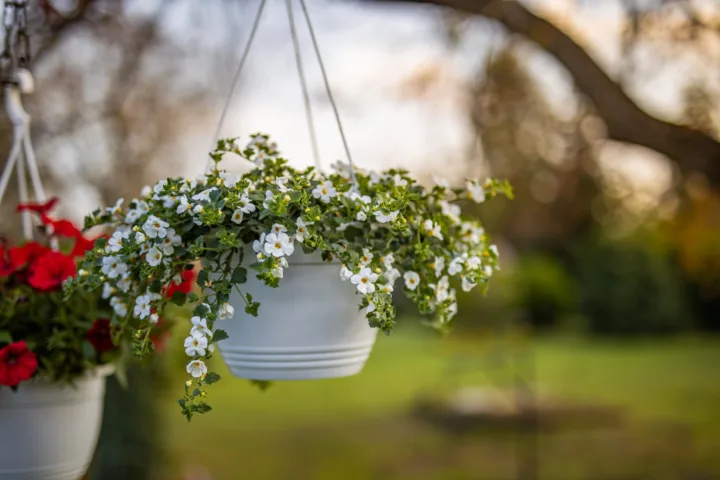
I attached a few railing planters and hung baskets from the ceiling hooks. A small obelisk in one corner supports sweet peas. Chicken wire along part of the railing lets climbers scramble without looking formal.
Tall pots go against the wall. Mid-height groups sit in the center. Low, trailing containers line the front edge. That simple layering creates depth even in a narrow rectangle.
I once squeezed a tiny wrought-iron chair into a corner that barely fit it. The chair changed the whole feel. Suddenly the space invited me to sit instead of just look. A small side table holds a watering can and a notebook. Those two pieces of furniture turned the planting into a place.
Water, Feed, and the Daily Reality
Containers dry out fast. I water almost daily in warm weather. A good water-retaining compost mix helps, but nothing replaces consistent attention.
I feed weekly with a balanced liquid fertilizer during the growing season. Deadheading happens selectively. I leave some spent blooms so plants can self-seed a little. That controlled mess keeps the cottage spirit alive.
Pests show up sometimes. Aphids and the occasional caterpillar. I deal with them by hand or with a gentle soap spray. No harsh chemicals. The bees and butterflies that visit the flowers matter more to me than perfect leaves.
Common Mistakes I Made and How I Fixed Them
I started too neat. One plant per pot looked sparse and formal. Packing them closer fixed that instantly.
I chose pots that were too small. Roots dried out and plants struggled. Larger containers (at least 12 to 16 inches wide for main displays) made everything happier.
I ignored sun patterns at first. Morning light on one side and harsh afternoon sun on the other meant some plants scorched while others sulked. Moving pots around until I found the right spots solved most of it.
I also tried to force big cottage classics that hate containers. Full-sized delphiniums and heavy peonies never thrived. Compact or shorter varieties do better. I stick with what actually performs in pots.
Making It Feel Like Home Year After Year
The first season was pure experimentation. By the second year I had a better sense of what returned and what needed replacing.
Some annuals self-seed. Others I start fresh each spring. Perennials in larger pots overwinter with a bit of protection. I move the most tender ones closer to the wall or wrap them lightly when hard freezes threaten.
I keep a simple notebook of what worked. Which combinations looked best. Which pots dried out fastest. That record saves me from repeating the same errors.
The space evolves. Some years the pinks dominate. Other years the blues take over. I do not fight the changes. That flexibility is part of the charm.
Frequently Asked Questions
Can I really create a cottage garden balcony with almost no floor space? Yes. Vertical planters, railing boxes, and hanging baskets multiply the growing area without eating into the floor. I did it on a balcony barely wide enough for one person to walk.
What is the easiest way to get the overflowing cottage look quickly? Pack the pots tightly from day one. Choose one tall plant, a couple of mid-height fillers, and a trailer for every large container. The density creates instant fullness.
Do I need special soil for a cottage garden balcony? Regular potting mix works fine if it drains well. I add a bit of compost and a water-retaining crystal or gel in the hottest months. Avoid heavy garden soil that can compact and stay too wet.
How do I keep the plants looking good all season? Consistent water, weekly feeding, and selective deadheading. Let a few flowers go to seed if you want natural volunteers next year. That light touch keeps the relaxed cottage feel.
Will a cottage garden balcony attract bees and butterflies? Mine does. The mix of open flowers, herbs, and continuous blooms brings them in. I avoid pesticides so the visitors stay welcome.
Final Thoughts From My Own Balcony
I still catch myself standing at the door some mornings just looking. The space feels bigger than its measurements. The scent of lavender and sweet peas drifts in when the breeze is right. Bees move from bloom to bloom. A few strawberries hide under the foliage.
None of this required a huge budget or perfect conditions. It required curiosity, a willingness to pack things in, and the decision to stop waiting for a bigger garden.
If you have even a small balcony or terrace, you can do the same. Start with a few good pots. Choose plants that spill and sway. Mix in herbs. Let it get a little wild around the edges.
The result will not look like a magazine page. It will look like yours. And that, honestly, is the best part.