
I spent three winters staring at a barren, wind-whipped balcony before I finally turned it into a proper winter garden balcony. The space sat empty. Cold. Useless. I wanted green things and a spot to sit with coffee even when the temperature dropped. So I started small, made mistakes, and figured out what actually works on a compact outdoor ledge when frost hits.
Honestly? The first attempt looked sad. A couple of half-dead pots and a cheap blanket I dragged outside once then never used again. That changed when I stopped treating the balcony like summer overflow and started designing it specifically for cold months. This article walks through everything I learned. Plants that survive. Layout tricks. Simple ways to add warmth without blowing the budget. If your balcony feels abandoned every November, keep reading. I wrote this for the version of me who almost gave up.
Why a Winter Garden Balcony Matters More Than You Think
Most people abandon their outdoor space the second the leaves fall. I did too. Then I realized I was missing out on quiet mornings and a mental reset that only happens outside. A winter garden balcony gives you that without needing a full yard. It becomes an extension of your living room when you get the details right.
See, the key shift for me was accepting that winter is not summer lite. Different plants. Different materials. Different goals. I wanted something that looked alive, felt sheltered, and required minimal daily fuss. Once I locked that in, the rest followed.
My balcony is small. Roughly six by eight feet. No fancy enclosure at first. Just railings, a concrete floor, and a view of neighboring roofs. Still, it became the place I go when the apartment feels too closed in. You can do the same.
Choosing Plants That Laugh at Frost
I killed more plants than I care to admit in the early days. Tender annuals. Pretty pots of basil that folded the first cold night. Lesson learned. For a true winter garden balcony you pick tough characters.
Container roots experience colder temperatures than plants in the ground, so choose varieties rated for a colder zone than your local climate when possible.
Evergreens and Winter Bloomers That Deliver
These are the ones that stayed alive for me:
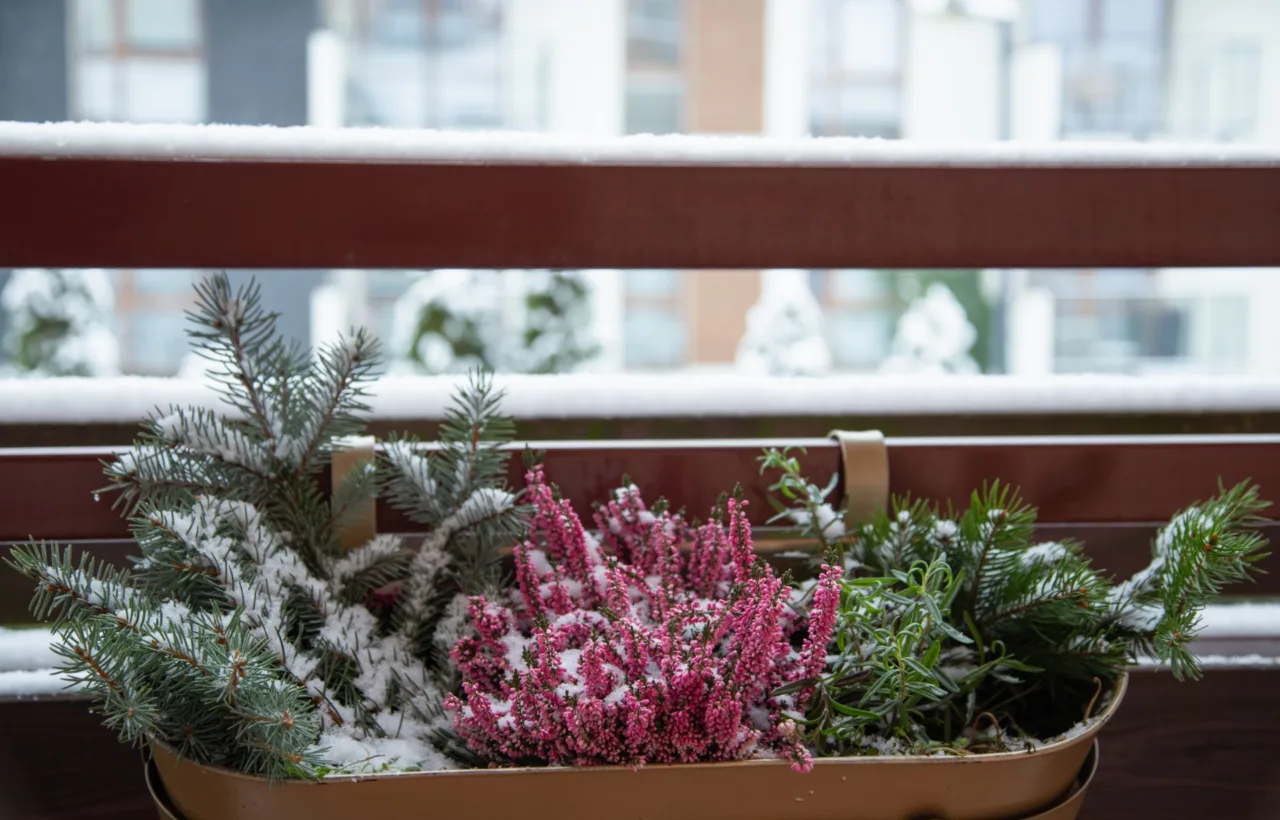
- Winter heather: Covers itself in pink or white flowers even in January. Low and compact. Perfect for the front edge of pots.
- Hellebores: Those nodding flowers appear when everything else looks dead. I keep two in larger containers near the railing.
- Skimmia: Glossy leaves and red berries. Birds ignore mine, which is a bonus.
- Holly: Classic. The berries last. The foliage stays sharp. Just watch the thorns when you move the pot.
- Heuchera: Colorful leaves that hold through most freezes. Great filler between the taller stuff.
I also keep a couple of small evergreen shrubs in the back corners for height. Nothing dramatic. Just enough structure so the space does not look flat.
Herbs That Still Produce in Cool Weather
Parsley, thyme, and mint surprised me. They slow down but keep going if the pots stay a bit protected. I use them for cooking right through December most years. Oregano hangs on too. Coriander is hit or miss depending on how hard the frost hits.
Pro tip from my own trial and error: group the herb pots together against the wall. They create a tiny microclimate that helps.
Containers and Materials That Survive the Freeze
Terra cotta cracked on me the first winter. Ceramic too. I switched to thick plastic, fiberglass, and composite pots. They handle the expansion and contraction better. Larger pots (at least 18 inches across) protect roots more effectively than tiny ones.
I line the bottoms with broken pottery or packing peanuts for drainage, then fill with a quality potting mix that has some grit. In the coldest weeks I push the pots against the building wall and cover the soil with a layer of leaves or straw. Simple. Effective.
Flooring matters more than I expected. Bare concrete feels icy and looks bleak. I added interlocking outdoor tiles that drain well and give a warmer visual. A couple of outdoor rugs that I can shake out or store when snow piles up complete the base.
Before filling several 18-inch containers, check your balcony’s load rating because saturated soil, tiles, rugs, and snow can add significant weight.
Layout Tricks for a Small Winter Garden Balcony
Space is limited. Every inch counts. I treat the vertical surfaces as seriously as the floor.
Vertical Moves That Changed Everything
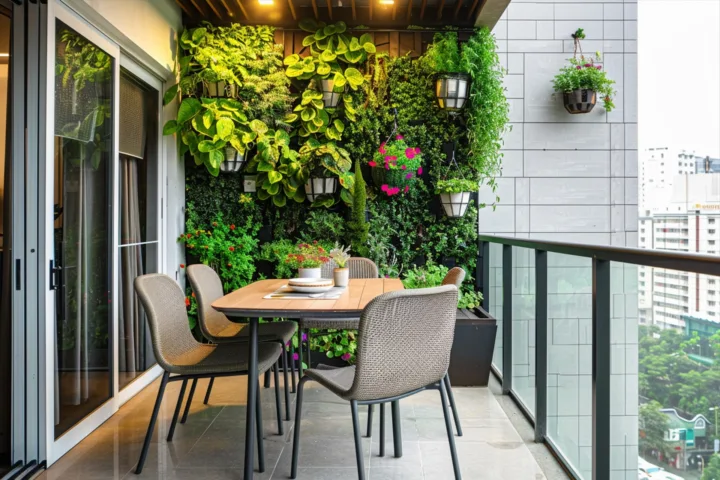
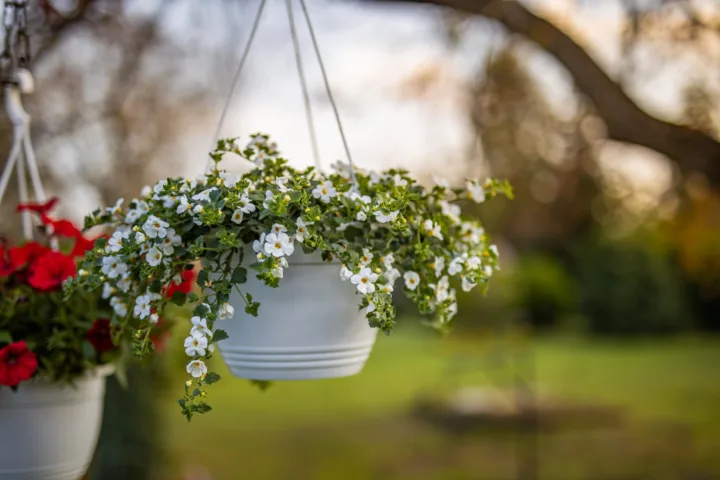
I installed a simple trellis against one wall for climbing evergreen ivy. It softens the hard edges and stays green. Hanging baskets with trailing heathers or small evergreens free up floor space. Rail planters hold the lower plants so the center stays open for a chair.
Creating Zones Without Looking Cluttered
I keep one clear corner for sitting. A weatherproof chair or small bench. Next to it a side table that holds a mug and a book. The plant pots form a soft barrier around that zone. Nothing formal. Just enough definition so it feels intentional.
Storage is key. I keep a weatherproof box under the bench for blankets, gloves, and extra soil. Out of sight. Ready when I need it.
Adding Warmth and Light Without Overcomplicating
Cold air is the enemy of lingering. I solved that in stages.
First came outdoor string lights. Warm white, battery or solar options so I avoid extension cords where possible. They change the whole mood after dark. Lanterns with LED candles sit on the table and the floor. Safe. Soft.
A small electric outdoor heater (the infrared kind that warms people, not the air) made the biggest practical difference. I use it only when I plan to sit for more than ten minutes. Otherwise the plants and the view are enough.
Blankets. Thick ones. I keep two in the storage box. Drape one over the chair and suddenly the space invites you instead of daring you.
Furniture That Holds Up and Feels Inviting
Wicker that looks good in photos often fails outdoors in real winters. I switched to powder-coated metal and synthetic rattan that claims weather resistance. Both have lasted three seasons with only light cleaning.
A small folding table works better than a fixed one on my narrow balcony. I can move it when I need to water or rearrange pots. Cushions stay inside until I actually use the space. Then they come out for an hour or two and go back in.
Honestly? Comfort beats style every time once the temperature drops below 40. Choose pieces you will actually sit in.
Seasonal Maintenance That Keeps Things Alive
Winter care is different. Water less. The soil stays wet longer. I check every few days and only water when the top couple of inches feel dry. Overwatering kills more plants in cold weather than cold itself does in my experience.
When a hard freeze is forecast I move the most tender pots closer to the wall or group them and cover loosely with burlap or an old sheet overnight. Remove the cover once the sun is up. Simple protection goes a long way.
Prune lightly. Remove dead leaves so disease does not set in. That is about it for most of the winter.
Budget Approaches That Still Look Good
I did not spend a fortune. Most of the pots came from end-of-season sales. Lights were a multi-pack from a hardware store. The heater was a mid-range model I researched for outdoor safety ratings. Plants I bought small and let them grow.
You can start with three or four solid containers, a couple of reliable evergreens, and some string lights. Build from there. My first version cost under $200 and already felt like a real improvement.
Mistakes I Made So You Can Skip Them
I overplanted the first year. Too many pots. No room to walk. Now I leave breathing space.
I ignored wind. My balcony gets a strong cross breeze. Tall pots tipped. I now weight the bases or choose lower profiles for the exposed spots.
I bought pretty but fragile furniture. It looked great for two months then started peeling. Weather ratings matter more than Instagram photos.
I waited for perfect conditions. There is no perfect. Start with what you have and adjust.
Frequently Asked Questions
Can I really grow a winter garden balcony in a cold climate? Yes. Focus on hardy evergreens and winter-blooming plants in insulated pots. Protect them during the hardest freezes and they hold up better than most people expect.
Do I need to enclose the space completely? Not necessarily. I started without any glazing and still created a usable winter garden balcony. Full enclosures add comfort and extend the season further, but they are optional and more expensive.
How often should I water in winter? Much less than in summer. Check the soil every few days and water only when it is dry an inch or two down. Cold slows everything.
What if my balcony gets almost no sun in winter? Choose shade-tolerant evergreens and foliage plants. Skip the ones that need full sun for flowering. My north-facing side still looks green with the right selections.
Is it worth the effort for such a short season? For me it is. Even using the space a few times a week changes how the whole apartment feels. The plants give me something living to tend when the rest of the year is gray.
I still tweak things every season. New plants. Better lights. A different chair arrangement. The core idea stays the same. A winter garden balcony does not have to be elaborate. It just has to feel like yours and invite you outside when most people stay in.
Start with one corner. Add one reliable plant. Put up a string of lights. Sit there for five minutes with a hot drink. That is how it begins. Mine started the same way and grew into the quietest, greenest part of my winter. Yours can too.