
I stared at my bare concrete balcony for months before I finally acted. The space felt dead. No greenery. No peace. Just a dusty slab that reminded me of everything I lacked in city living. That changed the day I decided to create my own balcony zen garden. I wanted a spot where I could sit with coffee and actually breathe without the traffic noise swallowing me whole.
Honestly? I almost gave up twice. The first attempt looked like a sad collection of mismatched pots. The second one leaned too hard into clutter. See, I kept chasing some magazine-perfect setup instead of working with what I had. Once I stopped that nonsense and focused on simple Japanese-inspired elements, everything clicked. Now I step outside and feel the tension drop. You can do the same.
I live in a third-floor apartment with a balcony that measures about six by eight feet. Tight quarters. Wind hits hard some days. Sun comes and goes. Still, I made it work. Here’s exactly how I approached it, what failed, and what stuck.
Why a Balcony Zen Garden Made Sense for Me
City life drains me. The constant noise and rush left me craving stillness. A full backyard Japanese garden stayed out of reach. My balcony offered the only outdoor option. I realized a balcony zen garden could deliver the same core feeling: quiet, intention, and a connection to nature that fits real life.
I researched traditional Zen gardens. They use rocks, sand, sparse plants, and water to suggest larger landscapes. Scale them down and they still work. My goal stayed clear. I wanted a place to sit, observe, and reset. Not a showpiece for Instagram.
The results surprised me. After three months I spent more time outside than I had in years. My neighbors started asking questions. One even copied a few of my plant choices. Small wins.
Getting the Basics Right Before Buying a Single Plant
I measured everything first. Width. Depth. Railing height. Weight limits on the structure. My building allows limited load, so heavy stone planters stayed off the list. I stuck to lightweight pots and spread the weight.
Sun and wind matter more than people admit. My balcony gets morning light and afternoon shade. That shaped plant choices later. Wind funnels through the buildings, so tall floppy plants tipped over early on. I learned that the hard way.
Drainage counts too. Water has to go somewhere. I used saucers with risers and checked the runoff path. No one wants soggy neighbors below.
Here’s the quick checklist I still follow:
- Confirm weight capacity with the building if needed.
- Note daily light patterns for a full week.
- Test wind exposure with a few empty pots.
- Plan for easy access to water and power if you want lights or a small fountain.
Don’t skip these steps. I did once and wasted money on plants that never thrived.
Calculate containers at full saturation, not dry weight, especially if adding a water basin later. Wet soil can substantially increase balcony load.
Choosing the Right Plants for a Small Balcony Zen Garden
Plants form the living heart of any balcony zen garden. I kept the list short on purpose. Too many species create visual noise. Zen design favors restraint.
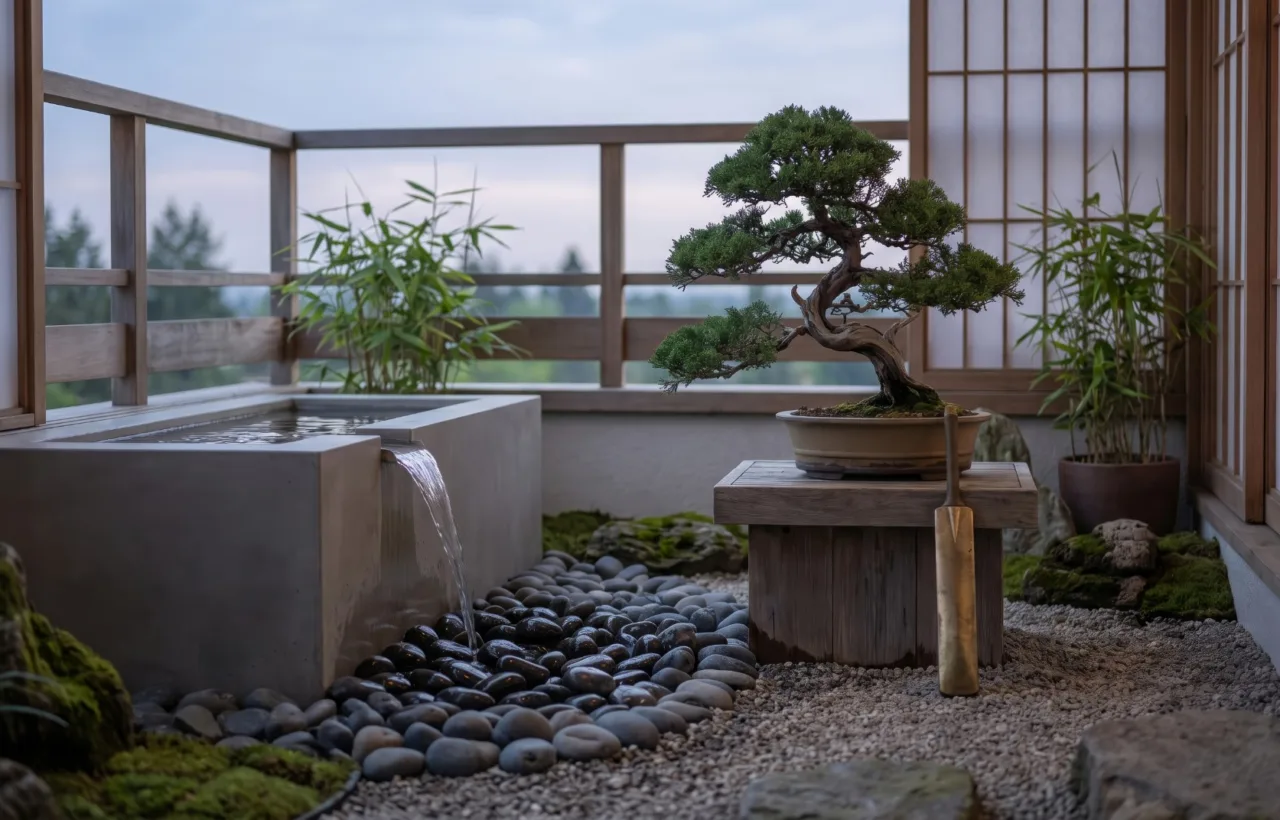
I started with a dwarf Japanese maple in a ceramic pot. The leaves change color through the seasons and give me something to watch. Next came a small juniper bonsai. It sits on a low stand and draws the eye without demanding space. Moss became my ground cover of choice. I grow it in shallow trays. Soft texture. Almost no maintenance.
Bamboo worked for vertical interest and a bit of privacy. I chose a clumping variety in a large container so it stays controlled. Ferns filled shady corners. They love the filtered light and add gentle movement when the wind picks up.
Succulents filled the gaps. Tough. Low water needs. I grouped a few in a long trough along the railing.
My personal ranking after two years:
- Japanese maple: Statement plant. Worth the extra care.
- Moss trays: Instant calm factor. Cheap to expand.
- Clumping bamboo: Privacy without the invasive risk.
- Bonsai or dwarf conifers: Focus points that invite closer looking.
- Ferns and low grasses: Soften hard edges.
I avoid bright flowers. They fight the quiet mood I want. Green and gray tones dominate for a reason.
Watering stays simple. I check soil with a finger twice a week. Most of these plants prefer slightly dry conditions over soggy roots. Overwatering killed my first maple. Lesson learned.
Plan annual root checks for containerized clumping bamboo and the dwarf maple, because restricted roots can reduce vigor even when foliage appears healthy.
Hardscape Elements That Carry the Zen Feeling
Plants alone never finish the job. Rocks, gravel, and simple structures do the heavy lifting for atmosphere.
I spread a thin layer of light gray pea gravel across part of the floor. It creates a clean base and lets me rake simple patterns when I feel restless. The sound underfoot already relaxes me. Larger smooth river stones sit in groups of three or five. Odd numbers feel more natural. One larger rock acts as a focal point near the maple.
A small bamboo screen along one side blocks the view of the neighboring building. I attached it to the railing with removable clips. No permanent damage for the landlord. A low wooden platform holds a cushion. That’s my seating. Nothing fancy. Just enough to sit cross-legged or stretch out with a book.
Lighting changed the evenings. Solar lanterns hang from the railing. Soft warm glow. No wiring. I also placed one small stone lantern near the gravel. It looks traditional without trying too hard.
Water proved trickier. A real pond stayed unrealistic. Weight and mosquitoes both worried me. Instead I use a small ceramic basin with a recirculating pump. The gentle trickle masks street noise. On windy days I turn it off. Simple.
These pieces cost less than I expected. Most came from garden centers or online. I mixed new and secondhand. The gravel bag ran about twenty dollars. The best investment so far.
Place the recirculating pump on a ground fault protected circuit, and secure its cable where balcony doors or rain cannot damage it.
Layout Tips That Actually Worked in Limited Space
I tried three different arrangements before landing on the current one. First attempt put everything against the walls. It felt closed in. Second version left the center empty but created awkward walking paths. Third version layered heights and left a clear path from the door to the seating area.
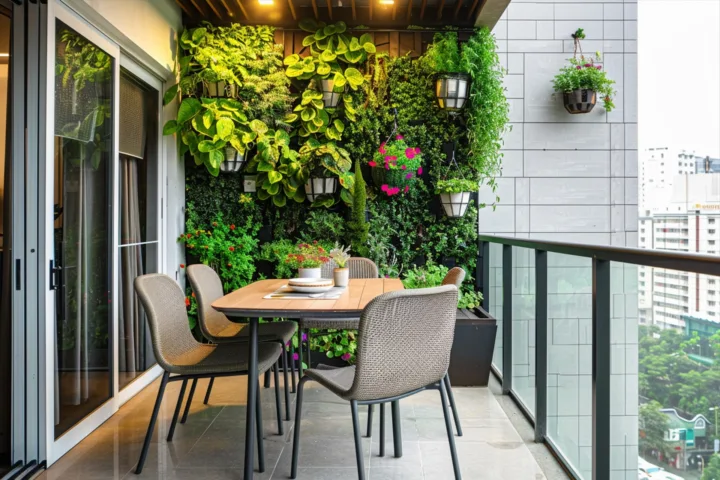
Vertical space became my friend. I hung a few planters on the railing for trailing plants. A narrow shelf holds smaller pots at eye level. Floor space stays open enough to move around.
Color stayed muted on purpose. Earth tones. Soft greens. Grays. One dark pot anchors the maple. Everything else blends. Bright plastic pots got covered or replaced.
I move pieces seasonally. In summer the bamboo shifts for more shade. In winter I group hardy plants closer for protection. Flexibility keeps the space alive.
Honestly? The layout still evolves. That’s fine. A balcony zen garden should feel personal, not frozen in time.
View the arrangement from your usual seated position before finalizing shelf heights, since eye-level balance matters more than the balcony’s standing view.
Maintenance Reality Check After Living With It
People picture Zen gardens as zero effort. Wrong. Mine needs regular attention, just less than a traditional flower garden.
Weekly tasks stay short. Rake the gravel if the wind scatters it. Check soil moisture. Wipe dust off leaves. Prune any dead bits from the maple or bamboo.
Monthly I refresh the moss trays and clean the water basin. Twice a year I repot anything that outgrows its container. Winter protection means moving tender plants closer to the wall or covering them during freezes.
Bugs appear sometimes. I use a gentle soap spray and hand-pick when needed. No harsh chemicals. They clash with the calm vibe.
The biggest surprise: maintenance itself became part of the ritual. Raking gravel settles my mind better than scrolling my phone. FYI, that simple act alone justifies the whole project for me.
Never let the ceramic basin run dry, even briefly, because a recirculating pump can overheat while the garden still looks perfectly calm.
Common Mistakes I Made and How You Can Skip Them
I crowded the space early on. More plants felt better until I realized I had nowhere to sit. Less works better. Always.
Cheap plastic pots cracked in the first winter. I switched to frost-resistant ceramic and resin. Worth the extra cost.
I ignored wind at first. Tall plants tipped. Now everything stays low or gets secured.
Buying every trendy item wasted money. A miniature bridge looked cute online and ridiculous in real life. I returned it. Stick to core elements: plants, stone, gravel, one water source, simple seating.
Overcomplicating the design drained the joy. I think that’s the wrong way to go about it. Perfection isn’t the goal. Daily use is.
Frequently Asked Questions
How much does a basic balcony zen garden cost to start? I spent around $300 for the first version. Gravel, a few pots, basic plants, and a bamboo screen covered the essentials. You can start smaller with just moss, stones, and one statement plant.
What plants survive best on a windy balcony? Clumping bamboo, junipers, and hardy ferns handled my windiest days. Avoid delicate maples until you find a sheltered corner. Succulents also shrug off most weather.
Can renters create a balcony zen garden without permanent changes? Absolutely. I used freestanding pots, clip-on screens, and removable deck tiles. Everything packs up when I move. No holes. No paint. No landlord drama.
How do I keep mosquitoes away from a small water feature? I run a small pump so the water stays moving. Empty and clean the basin weekly. In peak season I add a bit of mosquito dunk. The recirculating setup works better than still water every time.
Does a balcony zen garden need full sun? Mine thrives with partial sun. Many traditional plants prefer filtered light anyway. Match your plants to the actual conditions instead of forcing full-sun choices into shade.
Final Thoughts From My Own Experience
I started this project because my apartment felt incomplete. The balcony zen garden fixed more than the outdoor space. It gave me a daily reason to step outside and slow down. Two years later I still catch myself smiling when the maple leaves shift color or the gravel patterns hold after a quiet rake.
You don’t need a huge budget or perfect conditions. Start with one plant and a few stones. Sit with them for a week. Add the next piece only when it feels right. The space will grow with you.
Go measure your balcony this weekend. Pick up a bag of gravel. Find one plant that makes you pause. That’s how it begins. Messy first steps still beat staring at empty concrete. I speak from experience.