
I started my balcony vegetable garden after three straight years of grocery store lettuce that tasted like wet paper. My apartment patio measured maybe six by eight feet. No yard. No raised beds. Just concrete, a metal railing, and a stubborn refusal to keep buying sad produce.
Honestly? The first season nearly broke me. Half the plants died. The other half produced three cherry tomatoes total. But I kept at it. Now I pull fresh greens, radishes, and peppers every week from the same small space. This is exactly how I did it, mistakes and all.
Why a Balcony Vegetable Garden Makes Sense for Small Spaces
I live in a third-floor walk-up. The idea of hauling soil and pots up those stairs felt ridiculous at first. Then I realized something simple. Most vegetables do not need acres. They need light, decent soil, consistent water, and room for roots.
A balcony vegetable garden turns limited square footage into real food. You control the soil quality. You pick the harvest the same day you eat it. And you waste less because you only grow what you actually use.
See, a lot of people think container gardening is somehow lesser. I think that is the wrong way to go about it. The real question is not whether you can grow as much as a backyard plot. The real question is whether you can grow enough to change how you cook and eat. For me, the answer became yes.
Assessing Your Balcony Before You Buy a Single Pot
I spent an entire week just watching my balcony before I bought anything. Light mattered more than anything else.
Most fruiting vegetables need six to eight hours of direct sun. Leafy greens tolerate less. I tracked where the sun hit from morning to late afternoon. South-facing gave me the strongest light. East-facing worked for salad greens. West-facing cooked some plants in the afternoon heat until I added a bit of shade cloth.
Wind is the quiet killer. My railing caught strong gusts that dried soil fast and snapped young stems. I started grouping pots together and using heavier containers on the outer edge. Weight limits matter too. Check your building rules. I stuck with plastic and fabric pots to keep the load reasonable.
Drainage is non-negotiable. Every pot needs holes. I learned that the hard way when a ceramic pot without drainage turned into a swamp and killed two basil plants in a week.
Repeat your light check in spring and midsummer; nearby buildings and changing sun angles can shift where tomatoes receive their six hours.
Choosing Containers That Actually Work
I tried everything. Cheap plastic from the hardware store. Fancy ceramic. Fabric grow bags. Hanging baskets. Rail planters.
Fabric pots became my favorite for most crops. They air-prune roots so plants do not get root-bound as fast. They also dry out a bit quicker, which forces me to stay on top of watering. Plastic pots hold moisture longer and cost less. Ceramic looks nicer but gets heavy and cracks if it freezes.
Size rules I follow now:
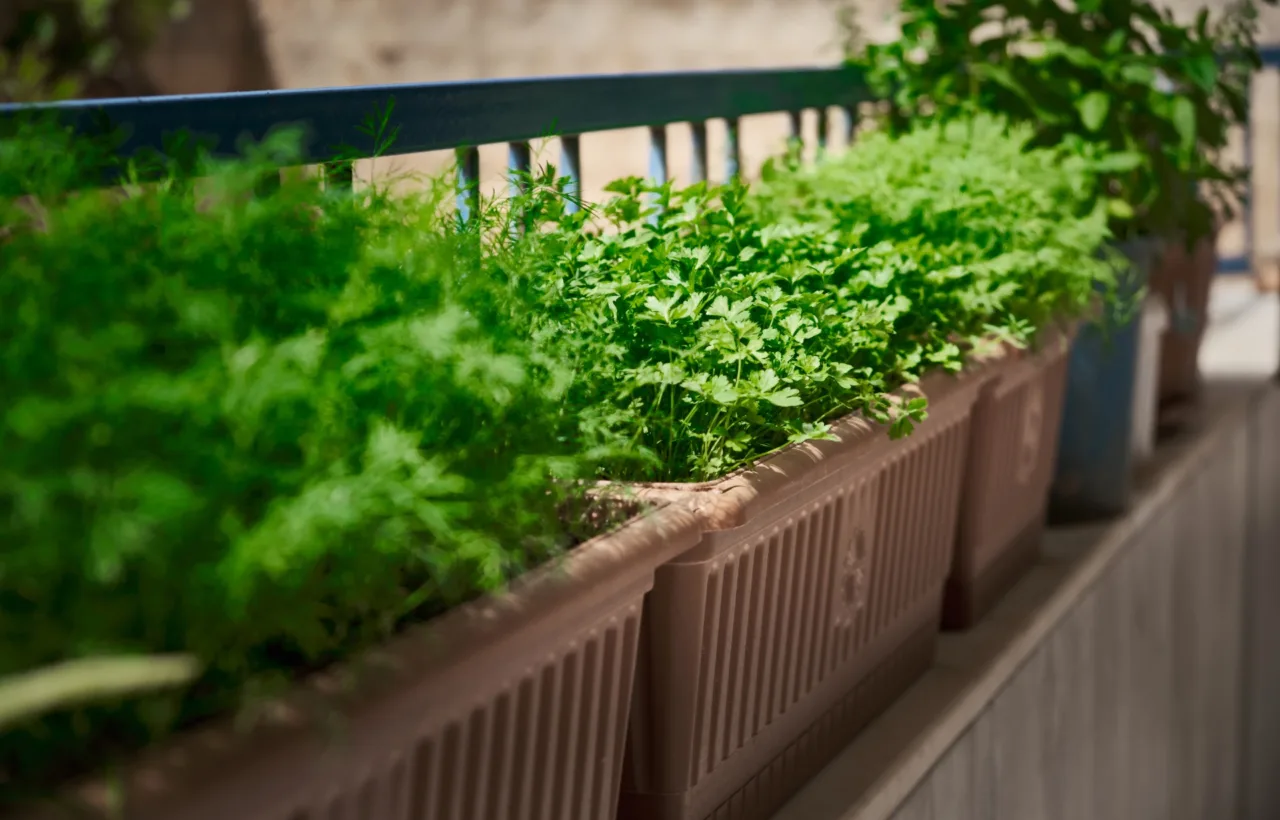
- Leafy greens and herbs: 6–8 inch pots or window boxes
- Radishes, green onions, bush beans: 10–12 inch pots
- Peppers, determinate tomatoes, cucumbers: at least 5-gallon containers
- Larger tomatoes or eggplants: 10-gallon or bigger
I line the bottoms with a scrap of landscape fabric or coffee filters so soil does not wash out. FYI, cheap potting mix often packs down hard. I mix in perlite or coco coir for better aeration.
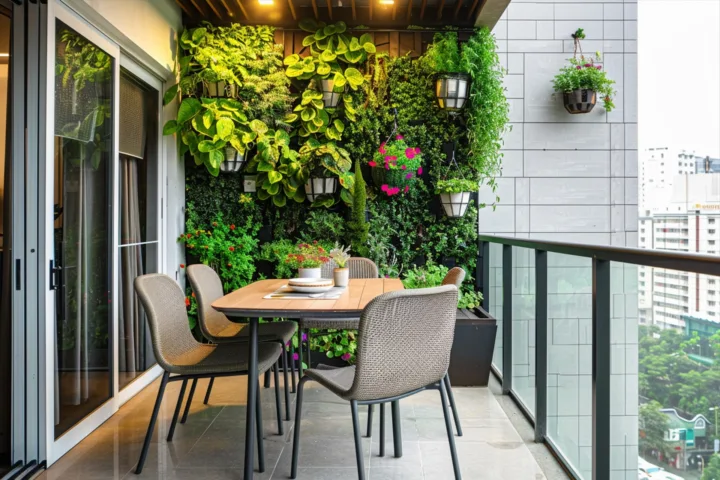
Vertical space saved me. Rail planters, hanging baskets, and a simple tiered shelf let me triple the growing area without eating floor space. Tomatoes and beans climb. Cucumbers trail. Herbs hang.
Install supports before filling containers: a planted five-gallon tomato pot is awkward to reposition once wet and crowded.
The Best Vegetables for a Balcony Vegetable Garden
I stopped chasing every seed catalog fantasy and stuck with plants that tolerate containers and deliver reliable harvests.
Here is what consistently works for me:
- Leafy greens: Lettuce, spinach, Swiss chard, arugula. Fast. Cut-and-come-again. They forgive imperfect light.
- Radishes: Ready in under a month. Perfect for shallow containers.
- Bush beans: Compact. Productive. Fix some nitrogen in the soil.
- Cherry or determinate tomatoes: Indeterminate types need serious support and space. I stick with bush types or patio varieties.
- Peppers: Sweet and hot both do well once temperatures stay warm.
- Herbs: Basil, parsley, chives, mint (in its own pot so it does not take over), thyme.
- Green onions and garlic chives: Nearly foolproof.
I tried zucchini once. One plant took over half the balcony and produced two sad fruits. Never again. Same with full-size cucumbers unless I have a sturdy trellis and lots of water.
Succession planting keeps things going. I sow new lettuce every two weeks. When radishes come out, I drop in more beans or greens. Empty soil is wasted space.
Harvest outer lettuce and chard leaves first, leaving the central crown intact, so one container supplies multiple meals.
Soil, Water, and Feeding Without the Drama
I used to think any bag labeled “potting mix” would do. Wrong. Regular garden soil is too heavy and holds too much water. I now buy a quality potting mix and amend it myself.
My basic recipe:
- Two parts potting mix
- One part compost or worm castings
- A handful of perlite for drainage
I top-dress with compost every few weeks during peak growth. Liquid seaweed or fish emulsion every two weeks keeps plants moving. Too much fertilizer burns roots and pushes weak growth. Less is usually more.
Watering is where most balcony gardens fail. Containers dry out fast. On hot days I water every morning and sometimes again in the evening. I stick my finger two inches into the soil. If it feels dry, I water deeply until it runs out the bottom. Shallow daily sprinkles create weak roots.
Self-watering containers helped once I got serious. They cut daily work and keep moisture more even. A simple saucer under each pot also reduces water waste, though I empty them after rain so roots do not sit in standing water.
White crust on potting mix signals fertilizer salt buildup; flush thoroughly with plain water before the next feeding.
Common Mistakes I Made So You Do Not Have To
I overcrowded everything the first year. Plants competed for light and air. Disease showed up. Now I follow spacing on the seed packet and resist the urge to squeeze in “just one more.”
I ignored heat stress. Dark pots on a concrete balcony can cook roots. I started painting some pots white or wrapping them in light fabric. Afternoon shade cloth on the hottest days made a huge difference for greens.
I also forgot about pollination. On a high balcony, bees sometimes stay away. I hand-pollinate tomatoes and peppers with a soft brush when flowers appear. It takes thirty seconds and boosts fruit set.
Pests still appear. Aphids love tender new growth. I blast them with water first. If that fails, a simple soap spray usually handles it. I avoid broad chemicals because I eat everything I grow.
Setting Up for Continuous Harvests
I plant in stages now. Cool-season crops go in early spring and again in fall. Warm-season plants wait until nights stay above 55°F. I start seeds indoors under a cheap LED light about six weeks before the last frost date. Transplants give me a head start.
Companion planting works in containers too. Basil near tomatoes. Nasturtiums as a trap crop for aphids. Marigolds for a bit of pest deterrence and color. Nothing complicated. Just pair plants that like similar conditions.
I keep a simple notebook. Planting dates. Varieties that performed. Ones that flopped. After three seasons the notebook became more useful than any blog post I read.
Frequently Asked Questions
How much sunlight does a balcony vegetable garden really need? Most fruiting plants want six to eight hours of direct sun. Leafy greens handle four to five. Track the light on your specific balcony for a few days before you plant.
Can I grow vegetables on a north-facing balcony? You can grow salad greens, herbs, and some root crops if the light is bright even without direct sun. Fruiting plants will struggle and often fail to set much fruit.
What is the easiest vegetable for complete beginners? Radishes and leaf lettuce. They grow fast, need little space, and give quick wins that keep you motivated.
Do I need special fertilizer for container vegetables? Regular potting mix has some nutrients, but plants use them up quickly. I add compost and a diluted liquid feed every couple of weeks during active growth. Overfeeding causes more problems than underfeeding.
How do I keep pots from blowing over in the wind? Group them together. Use heavier containers on the edges. Add a few bricks or bags of soil as ballast in the bottoms of taller pots. Secure hanging planters firmly to the railing.
Final Thoughts From My Own Patio
I still lose plants sometimes. A sudden heat wave or a forgotten watering day happens. That is part of it. The difference now is that I recover faster and harvest more than I lose.
A balcony vegetable garden does not require perfection. It requires attention and a willingness to start small. One good tomato plant or a steady supply of salad greens changes how dinner feels.
Start with three or four reliable plants this season. Watch how the light moves. Water deeply. Feed lightly. Adjust next year. That is the whole system.
I still walk out there most evenings with a pair of scissors and a small bowl. Fresh basil for pasta. A handful of cherry tomatoes for a snack. Radishes sliced thin with salt. None of it came from a plastic clamshell.
That feeling never gets old. Go plant something.