I spent two years staring at my bare balcony and wishing I had fresh herbs without the trip to the store. Living in a small apartment meant no backyard, no raised beds, and zero patience for plants that demanded perfect conditions. Then I finally started a balcony herb garden apartment setup that actually produced leaves I could snip and use. It changed the way I cook and the way I feel about my little outdoor space.
Honestly? I almost gave up after the first round of crispy basil and sad mint. The second attempt stuck. Here’s everything I learned the hard way so you can skip the dead plants and get straight to the good stuff.
Choosing the Right Spot for Your Balcony Herb Garden Apartment Setup
Sun decides almost everything. I tracked the light on my balcony for a full weekend. Morning sun hit one corner hard. Afternoon light stayed longer on the other side. Most herbs want four to six hours of direct sun. South-facing works best in the northern hemisphere. East or west can work if you pick the right plants.
Wind is the silent killer on most apartment balconies. Gusts dry out soil fast and snap stems. I moved pots closer to the wall and used the railing as a partial windbreak. Rail planters help too. They sit lower and catch less force.
Weight matters more than most people think. Check your building rules. Some balconies have strict limits. I stuck with lightweight plastic and fabric pots instead of heavy ceramic for most of the collection. Saucers under every pot stop water from dripping onto neighbors below. That detail keeps the peace.
Before installing rail planters, confirm the railing can support their saturated weight, not merely their empty container weight.
Best Herbs That Actually Survive Apartment Balconies
I tried too many at once the first year. Some thrived. Others quit within weeks. These are the ones that stayed reliable for me.
Basil needs warmth and consistent moisture. I keep it in its own pot so I can water it more often than the Mediterranean types. It bolts fast in heat, so I pinch the tops regularly and succession plant every few weeks in summer.
Mint is aggressive. I learned that lesson when it tried to take over a mixed planter. Now it lives alone in a container. Spearmint and peppermint both do well for me. The leaves make the best iced tea.
Rosemary, thyme, and oregano love the same conditions. Dryish soil. Full sun. Good airflow. I plant them together in one wider pot. They forgive missed waterings better than most.
Parsley and chives handle a bit less sun. They sit on the slightly shadier side of my balcony and still produce. Chives come back year after year if the winters stay mild enough.
Cilantro is short-lived in heat. I sow it in spring and again in fall. It hates hot afternoons, so I give it afternoon shade when I can.
I skip the ones that need constant babying. No more struggling with lavender that refused to bloom or sage that stayed tiny. Stick with the reliable performers first.
Harvest cilantro by cutting outer stems first, leaving the center crown intact for a longer spring or fall harvest.
Containers, Soil, and Drainage That Keep Plants Alive
Drainage holes are non-negotiable. Every single pot needs them. I drill extra holes if the ones provided feel insufficient. Standing water kills more herbs than under-watering ever did for me.
Soil choice makes a bigger difference than brand name. I use a quality potting mix made for containers. Regular garden soil packs down and stays wet. Herbs hate that. I mix in a handful of perlite for extra drainage on the Mediterranean group.
Pot size matters. Tiny pots dry out in hours on a windy balcony. I aim for at least 8–10 inches deep for most herbs. Wider is better than taller for shallow-rooted types like thyme and oregano. Self-watering pots help during busy weeks, but I still check them. They can stay too wet if the reservoir never empties.
Fabric grow bags surprised me. They breathe well and prevent root circling. I use a few for mint and basil. They dry a little faster, so I water more often, but the plants look healthier.
Watering and Feeding Without Overdoing It
I water when the top inch of soil feels dry. Finger test every time. No schedule. Balconies heat up and dry out faster than ground gardens. Morning watering works best. Leaves stay dry overnight and disease stays lower.
Overwatering killed my first rosemary. The leaves turned yellow and dropped. I now let the soil almost dry between waterings for the tough Mediterranean herbs. Soft herbs like basil and parsley get more consistent moisture.
Fertilizer stays light. Herbs grown for flavor taste better when they are not overfed. I use a diluted liquid organic fertilizer every three to four weeks during the growing season. Too much nitrogen makes lush leaves with weaker flavor. I learned that after a batch of bland basil.
Rain helps, but it is unreliable. I keep a watering can near the door so I can top up on dry days without a big production.
Flush container soil with plain water occasionally to reduce fertilizer salt buildup, especially in pots receiving regular liquid feeding.
Dealing with Wind, Heat, and Pests on a High Balcony
Wind is constant on my fourth-floor balcony. I group pots together so they shield each other. A small trellis or even a folded outdoor screen can break the force without blocking too much light.
Hot afternoons in summer cook the soil. Light-colored pots stay cooler than dark ones. I move the most sensitive plants (basil especially) a few feet into partial shade during heat waves. A temporary shade cloth draped over the railing works in a pinch.
Pests show up less often than I expected. Aphids hit the soft herbs once or twice. A strong spray of water knocks most of them off. I check the undersides of leaves every week. Spider mites appear in hot dry stretches. Raising humidity with a quick mist helps, but I never leave the leaves wet overnight.
Birds sometimes land and dig. A few small stones on the soil surface or a light mesh cover stops that without looking ugly.
Move aphid or mite affected pots away from healthy herbs immediately, since grouped balcony containers can speed pest spread.
Layout Ideas That Maximize a Small Space
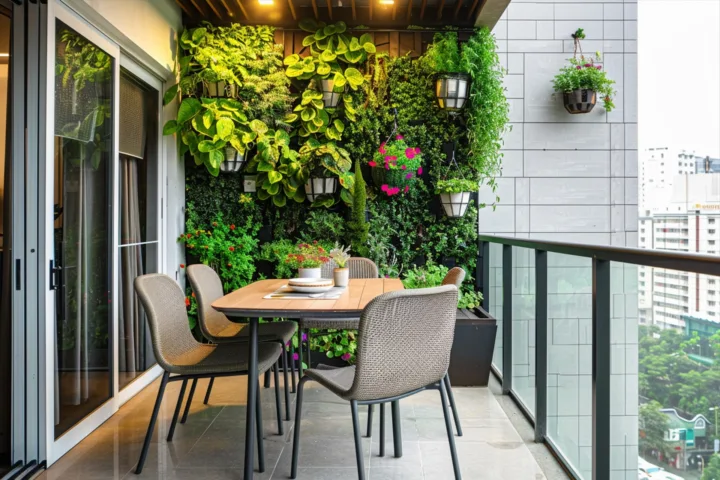
Vertical space is free real estate. I hang a couple of rail planters and use a narrow tiered stand against the wall. The tallest plants go at the back. Shorter ones sit in front so everything gets light.
I keep the path clear. Nothing worse than knocking over a pot every time I step outside. A single row along the railing plus one or two larger pots near the wall works on my narrow balcony.
Companion planting helps. Basil near tomatoes if you grow those. Chives near almost anything. Mint stays isolated. I learned not to mix mint with anything else after it choked out a thyme plant.
Seasonal rotation keeps things interesting. Cool-season herbs like cilantro and parsley take the front spots in spring and fall. Heat lovers dominate summer. I start a few seedlings indoors under a simple grow light so I always have replacements ready.
Rotate balcony pots a quarter turn weekly to prevent one-sided growth caused by the railing and wall reflecting uneven light.
Harvesting Without Killing the Plants
Snip, never strip. I take no more than a third of the plant at once. For basil I pinch just above a leaf pair. New growth branches out. For woody herbs like rosemary I cut stems back to a side shoot.
Frequent light harvests encourage bushier growth. Leaving plants untouched makes them leggy and less productive. I harvest in the morning after the dew dries. Flavor is stronger then.
I freeze excess basil in ice cube trays with a little oil. Rosemary and thyme dry easily hung upside down in a dark closet. Fresh is always better, but preservation keeps the harvest usable through winter.
Common Mistakes I Made So You Can Avoid Them
I overcrowded pots the first season. Roots competed and everything stayed smaller. Give each plant room.
I ignored drainage. Yellow leaves and mushy stems followed. Fix that first.
I watered on a fixed schedule instead of checking the soil. Some pots stayed soggy. Others turned to dust. The finger test is simple and effective.
I bought the cheapest potting soil. It compacted fast. Spending a little more on a good mix paid off in healthier roots.
I planted mint with everything else. Never again. Give it solitary confinement.
Frequently Asked Questions
How much sun does a balcony herb garden apartment really need? Most common herbs want at least four hours of direct sun. I get six on the best side of my balcony and the plants respond with stronger growth and better flavor.
Can I grow a balcony herb garden apartment setup if my balcony only gets morning light? Yes. Stick with parsley, chives, mint, and cilantro. They tolerate less intense light better than rosemary or basil.
What size pots work best for apartment balconies? I use 8- to 12-inch pots for most herbs. Anything smaller dries out too fast in wind and sun.
Do I need special soil for a balcony herb garden? Regular garden dirt packs down and drains poorly in containers. A quality potting mix with good aeration keeps roots healthy.
How often should I water herbs on a high balcony? Check the soil daily in hot weather. Water when the top inch feels dry. Frequency changes with temperature and wind, so the finger test beats any calendar.
I still walk out to my balcony most mornings and pinch a few leaves. The smell hits first. Then the satisfaction of knowing dinner will taste better because of something I grew in a space most people ignore. Start small. Pick three reliable herbs. Get the drainage right. Pay attention to the sun and the wind. The rest follows.
Your balcony does not need to look like a magazine spread. It just needs to produce a few handfuls of fresh flavor. Mine does that now. Yours can too.