
Strong flower planting ideas start with the bed you already have, not a wish list of blooms. Match plants to sun, soil, and space first. Then give that patch one job, such as curb color, weekly cuttings, or food for bees. Mix short, mid, and tall plants, and stagger bloom times so the display does not stall in July.
That approach works in a narrow front strip, a raised bed, or a cluster of pots. You need plants that share the same light and water, planted at the right time, with room to fill in.
Start With the Spot, Then Pick the Job
A heat lover will sulk under a maple. A clay-loving perennial will rot on a dry slope. The site decides the plant list. Style comes second.
How much sun the bed actually gets
Watch the space for a full day before you buy anything. Full sun means at least six hours of direct light, and many summer bloomers want that or more. Partial shade is roughly three to six hours. Deep shade is less than three. Most flowering annuals and cutting flowers fail in deep shade, even if the tag looks cheerful at the nursery.
If the bed is bright in April and gloomy in July once trees leaf out, treat it as summer shade. Plant spring bulbs, then switch to shade-tolerant plants instead of forcing zinnias into the dark.
One job per bed keeps the design from unraveling
Pick a single purpose for each planting area. A bed that tries to be a cutting garden, a cottage border, and a drought garden at once usually looks busy and still leaves gaps.
Use this filter:
- Want color from late spring until frost? Lean on annuals plus a few long-blooming perennials.
- Want less replanting next year? Build around hardy perennials and spring bulbs.
- Want bouquets? Choose long stems and plants that bloom again after you cut.
- Want bees and butterflies? Plant natives that flower in sequence from spring through fall.
You can borrow from more than one list. One job should still lead.
Flower Planting Ideas by Space and Purpose
Small spaces reward repetition. Three clumps of the same plant read as a design. Twelve singles read as leftovers. Plant in groups of three or five, and repeat a color or leaf shape so the eye can rest.
| Garden job | Plants that fit | What you get | What to watch |
|---|---|---|---|
| Fast summer color | Zinnia, cosmos, marigold, petunia | Blooms the first season | Needs regular water and deadheading |
| Comes back yearly | Coneflower, catmint, daylily, black-eyed Susan | Structure after year one | First season can look thin |
| Early spring punch | Daffodil, tulip, allium, grape hyacinth | Color before most perennials wake | Leave foliage until it yellows |
| Cut-flower harvest | Zinnia, snapdragon, dahlia, cosmos | Armfuls of stems | Needs full sun and frequent cutting |
| Pollinator patch | Milkweed, bee balm, aster, goldenrod | Nectar across months | Skip insecticides on blooms |
| Shade or part shade | Hosta, astilbe, impatiens, coral bells | Foliage plus seasonal flowers | Too little sun means fewer blooms |
For a balcony or stoop, treat pots like tiny beds. Use one tall plant, one filler, and one trailer in a 12- to 16-inch container. Zinnias with trailing petunias work in full sun. Begonias with coleus work where the light is softer. Water containers more often than in-ground beds. Soil in a pot dries out fast.
A four-by-eight-foot raised bed can hold snapdragons along one edge, zinnias and cosmos in the middle, and dahlias at the back once the soil is warm. Leave walking room so you can cut stems without crushing plants.
Layer Heights and Bloom Times So Color Doesn't Drop
A bed planted at one height looks like a hedge of flowers, then a bare patch when those plants fade. Layering solves both problems.
- Put the tallest plants at the back of a border, or in the center of an island bed you walk around.
- Set mid-height bloomers in front of them. This is where most of the summer color lives.
- Edge the front with low plants that hide bare stems and keep weeds down.
- Tuck spring bulbs between perennials so later foliage covers the dying bulb leaves.
- Slip annuals into the gaps the first year, while perennials are still settling in.
You can break the height rule on purpose. An airy tall plant such as cosmos can step forward without blocking the back row. A stiff sunflower in front will just hide everything else.
Pair an early bloomer with a midsummer plant and a late one. Daffodils give way to catmint, then asters take September. Annuals such as zinnia fill the quiet stretch if you keep cutting faded blooms.
When to Plant Annuals, Perennials, and Bulbs
Timing decides whether those ideas actually flower. Your USDA Plant Hardiness Zone tells you which perennials can survive winter. Your last spring frost and first fall frost tell you when tender flowers are safe. Those two facts are not the same. Two gardens in the same zone can frost weeks apart.
Look up local frost dates through a zip-code tool such as the Old Farmer’s Almanac frost date finder, then plant by plant type:
- Cool-season annuals such as pansies, snapdragons, and sweet alyssum can go out a couple of weeks before the last frost.
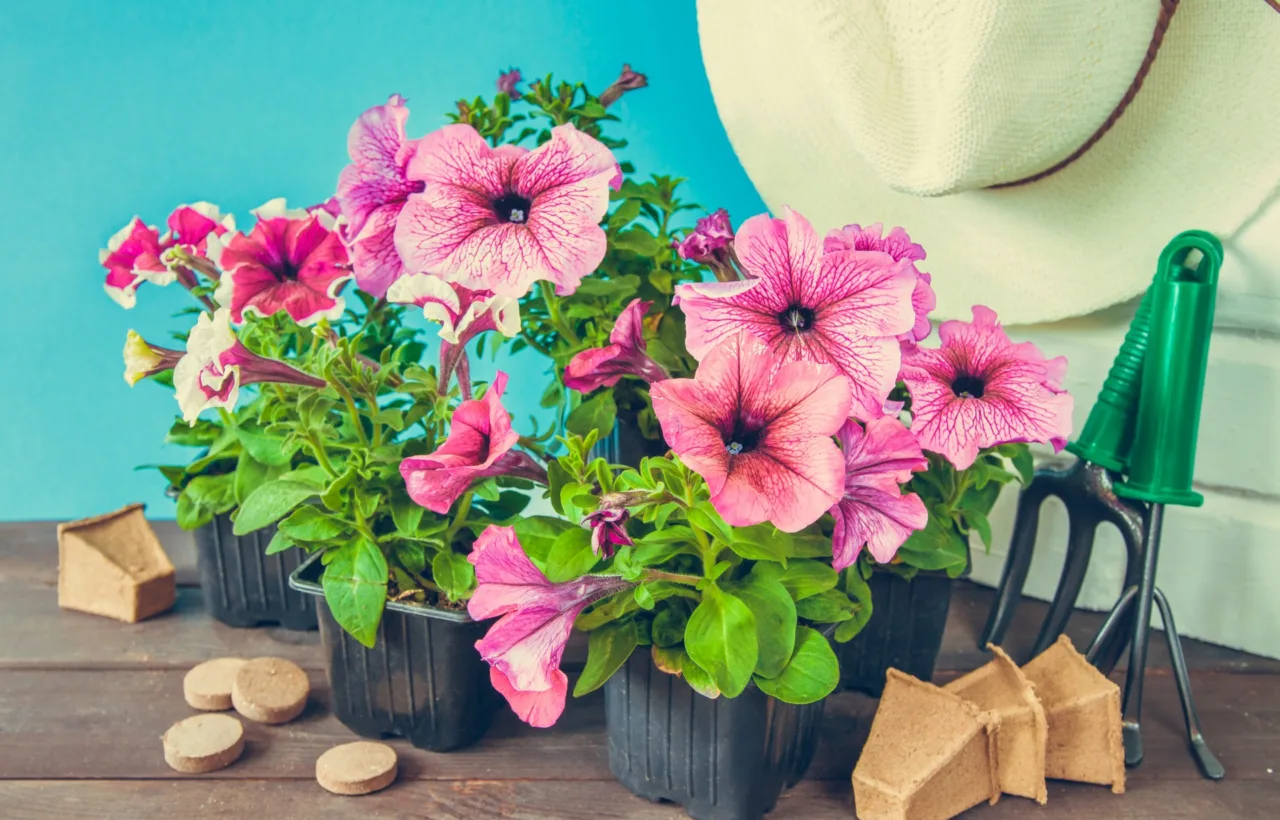
- Warm-season annuals such as zinnias, marigolds, and most petunias wait until frost danger has passed and the soil has warmed.
- Nursery perennials settle in well in spring or in early fall, about six weeks before the first hard frost, so roots can grow in cool soil.
- Spring-blooming bulbs go in during fall, before the ground freezes.
- Summer bulbs and tubers such as dahlias and gladiolus go in after the last frost, once the soil is warm.
Almanac planting calendars help with seed-starting windows. Fast annuals like zinnias can often be sown outdoors after frost. Petunias usually need a head start indoors.
Prep matters as much as the calendar. Loosen soil, pull weeds, and work in compost. Set transplants at the same depth they grew in the pot. Water them in, then add a couple of inches of mulch, keeping it off the stems.
Combinations That Share Sun, Water, and Bloom Seasons
Pretty neighbors still fail if one plant wants dry gravel and the other wants damp shade. Pair plants that agree on light and moisture first. Color comes after that.
Easy pairings for full sun
Catmint under roses covers bare canes and keeps blooming after the first rose flush. Coneflower with Russian sage or ornamental grasses gives late-summer structure and seed heads for birds. Dahlias with cosmos is a classic cutting mix: one plant is plush, the other is airy, and both want heat and sun.
For a pollinator strip, use regionally native species when you can. Milkweed, bee balm, coneflower, and asters cover different weeks of the season. The Xerces Society regional plant lists are a practical place to check what belongs in your area.
Shade pairings are quieter and still worth planting. Hostas and astilbe share moisture. Coral bells add leaf color when flowers are scarce. Do not drop lavender into that same wet shade. It wants sharp drainage and sun.
If you grow vegetables, tuck flowers among them. Alyssum, calendula, and cosmos pull in pollinators without demanding a second bed.
Mistakes That Quietly Steal Blooms
The usual problem is not a lack of ideas. It is a pile of plants that cannot live together.
Buying by color alone wastes a Saturday. A shade impatiens and a sun zinnia can sit side by side on a nursery bench and still need opposite yards. Read the tag for height, spacing, and light.
Overcrowding looks lush for three weeks, then stems weaken and mildew shows up. Follow the spacing on the label, even if the bed looks sparse on day one. Annuals can sit a little closer. Perennials need room for next year’s clump.
Planting only spring flowers leaves a dull midsummer. If peonies and tulips are the whole plan, add something that blooms in July and September.
New transplants need consistent moisture. Established drought-tolerant plants often prefer a deep soak and a dry spell. Soggy soil rots more flowers than a missed afternoon of watering.
Skip insecticides on open blooms if pollinators are part of the point. You cannot invite bees and then spray the buffet.
Frequently Asked Questions
What are the easiest flower planting ideas for beginners?
Start with a sunny patch and a short list: zinnias, marigolds, cosmos, and one tough perennial such as black-eyed Susan or catmint. Plant after frost, water while they settle, and snip spent blooms. That mix gives first-year color without a complicated layout.
How close together should I plant flowers?
Use the mature width on the plant tag, not the size of the pot. Compact annuals often sit 8 to 12 inches apart. Mid-size perennials usually need 18 to 24 inches. Tall plants often want 24 to 36 inches. Crowding cuts airflow and invites disease.
Can I plant flowers in the fall?
Yes. Fall is the window for spring bulbs and a strong season for many perennials. Roots grow in cool soil while the top growth rests. Tender annuals and dahlias still belong in spring in cold-winter climates.
What flowers grow well together in one bed?
Choose plants with the same sun and water needs, then mix heights and bloom times. A sunny trio is catmint, coneflower, and zinnia. In shade, pair hosta or coral bells with astilbe. Repeat each plant in small groups so the bed looks intentional.
Do flower gardens need full sun?
Many popular bloomers do. Full sun, about six hours of direct light, produces more flowers on zinnias, dahlias, roses, and most cutting crops. Shade gardens can still look rich if you plant for foliage and choose shade-tolerant bloomers.
How do I keep flowers blooming all summer?
Stagger bloom times, mix annuals with perennials, and cut spent flowers. Warm-season annuals often bloom until frost if you keep harvesting. Add a late perennial such as aster or sedum so September is not empty.
Plant a Small Bed Before You Redesign the Yard
Choose one sunny rectangle you can reach with a hose. Give it one job. Plant three of one mid-height flower, a low edging plant, and a tall backdrop or a pot of annuals for quick color. Water it in, mulch it, and leave the extra impulse buys at the nursery.
A small bed that blooms on schedule beats a big plan that never leaves the notes app. Start there, watch what thrives, and let next year’s ideas grow from that patch.