
I have enough verified guidance to draft the article to the brief. The finished piece is below.
A skinny strip along a fence can look finished if you pick plants that grow up more than out. The most useful narrow border planting ideas start with mature width, not the prettiest pot at the nursery. A 12-inch bed wants climbers, slim perennials, and a tight edge. A 24-inch bed can hold a repeating ribbon of foliage and bloom.
The strip itself is usually the hard part. Soil next to a wall or fence is often dry, shallow, and hungry, and a path leaves no room for plants that flop. Get the conditions right, then repeat a small set of plants. That is how a thin border stops looking like leftover dirt and starts looking like a garden.
Choose Plants by Width First
Measure the soil, not the fence. Then shop for plants whose adult spread fits inside that line with a few inches to spare. Labels lie in small type. A plant that looks neat in a 2-liter pot can double in width by year three.
Under 12 inches
Treat this as a vertical job with a thin green hem. Climbing plants on wires or trellis do the heavy lifting. On the ground, stick to clumping evergreens, slim bulbs, and plants that hug the edge without running.
Good fits include dwarf mondo grass, compact sedums, sea thrift, and a single row of dwarf lavender if the strip stays hot and dry. Skip hostas, most hydrangeas, and anything sold as a “mounding shrub.” They will sit in the path.
18 to 24 inches
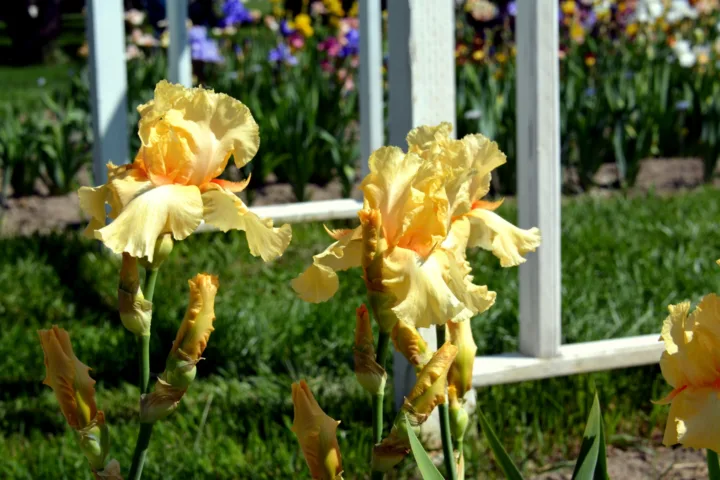
This is the sweet spot for most fence and driveway borders. You can layer a low front edge with one upright plant behind it, then repeat that pairing down the line. Ornamental grasses with a narrow vase shape, compact salvias, bearded iris, penstemon, and heuchera all earn their keep here.
Leave walking room if this is a side yard. Bins, hoses, and wet winter coats need a clear shoulder line. Low plants at the front protect that space better than a wall of shrubs.
About 30 inches or more
Now you can add a slim evergreen or a trained fruit tree without crowding everything else. Keep the tallest plant against the fence. Put medium bloomers in the middle. Finish with a low, continuous edge so the bed reads as one line, not a jumble of singles.
A useful rule from landscape work is to keep the tallest plant in scale with the bed. A 6-foot shrub in a 2-foot strip looks top-heavy and needs constant cutting.
Read the Light and Soil Before You Shop
Narrow beds fail for boring reasons. The RHS notes that wall-side borders often sit in a rain shadow, with shallow soil, rubble, and restricted roots. South-facing strips can bake. North-facing strips stay dim and dry at the same time.
Check three things on a weekday, not just at noon on Saturday:
- Hours of direct sun in summer and in winter
- Whether rain actually hits the soil or slides off the fence
- How you move through the space with a wheelbarrow or laundry basket
Improve what you can. Dig out loose rubble, add organic matter, and keep new soil below any damp-proof course on a house wall. After planting, a mulch of compost, bark, or pale gravel holds moisture and slows weeds. Gravel suits hot, dry strips especially well because it reflects light and looks tidy when plants are sparse.
If the spot is truly hostile, one tough species repeated is smarter than a mixed border that sulks. Lavender or a compact hebe in sun, and a run of heuchera or hardy geranium in shade, will beat a mixed shopping bag every time.
Sunny Narrow Border Planting Ideas
Hot, skinny beds want plants with an upright or clumping habit and foliage that does not melt in reflected heat from paving. Think silver, strappy, or wiry, not lush and leafy.
A dry ribbon that needs little fuss: dwarf lavender at even spacing, with species tulips for spring and sedum for late summer. Mexican fleabane (Erigeron karvinskianus) can soften cracks and edges in sun, though it seeds around, so keep it where a little spread is welcome. Gardeners' World also flags bearded iris and libertia for slim, sunny borders because both take up little ground while giving height and flower.
A taller sun mix for 18 to 24 inches: a repeating trio of feather reed grass, salvia, and a low catmint or thyme at the lip. Choose compact catmint if you use it at all. The usual garden forms get wider than a narrow path can handle.
Edible options work when the strip gets six hours of sun. Train a cordon or espalier apple or pear flat to the fence. Underplant with chives, thyme, or strawberries. You get blossom, fruit, and a useful edge without asking the bed to hold a round tree.
Shady Narrow Border Planting Ideas
Shade strips look better when foliage does the talking. Flowers come and go. Leaf shape is what you see from the kitchen window in February.
Heuchera, tiarella, and heucherella cover ground without much width and keep color when little else is awake. Japanese forest grass (Hakonechloa) makes a soft mound if you have at least 18 inches. Ferns and foxgloves add height on a skinny footprint, as long as you pick foxgloves that stay upright rather than forming a wide first-year rosette in the path.
For a north-facing fence, pair a wall shrub or a shade-tolerant climber with a low carpet underneath. Euonymus fortunei can be kept close to a fence. Campanula poscharskyana will scramble through gaps in sun or part shade. In deeper shade, London pride (Saxifraga × urbium) handles tight, dry-ish spots better than thirsty hostas.
Avoid mint, vigorous vinca, and anything described as a “fast groundcover” next to a path you need to keep. In a 1-foot bed, fast usually means “in the gravel by June.”
Steal Height From the Fence or Wall
When the soil strip is too thin for layers, borrow the vertical surface. Wires, a slim trellis, or vine eyes let you grow up the fence instead of into the walkway.
Clematis is the usual answer, and it still works if you match the variety to the light and keep the roots cooler with a low plant in front. Star jasmine suits milder climates and gives evergreen cover. Pyracantha can be trained as a wall shrub for flowers and winter berries, though the thorns mean it belongs away from a tight side passage.
Espalier and cordon fruit trees remain one of the cleanest solutions for a long, narrow bed against a sunny wall. They stay flat, they earn their space, and they give you a winter framework when perennials disappear. You do need annual pruning. If that sounds like a chore, a single upright evergreen repeated at wide intervals is the lower-effort version of the same idea.
A Repeatable Planting Plan Beats One of Everything
Long thin borders look busy when every plant is different. They look designed when you repeat a short sequence. Pick a look, then copy it every 5 to 8 feet.
| Look | Width it needs | Light | Why it works |
|---|---|---|---|
| Lavender or thyme ribbon | 12–18 in | Full sun, dry | One species, neat winter shape, strong scent by a path |
| Grass and salvia rhythm | 18–24 in | Sun | Upright lines, long season, easy to repeat |
| Heuchera and fern shade strip | 18–24 in | Part to full shade | Foliage carries the winter months |
| Climber plus slim edge | Under 12 in | Sun or shade by plant | Uses the fence so the soil can stay simple |
| Espalier fruit with herbs | 18–30 in | Sun | Structure, food, and a low useful front |
Plant in this order so you do not box yourself in.
- Fix the soil and set a firm edge with steel, brick, or stone.
- Add any support on the fence before the plants go in.
- Place the tallest or trained plants first, against the back.
- Fill the front with one low plant type, not five.
- Mulch, water in, and resist the urge to add “just one more.”
Odd-numbered groups of three or five of the same plant read more clearly than a mixed row of singles. If the border is a long sight line, keep the rhythm going and hide a couple of stepping stones in the planting if you still need to reach a gate.
Frequently Asked Questions
What plants work in a 1-foot-wide garden strip?
Climbers on the fence, plus a single low row such as dwarf mondo grass, compact sedum, sea thrift, or dwarf lavender in sun. In shade, try a thin run of heuchera or London pride. Anything that matures wider than the strip will lean into the path, no matter how cute it looks at the garden center.
What are the easiest narrow border planting ideas for beginners?
Repeat one sun-proof or shade-proof plant down the whole length, then add bulbs for a second season. A lavender ribbon, a heuchera strip, or a row of slim ornamental grass asks for less decision-making than a mixed cottage border. Easy here means fewer species, not cheaper plants.
Can I plant shrubs in a narrow border along a fence?
Yes, if you choose naturally narrow or easily pruned forms and check the adult width. Columnar holly, compact boxwood, and wall-trained shrubs can work in 24 inches or more. Fast-growing privacy hedges usually do not. They outgrow the bed and leave you pruning in a cramped gap.
How do I keep a skinny border looking good in winter?
Include at least one evergreen thread: heuchera, dwarf evergreen, trained wall shrub, or a grass that holds its stems. Bare soil in a 12-inch strip looks wider and sadder than the same soil in a deep border. Structure matters more than flower color from November to March.
Should I use pots instead of planting in the ground?
Pots help when the “border” is rubble, a utility run, or a strip you cannot dig. They also let you change the display. They dry out faster against a wall, so they are extra work in summer. If you can improve the soil, in-ground planting is usually less thirsty.
Will spreading plants fill a narrow bed faster?
They will fill it, then keep going. Creeping thyme can be a smart front edge if you like the scent underfoot. Unchecked mint, lamium, or vigorous vinca will erase the path. In a tight strip, clumping habits beat running habits.
Build the First Six Feet, Then Copy It
Do not plant the whole fence on day one. Improve the soil, set an edge, and finish one short module you actually like from the kitchen door. Live with it through a couple of weeks of weather. Then repeat the same plants down the line.
Skinny borders forgive a small palette. They do not forgive plants that refuse to stay put. Give them a job, a width limit, and a rhythm, and that leftover strip stops apologizing for itself.