
The most useful retaining wall planting ideas put shallow-rooted trailers on the hot, fast-draining top edge, tuck drought-tough alpines into joints, and save moisture-loving plants for the cooler base. That split matters more than any single “hero” plant. Stone, block, and timber all bounce heat and shed water in different ways, so the same wall can feel like a desert at the cap and a woodland at the toe.
Start with the edge you can see from the path or the Pin that brought you here. A few well-chosen spillers will change the whole look in one season. Then work backward so the roots help hold soil instead of fighting the drain.
Match Plants to the Wall’s Three Climate Zones
A retaining wall is not one growing condition. It is three stacked microclimates. Treat them separately and the planting looks intentional instead of patchy.
Hot, dry wall tops
The cap and the first foot of soil behind it bake. Heat radiates off masonry, rain runs off fast, and wind dries the surface. This is where moss phlox (Phlox subulata), creeping thyme, trailing rosemary, and low sedums earn their keep. They want sun and sharp drainage, not rich, soggy compost.
Check your winter lows on the USDA Plant Hardiness Zone Map before you commit to rosemary. Most forms of Salvia rosmarinus are reliable in zones 8 to 10 and need protection or a pot in colder gardens. Moss phlox is far hardier, typically zones 3 to 9, and it carpets sunny rock in mid-spring.
Cooler, shadier wall bases
The toe of the wall stays cooler, collects drip, and often sits in shade for part of the day. That is a different job. Heuchera, small hostas, ferns, and woodland creeping phlox (Phlox stolonifera) belong here, not on the cap. P. stolonifera likes even moisture and some shade. Put it on a south-facing cap and it sulks.
If the base is a gravel drain strip, do not bury that strip in soil. Set narrow planters on the gravel with a small air gap behind them so water can still leave the wall.
Crevices and dry-stone joints
Gaps between stones are alpine territory: lean soil, heat, and almost no depth. RHS guidance on alpines for dry stone walls points to plants that already live that life, including aubrieta, campanula, sempervivum, and compact sedums. Press a small plug into a pocket of gritty mix. Water to settle it, then leave it alone.
Cascading Plants That Spill Without Clogging Drains
Spillers should drape, not tunnel. Fibrous, shallow roots bind the surface soil. Thick, water-seeking roots hunt the gravel backfill and the weep holes.
For a sunny edge, these are reliable starting points:
- Moss phlox for a spring sheet of pink, white, or violet, then a tight evergreen mat
- Creeping thyme for scent, pollinators, and a low, weed-suppressing carpet
- Trailing rosemary for year-round structure in mild-winter gardens
- Sedum and hens-and-chicks for heat, poor soil, and almost no summer watering once established
- Dichondra ‘Silver Falls’ for a long silver curtain in warm climates, or as a summer annual everywhere else
Golden creeping Jenny looks bright in photos, and it will cover a wall fast. It also likes moisture and can run into lawns and wet ditches. Use it on a damp, partly shaded face you can trim, not as a set-and-forget cap plant.
Self-clinging climbers are a separate decision. English ivy and creeping fig can look lush, but aerial roots grip mortar, trap moisture, and are hard to remove. If you want greenery on the face, train a twiner such as star jasmine on wires or a freestanding trellis so the wall itself stays dry.
What Belongs in the Gaps, and What Does Not
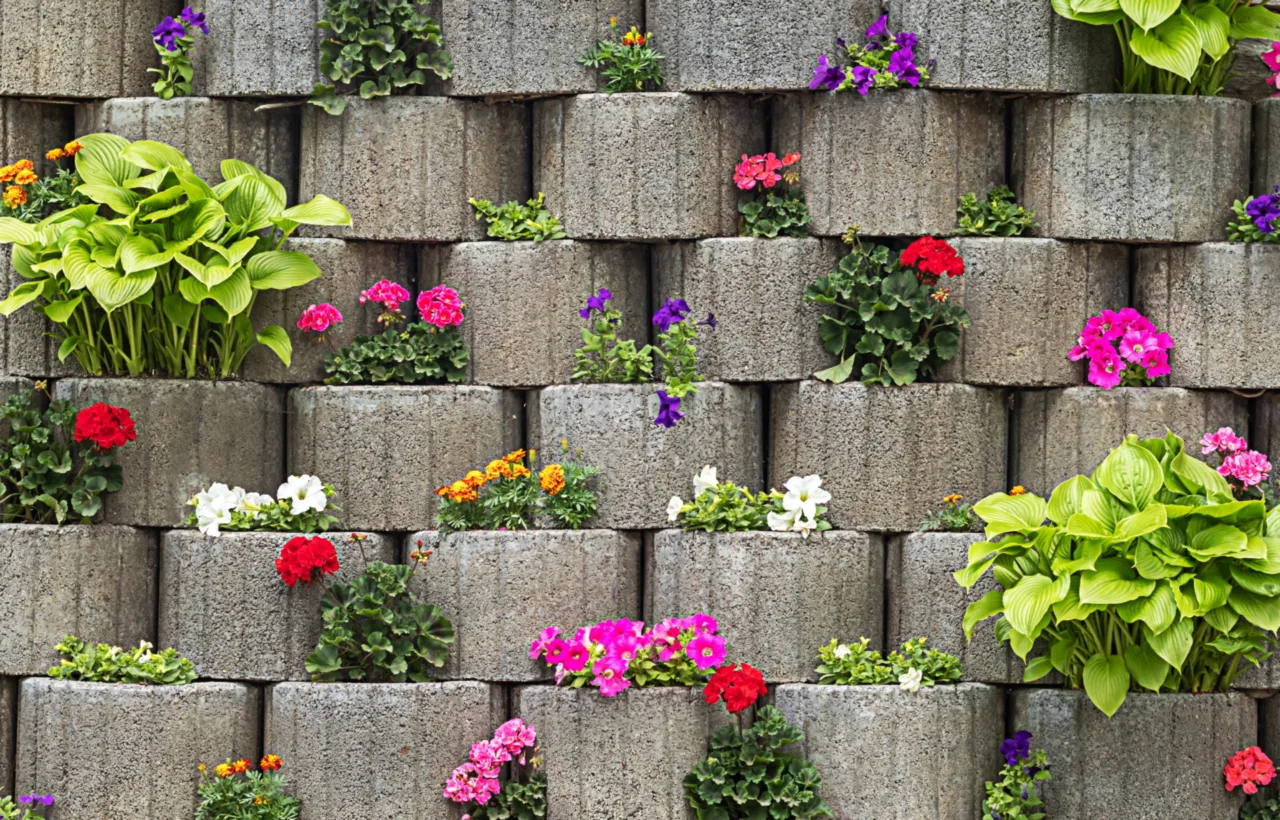
A wall with planting pockets or open joints can hold a second layer of plants without adding a new bed. Keep the pockets small. A handful of grit and compost is enough for a sempervivum or aubrieta. A shrub stuffed into a block cell will outgrow the cell and pry at the cap.
Rock cress and aubrieta are the classic “stone disappears in April” plants. They flower hard in spring, then settle into a low mat. Mexican fleabane (Erigeron karvinskianus) will seed into tiny cracks if your climate is mild, which is charming until it fills every joint. Thin it when it crowds the weep holes.
Skip running bamboo, willows, figs, and other water-seeking trees anywhere near the structure. Roots follow moisture into drainage pipe and gravel. Once that path is blocked, water sits behind the wall and the pressure rises. That is a wall problem, not a pruning problem.
Large shrubs need space too. Industry guidance for vegetation on segmental retaining walls calls for keeping the edge of a tree or shrub root ball at least 5 feet from the wall face, then staggering plants so the mature canopy does not hang past the cap. Groundcovers can sit right on the edge. Trees cannot.
| Plant | Where it works | Light and habit | Watch-out |
|---|---|---|---|
| Moss phlox (P. subulata) | Sunny cap and joints | Full sun, spring bloom, low mat | Needs drainage; cut back after bloom |
| Creeping thyme | Hot, dry edge | Full sun, fragrant, shallow roots | Dislikes winter wet and heavy clay |
| Trailing rosemary | Mild-winter sunny cap | Evergreen trailer, culinary stems | Tender in cold zones; hates soggy soil |
| Sedum / sempervivum | Caps, pockets, stone joints | Sun, drought-tough, shallow | Rot if the pocket stays wet |
| Heuchera or small ferns | Shady, cooler base | Part shade, foliage first | Fails on a baked cap |
| Dichondra ‘Silver Falls’ | Warm-climate spill or annual | Sun to light shade, long trail | Not hardy in cold winters |
How to Plant the Top of a Retaining Wall So It Lasts
Pretty plants fail when the soil on the cap is builder’s rubble or when every hose blast soaks the backfill. Fix the planting strip first.
Clear weeds and pull soil back from the very lip so water still sheds off the cap instead of pooling against the first course. Work in a thin layer of compost only if the existing soil is lifeless sand or fill. Do not create a rich, spongy bed that holds water against the wall. A lean, free-draining mix suits the plants that belong here.
Set spillers 6 to 12 inches back from the edge if you want them to reach the lip in a few months. Plant them right on the lip only when you need instant drape and you can water by hand. Keep any mounding perennial or small shrub farther back so its crown does not sit on the capstones.
Water the root zone, not the wall face. A soaker line along the planting strip beats a sprinkler that saturates the gravel behind the blocks. During the first season, check moisture with a finger before you add more water. Wall-top soil can look dry on Tuesday and stay wet under the mulch after a weekend storm.
Mulch lightly with gravel or fine bark, and stop short of the weep holes. Mulch that slides into drains is just another clog.
A Layered Look You Can Copy in One Afternoon
If you want a Pin-ready mix instead of a plant-by-plant debate, use this sequence from the lip backward.
Put one trailing plant on the edge every 12 to 18 inches. Mix two textures rather than eight colors. Thyme plus moss phlox reads as a garden. Eight different annuals reads as a leftover flat from the nursery.
Behind the trailers, add a broken line of low mounds: compact sedum, lavender where winters are mild, or a small ornamental grass that stays under two feet. Leave gaps so you can still reach the wall for weeding and drain checks.
Farther back, use the plants you already love, as long as their mature size respects that 5-foot root-ball rule for anything woody. Native grasses, coneflowers, and dwarf evergreens can sit in that rear band without turning the wall into a planter box for a future tree.
For a tall, blank face with no soil on top, plant from below on a trellis, or use containers along the cap. Containers let you grow tender spillers such as ‘Silver Falls’ and trailing petunias without committing their roots to the backfill.
Frequently Asked Questions
Can I plant directly into a concrete block retaining wall?
Yes, if the blocks have open cores or you add purpose-built pockets, and if you use small, drought-tolerant plants. Fill only the cells you intend to plant, keep soil out of the drainage path, and choose succulents or compact alpines. A shrub in a single block cell will outgrow it.
What are the safest retaining wall planting ideas for full sun?
Sunny caps favor moss phlox, creeping thyme, sedum, and, in mild climates, trailing rosemary. They handle heat, lean soil, and reflected light. Pair them with a gravel mulch and infrequent, deep watering at the roots rather than daily misting.
Will plant roots damage my retaining wall?
Shallow groundcovers on the cap rarely do. Trouble starts with trees, running bamboo, and moisture-hungry shrubs planted tight to the face or directly behind the wall. Their roots can block drains and press on blocks. Keep woody plants back, and keep weep holes visible.
How do I plant a shady retaining wall?
Move the colorful trailers to the base or a part-day section. Use heuchera, ferns, ajuga, or woodland phlox where the wall stays cool. Golden creeping Jenny can brighten shade, but plan to cut it back so it does not swallow the drain line.
Can I grow herbs or vegetables on the wall cap?
Shallow herbs such as thyme, oregano, and chives fit a cap or a pot on the cap. Leafy greens can work in containers. Skip deep-rooted crops and heavy vines that need constant water sitting against the wall. Harvest is the bonus. Drainage is still the job.
How soon will cascading plants cover the stone?
Annual trailers can drape in weeks. Moss phlox and thyme usually look settled in one to two seasons. Rosemary and junipers take longer, then hold the look through winter in the climates that suit them.
Plant the Edge You Can See First
Pick the stretch of wall you walk past every day. Clear the lip, choose one sun-true trailer and one backup texture, and plant only as far as you can water this week. A living edge beats a complicated plan that never leaves the cart.
The wall is already doing the heavy lifting. Your job is to dress the rim without blocking the way the water leaves. Get that right, and the stone starts to look like it grew there on purpose.