
I spent two full summers staring at a bare metal railing and wishing it looked like those overflowing Paris balconies I keep saving on Pinterest. My french balcony garden finally happened the third year, and it changed how I use that narrow outdoor strip every single day.
I live in a third-floor walk-up with a classic french balcony: just a thin platform and a wrought-iron rail. No room for a table and chairs. Barely room for two people to stand. Yet I wanted herbs for cooking, flowers that spill over the edge, and something that felt like a secret garden instead of an afterthought. This is exactly how I did it, what worked, what failed, and the simple systems I still use.
Why a French Balcony Garden Feels Different
Most people treat a french balcony like leftover space. I used to do the same. A couple of sad pots, maybe a struggling geranium, and that was it.
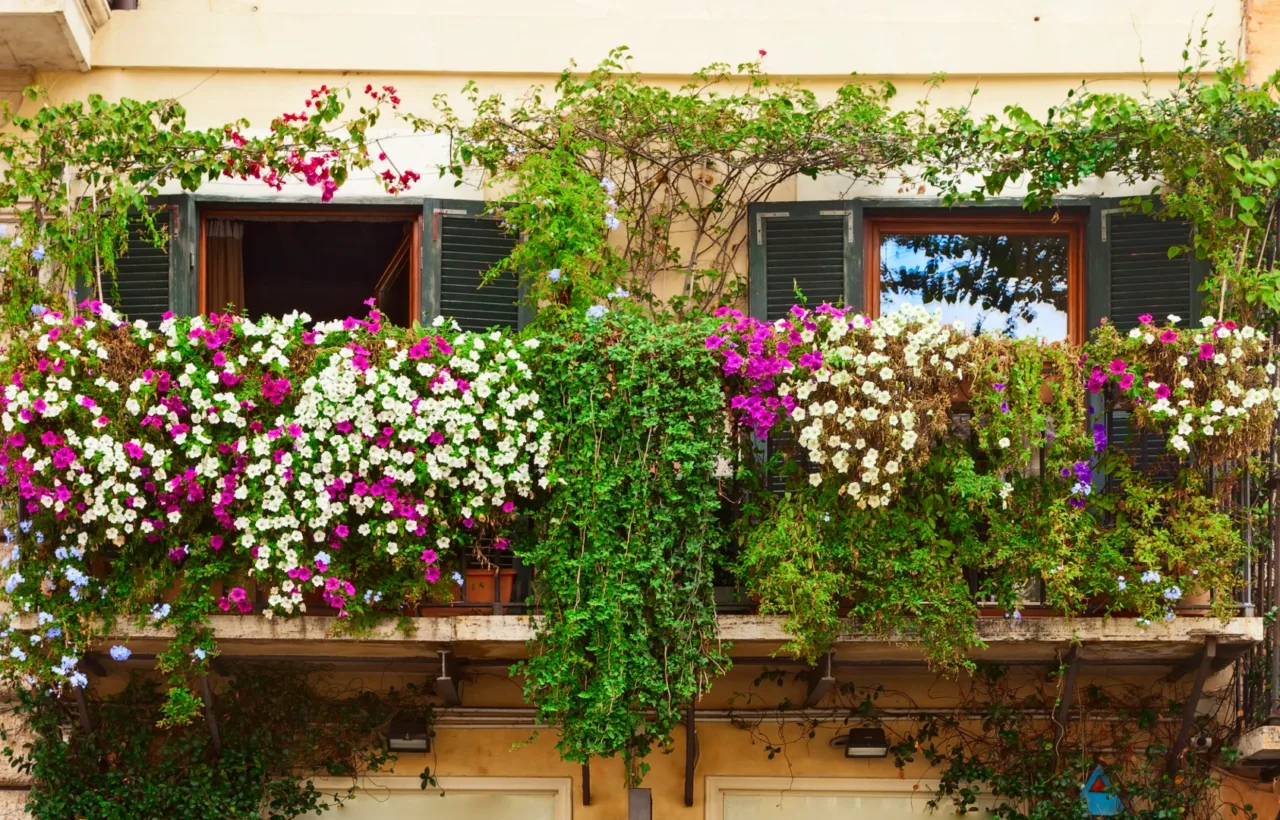
Then I started paying attention to the real ones in Paris photos. They use every vertical inch. They mix edible plants with pure beauty. They lean into the railing itself instead of fighting the small footprint.
My goal became clear: create layers. Floor level for heavier pots. Railing level for boxes and hangers. Wall or rail height for climbers and trailing plants. That three-zone approach made the whole thing click for me.
Honestly? The biggest shift was mental. I stopped waiting for a bigger balcony and started treating the one I had like a proper garden plot.
Place fragrant herbs at hand height, trailing flowers on the rail, and climbers behind them, so every layer earns its space.
Assessing Your Space Before You Buy a Single Plant
I measured everything first. Width of the railing. Depth of the platform. How much sun hits at different times of day. Direction the balcony faces.
Mine gets morning sun and afternoon shade. That ruled out pure sun lovers and opened the door to plants that handle partial light.
Weight matters more than most people realize. Older buildings have limits. I checked with my building manager and stuck to lightweight plastic and resin containers instead of heavy terracotta for the bigger ones. I still use a few classic clay pots for herbs because they look right, but I keep those smaller.
Drainage is non-negotiable. Every pot needs holes. I learned that the hard way when a waterlogged basil died in week two. Now I line the bottoms with a thin layer of broken pottery or packing peanuts so water can escape without soil washing out.
Wind is another factor on higher floors. My railing gets gusts. I avoid tall, top-heavy plants or I stake them early.
Mark each container’s sun exposure at 9 a.m., noon, and 3 p.m. to reveal whether morning light suits your planned herbs.
Choosing Containers That Actually Fit a French Balcony
I went through three rounds of containers before I landed on a system that works.
Railing planters came first. The ones that clamp or hang over the rail without tipping. I bought a matching set of three long window boxes in a soft gray. They hold trailing plants and herbs perfectly.
For the floor of the balcony I use square and rectangular pots that sit tight against the wall or rail. Round pots waste space in a narrow footprint. Square ones nest better.
Hanging baskets go on sturdy hooks attached to the wall or the underside of the rail supports. I keep the weight light and check the hardware twice a season.
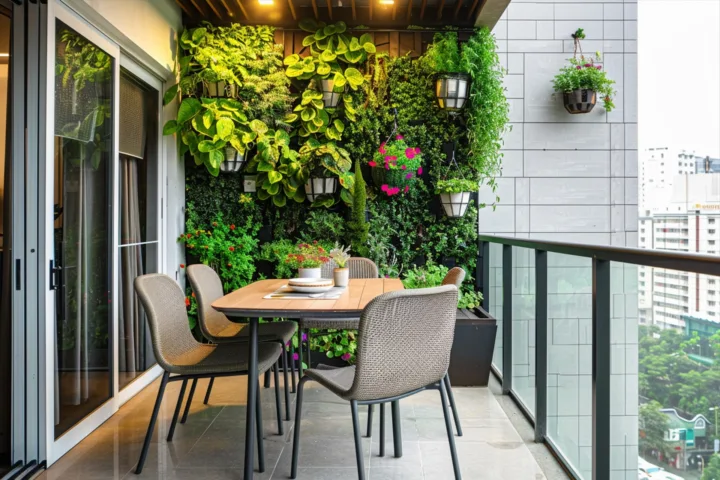
Vertical options matter too. I added a narrow trellis against the wall for a climbing jasmine. It takes almost no floor space and gives height.
My current setup looks like this:
- Three long railing boxes for cascading flowers and herbs
- Four square floor pots for larger plants and a dwarf citrus
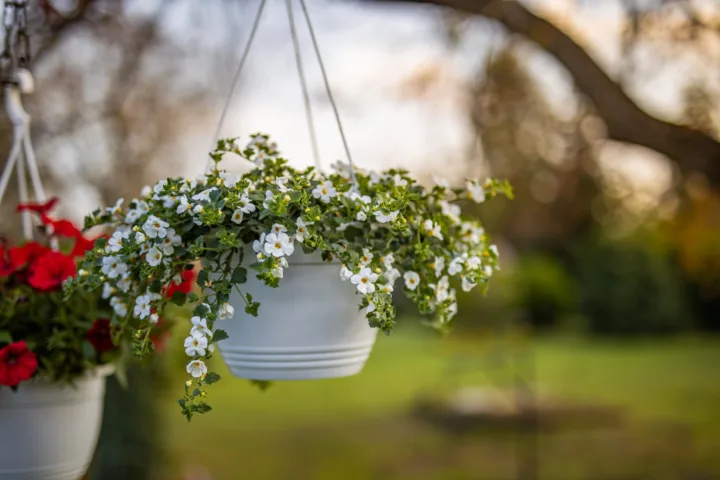
- Two hanging baskets for strawberries and trailing petunias
- One slim trellis for climbers
Everything stays under the weight limit and still feels abundant.
Measure the railing’s inside and outside lip before buying clamp boxes, since compatible width matters more than box length.
The Plants That Thrive in My French Balcony Garden
I tried too many plants the first year. Half of them sulked. Now I stick to proven performers for partial sun and windy conditions.
Trailing and Cascading Stars
These make the balcony look full from the street.
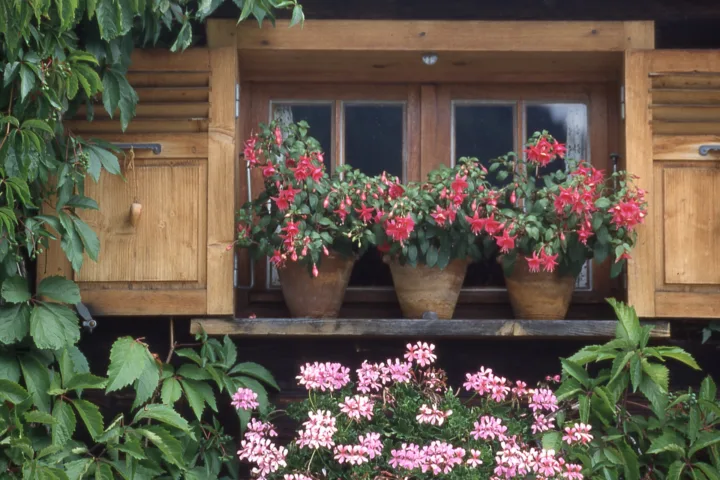
Geraniums remain the classic for a reason. I grow the ivy-leaf types that spill over the rail. Bright pinks and reds. They bloom for months with deadheading.
Petunias and calibrachoa give nonstop color. I choose compact varieties so they do not take over.
Trailing nasturtiums add edible flowers and a peppery leaf I toss into salads. They self-seed a little, which I like.
Herbs That Earn Their Keep
I refuse to grow anything I will not use.
Basil, thyme, rosemary, and chives live in the railing boxes closest to the kitchen door. I snip them almost daily in summer. Parsley and mint get their own pots because mint spreads like crazy.
One surprise success: French tarragon. It handles the conditions well and makes every chicken dish better.
Climbers and Height Givers
A compact jasmine climbs the trellis and smells incredible in the evening. I also tried a small passionflower once. It produced a few fruits but needed more heat than I could give it.
Wisteria looks romantic in photos, but most varieties get too big for a true french balcony. I skip it.
Edibles Beyond Herbs
Cherry tomatoes in a hanging basket worked for two seasons. I choose determinate or patio varieties. Strawberries in hanging baskets produce a steady handful of berries. Lettuce and spinach grow in the shadier floor pots during cooler months.
I avoid heavy root vegetables. No space and not enough soil depth.
Soil, Water, and Feeding Without the Fuss
I use a high-quality potting mix made for containers. Garden soil is too heavy and drains poorly.
Every spring I refresh the top few inches and add a slow-release fertilizer. During peak growth I give a diluted liquid feed every two weeks. Nothing fancy. Just consistent.
Watering is the daily job. Containers dry out fast. I check with my finger. If the top inch feels dry, I water until it runs out the bottom. Morning is best so leaves dry before night.
In heat waves I water twice a day for the smaller pots. A simple saucer under floor pots catches excess and keeps the balcony cleaner.
Mulch helps. A thin layer of fine bark or even dried coffee grounds slows evaporation.
Dried coffee grounds can crust when wet; keep this mulch layer very thin and alternate with bark to preserve water penetration.
Design Tricks That Make It Look Intentional
Color matters. I stick to a loose palette: soft pinks, whites, deep greens, and the occasional pop of red. Too many colors look chaotic in a small space.
I group plants in odd numbers. Three railing boxes instead of two. It feels more natural.
Foliage texture creates interest even when flowers fade. I mix fine leaves (thyme) with broader ones (geranium) and glossy ones (citrus).
A small folding stool sits in the corner. On good days I perch there with coffee and watch the plants. It turns the balcony into a place I actually want to use, not just a plant shelf.
Lighting helps at night. I clipped two small solar lights to the rail. Soft glow, no wiring needed.
Position solar-light clips where foliage will not shade their panels, otherwise the soft evening glow may fade before nightfall.
Common Mistakes I Made So You Do Not Have To
I overcrowded the first season. Plants need air flow. Now I leave a little breathing room between pots.
I ignored the microclimate. Plants that thrived on a friend’s sunny balcony failed on mine. Match the plant to the actual light and wind you have.
I bought cheap plastic that faded and cracked. Spending a bit more on UV-resistant containers paid off.
I forgot about winter. Most of my plants are annuals or come inside. The rosemary and thyme stay out with protection. Everything else gets cleared or moved to a sunny window.
See, the learning curve is real. But once the system is set, maintenance drops to a pleasant routine.
Seasonal Rhythm of My French Balcony Garden
Spring is planting and arranging. I start seeds indoors for the tender herbs and buy strong transplants for flowers.
Summer is peak beauty and daily harvesting. I deadhead, water, and enjoy.
Fall is wind-down. I pull spent annuals, take cuttings of favorites, and tidy the pots.
Winter is quiet. Empty containers get stored. A couple of evergreen herbs hold the space. I plan next year’s mix while looking at old photos.
The cycle keeps me connected to the seasons even in a city apartment.
Budget Reality Check
I started small. One railing box and two floor pots the first year. Total under $100 including plants and soil.
Now the full setup cost more, but I spread purchases over seasons. I reuse containers, save seeds, and take cuttings. The ongoing cost is soil refreshes, fertilizer, and a few new plants each spring.
It is cheaper than a gym membership and far more satisfying.
Frequently Asked Questions
How much sun does a french balcony garden really need? Most of the plants I grow handle four to six hours of direct sun. Morning light is ideal. Full shade limits options to ferns and a few herbs, but partial sun opens up the classic look.
Can I grow vegetables successfully on a french balcony? Yes for the small ones. Cherry tomatoes, lettuce, radishes, and strawberries work well in containers. Skip large plants like zucchini or full-size tomatoes. They need more root space than a railing allows.
What is the easiest way to keep plants from falling off the railing? Use planters designed to lock or hang securely over the rail. Add a bit of weight in the bottom if needed. Check the attachments after strong winds. I lost one pot early on and never made that mistake again.
Do I need special soil for a french balcony garden? A good quality potting mix made for containers is enough. Avoid garden soil. It compacts and drains poorly in pots. Refresh it yearly for best results.
How do I handle apartment rules or weight limits? Ask the building manager early. Stick to lighter containers and avoid overwatering that adds extra pounds. Most places allow reasonable plant setups if you stay within structural limits.
I still walk out every morning and feel a small hit of pride when I see the greenery against the city backdrop. The french balcony garden did not require a bigger home or a huge budget. It just required deciding the small space was worth the effort.
Start with one railing box and a handful of plants you actually like. Expand when the first ones thrive. That is how mine grew, one season at a time. Your version will look different from mine, and that is the best part.