
I spent years staring at my tiny balcony and feeling stuck. Concrete floor. Metal railing. Maybe four square feet of usable space if I stood sideways. I wanted plants. Real ones. Herbs I could snip for dinner. Something green that made the place feel less like a storage shelf and more like home.
That is when I started collecting 14 big balcony garden ideas that actually fit small spaces. Not the Pinterest fantasies that need a yard. Practical setups I tested myself. Some worked right away. Others taught me hard lessons about wind and weight.
I live in a third-floor apartment. Sun hits the balcony hard from late morning until mid-afternoon. Wind tries to tip everything. Neighbors sit close enough that I once overheard a full conversation about their dog’s diet. These ideas came from that reality.
Why Small Balconies Need Smart Plans
Most people start with one pot and hope for the best. I did that. The pot dried out in two days. The plant died. I felt defeated.
See, the wrong question is “How do I fill this space?” The right question is “How do I make every inch earn its keep?”
Weight matters. Wet soil is heavy. Wind is constant. Watering becomes a daily chore if you choose the wrong containers. I learned these rules the messy way.
Honestly? Once I stopped fighting the limits and started using them, the balcony changed. It still looks small. It just feels bigger.
Vertical Space Comes First
Floor space is precious. Vertical space is free.
Before mounting trellises or hanging planters, check balcony load limits, landlord rules, and whether anchors could damage the exterior wall.
1. Railing Planters That Clamp Tight
I hung my first railing boxes three seasons ago. They clamp onto the metal rail with adjustable brackets. No floor space used.
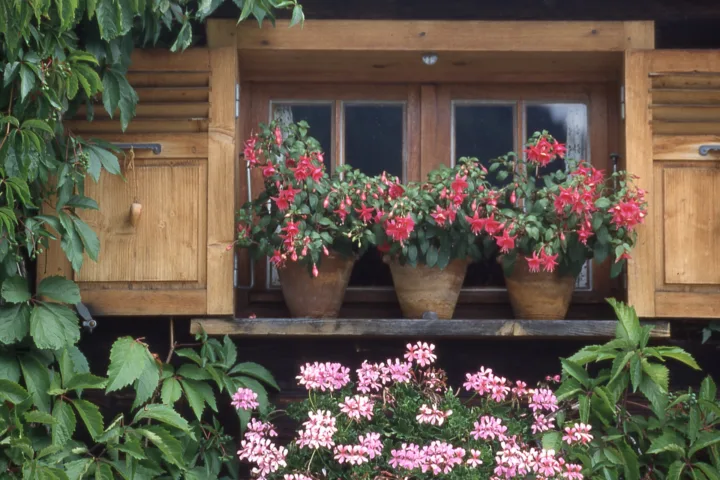
I plant trailing nasturtiums and compact marigolds in them. The flowers spill over the edge and soften the hard lines of the building. Lettuce works too if the box is at least six inches deep.
Water them first every morning. They dry out fastest because the soil volume is small.
2. Wall-Mounted Pocket Planters
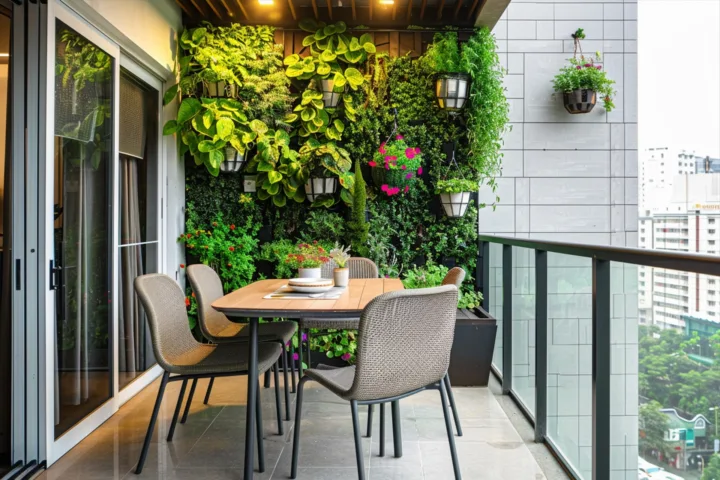
I screwed a fabric pocket planter to the wall near the door. It holds twelve small pockets. I fill the top ones with thyme and oregano. Lower pockets get lettuce and arugula.
The soil stays lighter if I mix in extra perlite. Thirsty plants go at the bottom so they catch the drip. This setup gave me fresh salad greens for weeks last spring.
3. Hanging Baskets from the Ceiling
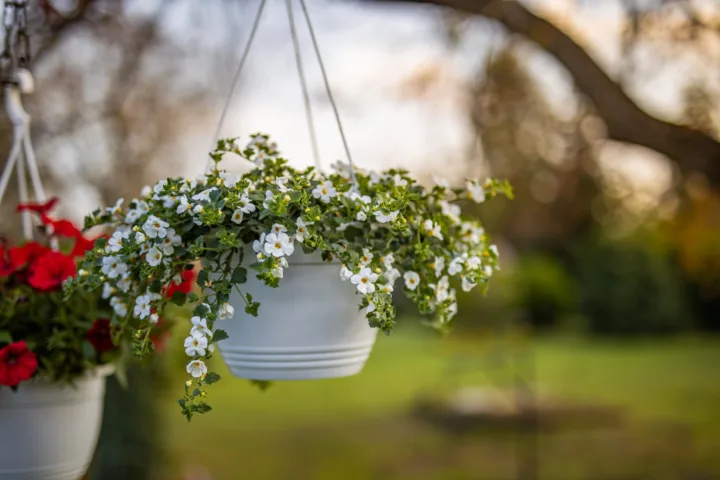
I installed two heavy-duty hooks rated for the load. A watered twelve-inch basket weighs more than most people expect. Trailing cherry tomatoes thrive up there. So do strawberries. The fruit stays out of reach of curious birds that visit my floor.
Rotate the baskets a quarter turn every week. They grow even instead of leaning toward the light.
Herb Setups That Pay Rent
I cook almost every night. Store-bought herbs never taste as good as the ones I snip myself.
4. Clustered Herb Pots by the Door
Five pots sit on a small metal stand right outside the sliding door. Basil in the largest pot. Mint in its own container because it spreads like gossip. Rosemary, thyme, and parsley share the rest.
I group them by water needs. Mediterranean herbs dry out between drinks. Basil wants steady moisture. Harvest hard and often. The plants branch more and produce longer.
5. Jar Herb Garden on a Shelf
I drilled holes in the bottoms of wide-mouth jars and set them on a narrow shelf. Labels go on the front. This looks tidy and costs almost nothing.
Cilantro and chives do well here. The jars dry faster than plastic pots, so I check them daily in summer.
Real Food from Containers
People tell me you cannot grow vegetables on a balcony. I ignore them.
6. Five-Gallon Tomato and Pepper Pots
One big pot holds a cherry tomato plant. Another holds a jalapeño. Both need at least five gallons of soil and six to eight hours of sun.
I stake them the day I plant. Waiting until they flop creates a mess. Feed every week or two because frequent watering washes nutrients out. Last summer I harvested tomatoes for nearly three months.
7. Salad Rotation in Shallow Trays
Two wide, shallow containers sit on a bench. I sow buttercrunch lettuce every two weeks in cool weather. When heat arrives I switch to arugula or bush beans. In late summer I go back to spinach.
This system keeps fresh leaves coming without tying up the big pots.
8. Strawberry Towers
A vertical tower planter holds strawberries on every level. Water from the top and it trickles down. The plants stay productive and the fruit stays clean.
I tried this after my hanging baskets got too heavy. The tower uses less overhead space and still gives me handfuls of berries.
Privacy and Screening Ideas
My balcony faces other apartments. I wanted to feel less exposed.
9. Morning Glory Privacy Screen
I run strings or a simple trellis along the railing and plant morning glories at the base. They climb fast. By midsummer the vines create a green wall that blocks the view of the neighbors’ laundry.
Anchor the trellis well. Wind will test every connection. Keep the seeds away from pets. They are toxic if eaten.
10. Tall Flower Boxes as Soft Screens
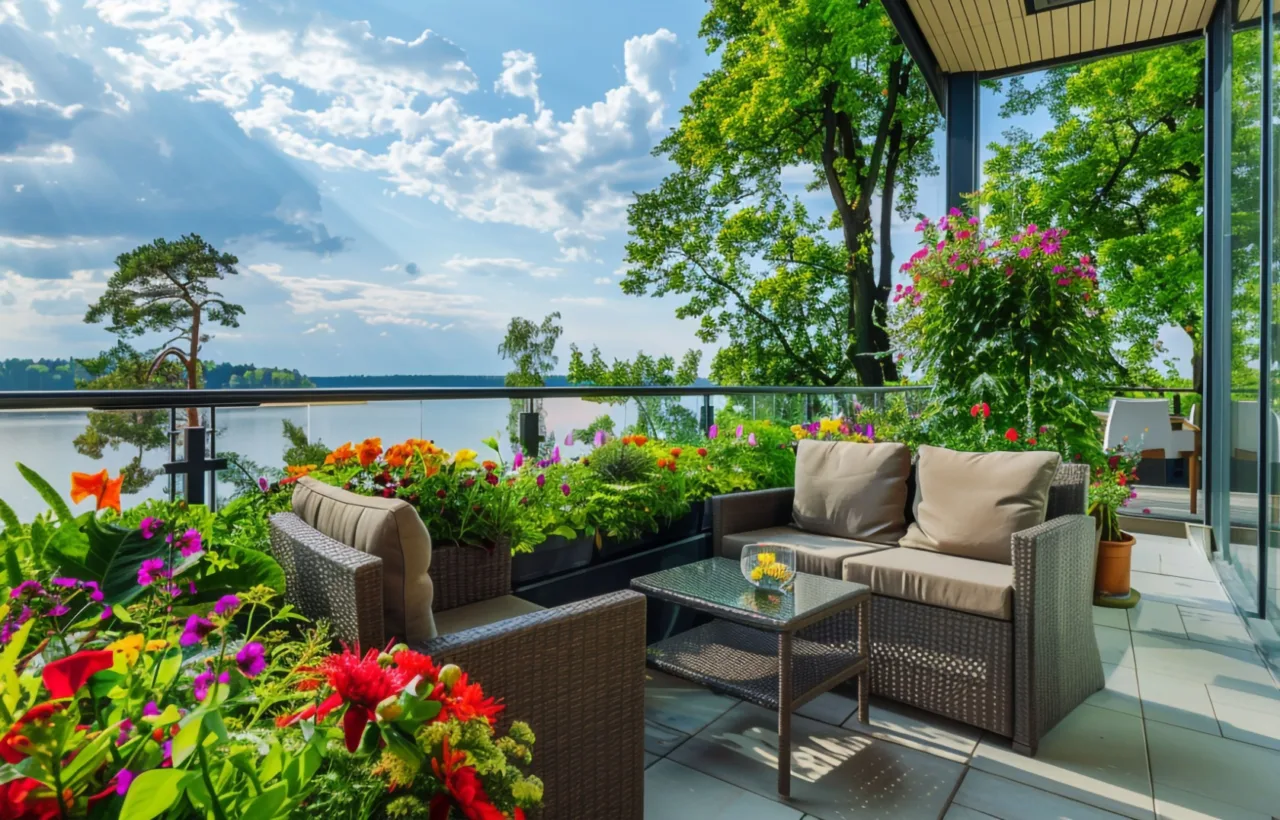
Long planter boxes filled with zinnias or tall cosmos sit along the open side. They reach three to four feet and give cut flowers all season. I layer shorter herbs in front. The whole arrangement feels enclosed without feeling boxed in.
Styling That Makes It Look Intentional
A random collection of pots looks like clutter. A planned arrangement looks like a garden.
11. Tiered Ladder Stands
I bought a simple wooden ladder-style stand. Sun-loving plants go on the top rungs. Shade-tolerant ones sit lower. Every plant shows. Nothing hides behind something else.
Odd numbers of pots read as deliberate. Matching containers help too. I swapped a jumble of plastic nursery pots for a set of terracotta ones and the whole balcony looked calmer.
12. Mixed Height Groupings
One tall element, several mid-height pots, and one trailing plant create a visual path. I place a trellised vine or staked tomato as the tall piece. Then I fill around it. The eye moves instead of stopping at a flat row of identical pots.
13. String Lights for Evening Use
Warm outdoor lights along the railing double the hours I actually sit outside. The plants look softer at night. The space feels like a room instead of an afterthought.
Leave at least one third of the floor clear. A garden you cannot sit in becomes another chore.
Seasonal Thinking Keeps It Alive
14. Three-Season Rotation Plan
Containers warm up faster than ground soil. They also cool down faster. I treat the balcony as three different gardens.
Spring brings cool-season crops: lettuce, spinach, pansies. Summer swaps in tomatoes, peppers, basil, and vines. Late summer I sow cool crops again for fall harvest. Between swaps I refresh the top few inches of soil and dump anything that looked diseased.
This rhythm stops the space from looking empty for half the year.
Lessons I Learned the Hard Way
Wind is the real enemy. Cluster pots so they shelter each other. Keep the tallest plants near the building wall.
Weight matters more than people admit. Heavy containers stay near structural supports. Lightweight potting mix beats garden soil every time.
Watering becomes a habit. Small pots need daily checks in July. I keep a watering can by the door so I never forget.
Start with one idea. I began with a single railing box of marigolds. The next season I added herbs. Then the tomatoes. The balcony never got bigger. My confidence did.
Frequently Asked Questions
How much sun do most of these 14 big balcony garden ideas need? Most edible plants want four to six hours. Fruiting crops like tomatoes and peppers prefer six to eight. Leafy greens and many herbs tolerate less. Map your light before you buy plants.
Can I grow real vegetables in containers this small? Yes. Give fruiting plants at least five gallons of soil and consistent water and feed. Cherry tomatoes and peppers have produced well for me three years running.
What if my balcony faces north and stays shady? Focus on lettuce, mint, parsley, and ferns. Skip the tomatoes. Vertical pockets and railing boxes still work. You just choose different plants.
How do I keep plants from tipping in the wind? Cluster them. Use heavier pots for tall plants. Clamp railing boxes tightly. Add a small trellis only if you can anchor it solidly.
Is this expensive to start? No. Railing planters and basic pots cost little. Seeds are cheaper than nursery plants. I spent under fifty dollars on my first full season and reused almost everything the next year.
I still walk out there most mornings with coffee. The railing boxes spill color. The herbs smell strong when I brush past. The tomatoes climb their stakes. The space remains small. It just no longer feels limited.
Pick one idea from this list and try it this weekend. See what happens. Messy first attempts beat empty concrete every time.