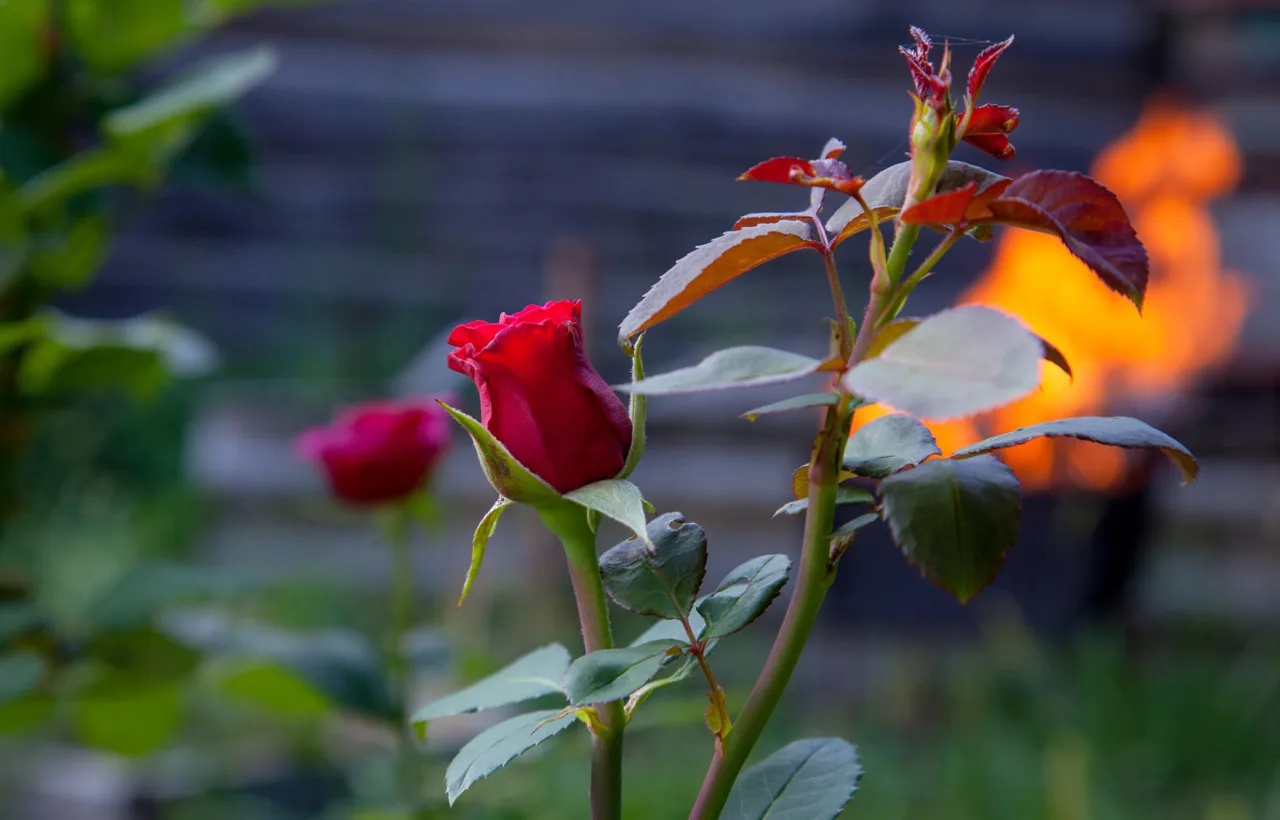

The most useful rose planting ideas start with a job, not a color chart. Put a compact shrub in a sunny border, a landscape rose in a hedge line, a patio rose in a deep pot, or a climber at the foot of a fence, and the rest of the plan gets simpler. Roses need about six hours of sun, soil that drains but does not bake dry, and enough space for air to move around the leaves. Get those three things right, then dress the planting with companions that hide bare stems and keep the picture going when blooms pause.
Choose the Rose Type Before You Pick a Spot
A pretty Pin can send you shopping for the wrong plant. Hybrid teas look elegant in a vase, but they sit awkwardly in a mixed bed. Ramblers cover a barn. Patio roses sulk in a tiny decorative pot that dries out by lunchtime. Match the class to the space first, then choose color and scent.
Shrub and landscape roses for beds and hedges
Shrub roses, including many English-style varieties and modern landscape types, are the workhorses of home gardens. They hold a rounded shape, flower in flushes, and look finished even when you skip a formal rose garden. Plant them in odd numbers if you want a collected look, and leave room for their mature width so the bed does not turn into a tangle by year three.
Landscape shrubs such as Knock Out types earn a place in hedges and front-yard masses because they keep blooming with less fuss. Neutral whites, blushes, and soft yellows read as modern. Hot pinks and scarlets shout cottage. Either can work if the whole run is one variety instead of a jumble of heights.
Climbers for walls, fences, and arches
Climbers need a structure from day one. They do not cling like ivy. You tie the canes to a trellis, wire, arch, or fence and keep them there. Training the main stems more horizontally, rather than straight up, encourages side shoots and a heavier crop of flowers along the support.
Leave climbers off high-traffic paths unless you pick a nearly thornless variety. A romantic arch is less charming when it snags sleeves every time you carry groceries through.
Give Roses Sun, Drainage, and Room to Breathe
Most roses bloom poorly in less than six hours of direct light. Morning sun that dries dew off the foliage is especially helpful against black spot. In very hot climates, light afternoon shade can prevent scorched petals. Avoid the drip line under large trees, where roots steal water and the canopy steals light.
Soil should be loamy and well drained, slightly acidic to neutral, around pH 6.0 to 6.5. Heavy clay holds water against the roots. Pure sand lets nutrients wash away. In both cases, work well-rotted compost or manure into the top 8 to 12 inches over the whole bed, not just a isolated hole. Isolated “luxury holes” create a bathtub that roots hate to leave.
Give each plant air. Crowding is one of the fastest ways to invite mildew and a sparse, twiggy look. Keep at least a hand’s width of open ground around the crown so mulch and companion plants do not sit against the canes.
Five Rose Planting Ideas That Fit Real Yards
Use this as a decision filter before you buy plants. One strong idea, planted well, beats a yard full of mismatched roses.
| Idea | Rose type to use | Space each plant needs | Extra work | Best use | | Mixed sunny border | Shrub or English rose | 3 to 4 ft | Regular deadheading | Cottage beds near a patio | | Simple flowering hedge | Landscape shrub | 2 to 3 ft | Light trim after flushes | Front yards and property lines | | Pot grouping | Patio or compact shrub | One rose per 16 in-plus pot | Frequent watering | Decks, rentals, tiny yards | | Arch or pergola | Repeat-flowering climber | About 6 ft along the structure | Tying and training | Gates, paths, seating shade | | Path or foundation edge | Compact floribunda | About 2 ft | Keep thorns off walkways | Walkways and house walls |
A mixed border is the most forgiving if you want that Pinterest overflow look. Pair one or two shrub roses with catmint, hardy geraniums, and a low lavender edge so the bed still has shape in late summer. A hedge of one landscape variety looks calmer and needs less design skill. Pots work when the ground is paved or rented, provided the container is large and has real drainage holes.
For an arch, plant a climber at each post. Water those two plants as if they are doing a hard job, because they are. Fast growers such as ‘New Dawn’ or nearly thornless ‘Zéphirine Drouhin’ are often used on walkways for a reason.
How to Plant Roses Without the Usual Mix-Ups
Bare-root roses go in during dormancy: late fall through early spring, whenever the ground is not frozen or waterlogged. RHS planting guidance favors late autumn at leaf fall, then late winter to early spring. In regions where winter routinely drops below about -10°F, spring planting is safer because a newly set plant has less winter to survive. Container roses can go in almost any time the soil is workable, though heat waves ask for extra water and temporary shade.
Soak bare roots in water for several hours before planting. Dig a hole at least twice as wide as the roots and deep enough that you can set the plant at the correct height. Tease circling roots on pot-grown plants so they head outward. Backfill with the native soil mixed with compost, firm gently, water until the hole settles, then mulch 2 inches deep, keeping mulch off the canes.
Set the graft union by climate, not by habit
The graft union is the swollen knuckle where the named variety was joined to the rootstock. Advice online contradicts itself because climate changes the answer. In mild-winter areas, keep the union at or just above soil level so you can spot suckers and reduce rot risk. In cold-winter gardens, set it 1 to 3 inches below the soil so freeze-and-thaw cycles are less likely to kill the named variety. Oregon State Extension frames it that way: milder sites plant high, colder sites plant lower.
Own-root roses have no graft knob. Plant them at the same depth they grew in the nursery pot.
If you are replacing a rose in the same hole, do not drop a new plant into the old soil and hope. Rose replant disease can stunt the newcomer. Dig out a hole about 18 inches wide and deep, swap in soil from a part of the garden that has never grown roses, and consider mycorrhizal granules on the roots. Some gardeners plant into a biodegradable cardboard box filled with fresh compost so the young roots establish before they meet the old ground.
Companion Plants That Cover Bare Stems
Roses often look gawky from the knees down. Companions should share full sun and decent drainage, stay shorter than the rose, and leave a clear collar around the crown.
Good partners include:
- Catmint (Nepeta) for a long blue haze that hides canes
- Hardy geraniums such as ‘Rozanne’ for a low, flowering skirt
- Lavender or salvia for scent and a contrasting spike
- Ornamental alliums or chives for spring structure and a smell many aphids dislike
- Lady’s mantle or sweet alyssum as a soft front edge
Keep aggressive spreaders and large shrubs away. They steal water and turn the rose into a sad stick in the middle. Garlic around the drip line is an old garden habit that may discourage some pests. Treat it as a helpful extra, not a guarantee against black spot.
Frequently Asked Questions
When is the best time to plant roses?
Plant bare-root roses while they are dormant, from late fall to early spring, skipping frozen or soggy ground. Container roses can go in during the growing season if you water them through the first dry spell. Autumn planting gives roots a head start in mild climates. Cold-winter gardeners are usually better off waiting until spring.
How far apart should rose bushes be planted?
Follow the mature width on the label, then add a little air. Compact patio roses can sit about 2 feet apart. Hybrid teas and many floribundas want 2.5 to 3 feet. Larger shrubs often need 3 to 4 feet. Climbers along a fence usually need about 6 feet. Tight spacing looks lush for one season and then traps humidity.
Can I plant a new rose where an old one grew?
You can, but the new plant often struggles if you reuse the same soil. Replace the soil in an 18-inch-wide hole with fresh earth from elsewhere, or plant into a cardboard box of new compost set inside that hole. Moving the rose to a new bed is the simplest fix when you have the space.
How deep should I plant a rose bush?
Spread the roots so they are not bent, then set the graft union at soil level in mild climates or 1 to 3 inches below in cold climates. Water after backfilling. The plant will settle a little, so check the height once the soil has firmed.
What are easy rose planting ideas for a small yard?
One deep pot with a compact shrub rose, a pair of climbers on a cattle-panel arch, or three matching landscape roses as a short hedge will do more than a crowded mix. Choose repeat bloomers, give them full sun, and plant catmint or geraniums at their feet so the scene does not look empty between flushes.
Plant One Clear Picture This Season
Pick the job first: a path that needs an arch, a patio that needs scent in a pot, or a border that needs one honest shrub rose and two companions. Buy for mature size, set the graft where your winter actually is, and leave the crown a little breathing room.
A single well-placed rose that you can water, prune, and walk past every day will beat a wishlist taped to the fridge. Start there, then add the next plant once this one looks at home.