
Garden wall planting ideas work when you treat the wall as four growing zones: the crown, the face, the base, and any gaps in the stone. One climber cannot do every job. A sunny dry-stone wall wants alpines stuffed into crevices. A blank rendered boundary wants wires and a trained plant. A rented fence wants pots you can take with you.
Start with the wall you already have, then pick the method that fits the surface, the light, and how much watering you will actually do. That is how a Pinterest picture turns into plants that stay alive.
Match the method to the wall you already own
The wall decides the planting, not the other way around. Dry stone and old brick have pockets. Smooth render and painted block do not. A low retaining wall has soil on top. A house wall has gutters you must keep clear.
Use this as a quick filter before you buy a single plant.
| Method | Works best on | What you get |
|---|---|---|
| Crevice and crown planting | Dry stone, rubble, old brick with gaps | Soft spillover and seasonal flowers with almost no extra structure |
| Wires or trellis plus climbers | Sound brick, render, fences | Coverage, scent, and height without roots gripping the masonry |
| Wall pots, mangers, hanging baskets | Any sound wall you can fix to | Instant colour and herbs you can swap by season |
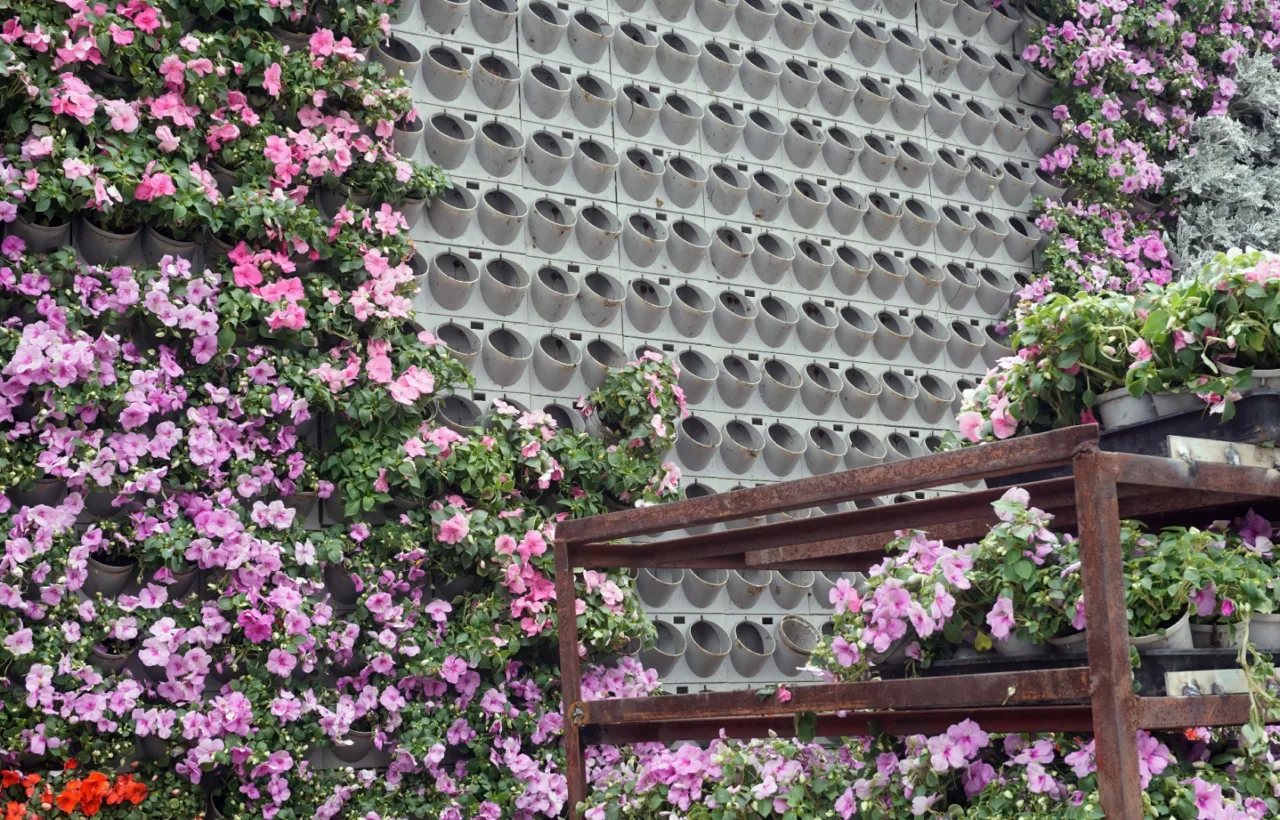
| Pocket panels or modular living walls | Strong, waterproofed surfaces | A dense green face, if you commit to regular watering |
| Espalier or fan-trained fruit | Warm, sunny house or garden walls | Fruit and winter structure in a narrow strip |
If the wall is cracked, damp, or poorly pointed, skip self-clinging climbers until the masonry is sound. Planting first and repairing later is how mortar gets worse, not prettier.
A rented plot or a wall you cannot drill is not a dead end. Hook-over baskets, freestanding troughs at the base, and tension-wire systems that clamp rather than screw still give you height.
Soften the crown and fill the gaps first
This is the look most people pin: thyme, campanula, and sedum pouring over stone. It is also the least fussy method if the wall already has joints or a soil-filled top.
The crown of a retaining wall behaves like a raised bed with extra drainage. Heat radiates off the stone. Water runs through fast. Plants that sulk in heavy border soil often thrive here.
Good crown and spillover choices for sun include creeping thyme, prostrate rosemary, sedums, houseleeks, aubrieta, Mexican fleabane (Erigeron karvinskianus), and trailing nasturtiums for a cheap summer splash. In cooler, shadier joints, try Campanula portenschlagiana, saxifrage, and small ferns.
How to tuck plants into an existing stone wall
Use young plugs or small divisions. A plant from a 9cm pot rarely fits, and forcing it usually snaps roots.
Water the plant first. Wedge a small stone at the front of the gap so soil cannot wash out. Pack in a lean mix of compost and horticultural grit, then spread the roots and firm them in. Keep the crown of the plant level with the surrounding soil, not buried.
Water until it is established. After that, most true wall plants prefer a dry spell to a soggy joint. If you are building the wall from scratch, plant as you lay each course. That is when roots get a real pocket of soil behind the face, not a teaspoon of compost in a crack.
What to grow along the top so it spills over
Think shallow roots and a trailing habit. Sedum and houseleeks handle heat and thin soil. Creeping thyme gives scent when you brush past. Aubrieta and rock cress give that spring cushion of colour people expect from a cottage wall.
Leave some joints empty on purpose. A wall stuffed with plants in every crack looks busy for one season, then messy when the vigorous ones swamp the rest. Space is part of the design.
Train climbers without asking the brick to do the work
Climbers are the fastest way to cover a blank face. They are also where people get into trouble, because some plants glue themselves to masonry and some need a support you control.
Plant climbers about 45cm out from the base, then lean the stems in. The strip of soil against a wall is often a rain shadow. The RHS is blunt about this: plants parked tight against the brick dry out while the rest of the garden gets rain.
Fix horizontal wires or a trellis with a small air gap so the wall can dry. Train stems sideways. Horizontal growth covers more wall and usually means more flowers than a single shoot racing for the gutter.
Self-clingers versus plants that need wires
Self-clingers such as ivy, climbing hydrangea, and Virginia creeper attach with aerial roots or sticky pads. On sound masonry they often cause little harm, and research commissioned for Historic England even found ivy can buffer temperature swings. The risk rises when mortar is already crumbling, when stems sneak into cracks, or when a mature plant adds weight and hides defects.
The RHS advice on ivy is the useful middle ground: aerial roots do not bore into sound masonry, but they can enlarge existing joints. Keep growth off gutters, roofs, and windows. Check the wall once a year.
Twining and scrambling plants are easier to manage. Star jasmine, most clematis, honeysuckle, climbing roses, and passionflower want wires, not a grip on the render. If you ever need to paint or repoint, you can lower them instead of ripping pads off the brick.
For shade, climbing hydrangea, several ivies, Clematis alpina types, and Pyracantha trained as a wall shrub earn their keep. For a hot south or west face, climbing roses, star jasmine, grapes, and a fan-trained fig or peach make more sense than a woodland fern.
Use pots and pockets when the wall has no soil
Not every garden wall is a planting surface. Plenty of them are smooth, rented, or already carrying a damp course you should not pierce.
Wall-mounted pots, terracotta clusters, and stacked mangers give you the same vertical hit with far less commitment. Stagger the heights so the lower plants still get light. Choose trailing forms: ivy-leaved pelargoniums, creeping Jenny, strawberries, oregano, and tumbling tomatoes on a sunny kitchen wall.
Modular pocket panels and felt living walls look dense in photos because they are packed and irrigated. In real life they dry out faster than any border. If you go this route, group plants with the same thirst, install drip irrigation if the panel is large, and waterproof the wall behind it. The RHS notes that living wall systems often need watering built in. That is not a luxury. It is the difference between a green wall and a brown one in July.
A simpler stand-in is a row of identical pots on brackets. You can swap tired bedding for winter evergreens without rebuilding anything.
Choose plants by the light on the wall
Aspect matters more on a wall than in an open bed. A south-facing wall stores heat and can ripen fruit that sulks in the rest of the garden. A north-facing wall may get almost no direct sun.
Match the plant to that microclimate instead of copying a photo taken in different light.
Sunny, dry walls favour Mediterranean herbs, sedums, helianthemum, lavender on the crown, and heat-loving climbers. Shady walls favour ferns, heuchera, ajuga, hostas in pots, and foliage climbers. East walls often suit clematis and honeysuckle. West walls get hot afternoon sun and need plants that will not scorch.
Edibles work if you keep the root run watered. Alpine strawberries, chives, parsley, and cut-and-come-again salad leaves cope with less sun. Thyme, oregano, and tumbling tomatoes want the bright side. Espalier apples and pears like a warm wall and a wire framework. They take patience, but they earn their space in a small garden in a way a floppy shrub does not.
Mistakes that leave a wall looking patchy
Most failed wall planting is not a mystery. It is one of a handful of avoidable errors.
- Planting a large nursery plant into a crack that can only hold a plug, then watching it wilt.
- Choosing a self-clinger for crumbly mortar because it looked lush on a restored barn.
- Installing a pocket wall with mixed ferns and succulents, then watering them on the same schedule.
- Setting a climber tight against the brick, inside the rain shadow, and assuming the sky will do the rest.
- Letting ivy or a rose reach the gutter in year two because pruning felt optional.
Consequences are predictable. Joints empty out. Leaves crisp. The pretty mid-section of the wall stays bare while one plant clogs the downpipe. A yearly trim and a watering plan in the first season prevent most of that.
Frequently Asked Questions
What can I plant in the gaps of a garden wall?
Young, drought-tolerant plants with small roots. Aubrieta, campanula, sedum, houseleeks, thrift, and creeping thyme are the reliable starting list for sun. Use campanula, saxifrage, and small ferns in cooler joints. Pack a gritty mix behind a wedge stone and water until the plant holds.
Do climbing plants damage garden walls?
They can, if the masonry is already weak or if a self-clinger is allowed into cracks and gutters. Sound brick and well-pointed stone usually cope, especially with climbers grown on wires. Inspect mortar first. Keep stems off roofs and rainwater goods. That is the practical rule.
Can I plant on top of a retaining wall?
Yes, if there is soil behind the coping and the wall drains. Treat the top as a hot, fast-draining raised bed. Trailing sedum, thyme, rosemary, and erigeron are safer than thirsty shrubs with heavy roots. Avoid anything that will lever stones apart as it fattens.
What garden wall planting ideas work in shade?
Climbing hydrangea, ivy on a support you can control, ferns in pots or pockets, heuchera, ajuga, and shade-tolerant campanula. Flowering climbers that need a full day of sun will sulk. Lean on foliage, berries, and a few pale flowers rather than chasing a rose that wants the other side of the house.
How do I water plants on a vertical wall?
Water the root zone, not the facade. New crevice plants need regular drinks until they root. Climbers need a soak at the base, especially in the rain shadow. Pocket systems dry fastest and usually need drip irrigation or daily checks in hot weather. Group plants with similar needs so you are not drowning a sedum to save a fern.
Plant one face of the wall and leave the rest for later
A whole boundary planted in one weekend looks ambitious on a pin and exhausted by August. Pick the stretch you see from the kitchen or the path. Decide whether that face needs crevice plants, a climber on wires, or a line of pots.
Do the unglamorous checks first: pointing, drainage, light, and whether you can reach the top without a circus act. Then plant small, water well for the first season, and train sideways.
A garden wall earns its keep when the hard surface and the plants look like they belong together. Start with the wall you have, give it the right job, and let the greenery do the softening.