
The fastest way to get plants growing is to skip the full-yard overhaul and plant into something you can hang, hook, or slide against a wall. Most DIY planting ideas stall for the same three reasons: no real drainage, heavy garden soil packed into a closed pot, and a container too small for the plant you chose. Fix those first and the pretty projects start working.
You do not need a backyard. A sunny rail, a stoop, or a kitchen window is enough if you match the planter to the light and the plant to the pot.
Match the Project to Light, Weight, and Water
Pick the spot before you pick the Pinterest project. A west-facing rail can cook a small metal can by midafternoon. A covered porch can starve a tomato of the six-plus hours of sun it wants. Walk the space at 9 a.m. and again at 3 p.m. Note what actually gets light, not what you hope it gets.
Weight matters just as much on a balcony or fire escape. Wet potting mix is heavy. A 5-gallon bucket filled with moist mix and a mature pepper plant can approach the load of a small suitcase. If you rent, check what your railing and floor can hold before you build a wall of soil.
Water is the third filter. Hanging baskets and skinny window boxes dry out faster than a crate on the ground. If you travel midweek, choose larger pots or a simple bottle reservoir rather than a cluster of tiny tins.
For perennials you want to keep outdoors year after year, check your winter low on the USDA Plant Hardiness Zone Map before you buy. Annual herbs and flowers are more forgiving. They only have to last one season.
DIY Planting Ideas You Can Build From What You Already Own
Start with a container that already exists. Drill or punch drainage holes. That single step turns junk into a planter.
Tin cans, colanders, and old buckets work because they are cheap and easy to modify. A colander already has holes, so it becomes a hanging basket with twine and an S-hook. Line it with coir or landscape fabric so the mix stays put. The RHS tin-can and colander method is a clean weekend project if you want a visual that still functions.
A 5-gallon hardware-store bucket holds a determinate tomato, a pepper, or a mound of chard if you drill several holes in the base. Wooden crates work for shallow greens if you line them and keep the soil 6 to 8 inches deep. Skip baskets as the actual pot. Water plus untreated woven fiber turns into rot. Drop a plastic nursery pot inside the basket instead.
Pallets look charming on Pinterest and cause more trouble than any other upcycled idea. Use only pallets stamped HT (heat-treated). Skip anything stamped MB (methyl bromide). University of Maryland Extension explains the markings and why MB pallets do not belong near edible plants. If there is no stamp, do not grow food in it.
| Project | Floor space | Skill | Good plants | Watch-out |
|---|---|---|---|---|
| Cans or jars | Almost none | Low | Small herbs, succulents | Metal heats and dries fast |
| Colander or hanging basket | None | Low | Strawberries, trailing flowers | Needs daily water in heat |
| Crate or 5-gal bucket | Small footprint | Low | Lettuce, peppers, bush tomatoes | Drill several drain holes |
| HT pallet pocket wall | Wall only | Medium | Shallow herbs, succulents | Never use MB-stamped wood |
| Simple raised box | Moderate | Medium | Mixed vegetables | Soil volume and wet weight |
That table is the decision, not the mood board. Choose the row that matches the space you actually have.
How to Plant a Container So It Lasts the Season
Pretty planters fail in week three when roots sit in soggy mix or dry out twice a day. The planting sequence matters more than the paint color.
Drain first, then fill with the right mix
Every planter needs open holes. One tiny hole in a large tub is not enough. Cover the holes with a scrap of window screen or a coffee filter so mix does not wash out. Do not add a layer of gravel. Water hangs up at the soil-to-gravel boundary instead of leaving the pot. Clemson Extension is blunt about hanging baskets and window boxes: do not put pebbles in the bottom.
Use potting mix, not garden soil and not bagged topsoil. Garden soil packs down in a closed container, holds water too long, and can bring in weeds. Fill the pot with mix from the base to about an inch below the rim. That gap keeps water from running over the sides every time you water.
If the vessel is too pretty to drill, treat it as a cover pot. Keep the plant in a plastic grow pot with holes, water it in the sink, and drop it back in.
Pair plants that share the same thirst
The classic “kitchen herb pot” is where rosemary dies and basil sulks. Mediterranean herbs such as rosemary, thyme, sage, and oregano like mix that dries between waterings. Basil, parsley, cilantro, and mint want steadier moisture. Put those two groups in separate containers.
The same rule applies to flowers. A sun petunia and a shade fern will not share a pot happily, no matter how good they look in the cart.
For a mixed show pot, use the old florist formula: a tall center plant, a mounding filler, and a trailer over the rim. Keep their light and water needs aligned, or the design is only pretty for two weeks.
Size the pot to the crop
A plant in a too-small pot dries out, tips over, and never reaches the size on the tag. University of Maryland Extension gives practical minimums: leaf lettuce can live in about a half gallon, bush beans in 2 gallons, peppers in 5 gallons, and a standard tomato in at least 5 gallons, with more room producing a sturdier plant.
Depth counts for roots. Lettuce is fine in 6 to 8 inches. Carrots want closer to 10 to 12 inches. A patio tomato wants 12 inches or more plus a cage from day one, not after it flops.
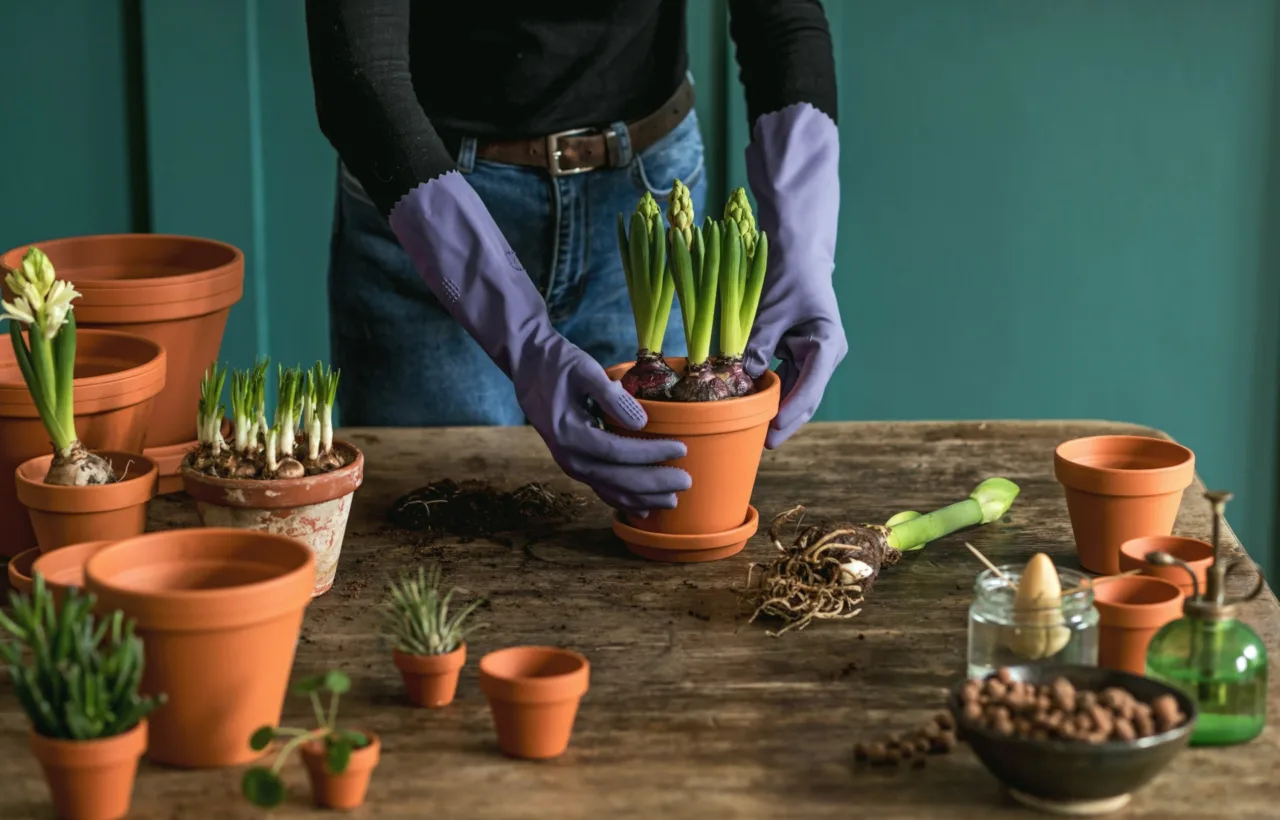
- Water the nursery pot before you unpot it so the root ball stays intact.
- Set the plant so the top of its mix sits even with the new mix, not buried.
- Firm the mix around the sides, water until it runs out the holes, then add mix if the surface sinks.
- Leave that one-inch gap at the rim so watering stays inside the pot.
Vertical and Hanging Planting Ideas for Tight Floors
When the floor is full, go up. Rail planters, hanging baskets, and a simple ladder shelf give you harvest or color without claiming the walking path.
Hook-on rail boxes work on a balcony if they clamp tightly and face inward on a windy side. A falling wet planter is not a cute accident. Check the hardware twice.
Hanging baskets look generous from below, so plant the edges with trailers and keep the center slightly higher. Strawberries in a hanging basket stay cleaner than berries on the ground. Choose an everbearing type if you want fruit across the season rather than one brief flush.
A leaning ladder shelf holds nursery pots you can rotate. That is easier to water and cheaper to rebuild than a living wall that leaks down the siding. Fabric pocket planters look tidy in photos and dry out fast. Check them daily in summer or they become expensive toast.
Keep mint in its own hanging pot. It will roam through a shared box and crowd everything else.
Raised and Tiered Beds When You Want More Than One Pot
A low box makes sense when you have a strip of yard, a patio corner, or a need to garden without kneeling in native clay. Keep the bed no wider than 4 feet so you can reach the middle without stepping in the soil.
Untreated cedar or a lined pine box is the simple food-garden choice. Current residential pressure-treated lumber is usually micronized copper azole, not the older arsenic formula pulled from home use in 2004. Maryland Extension and an Oregon State University study treat modern copper-treated boards as a low-risk option for home vegetable beds, with any copper rise limited to soil right against the wood. If you want extra distance, line only the sides (leave the base open to drain) or plant the edibles a few inches in from the frame. Certified organic production still does not allow treated wood in soil contact.
Fill a raised bed with a blend built for beds, not with bag after bag of potting mix. Potting mix is right for pots. In a large box it is costly and can dry in odd ways. A common workable fill is quality soil plus compost, with some coarse material so the bed does not set up like brick.
Tiered or ladder planters earn their keep on a patio. Put the thirstiest crops on the lower, shadier tier and the sun lovers up top. Water from the top and watch the bottom pots so they do not sit in runoff.
Mistakes That Quietly Kill DIY Plantings
These are the failures that look mysterious until you check the pot.
- No drainage, or one clogged hole. Roots drown. Yellow leaves and a sour smell show up before the plant collapses.
- Garden soil in a container. It compacts. Water sits. The plant looks thirsty and still rots.
- A tomato in a 1-gallon pot. It wilts every afternoon and never sets a decent crop.
- Sun and shade plants in one bowl. One fries. One stretches. Both look tired.
- An unmarked or MB pallet used for herbs. The look is rustic. The risk is not worth the free wood.
- Watering on a schedule instead of checking the mix. Poke a finger an inch down. Water when that layer is dry, and water until the extra leaves the holes.
Containers also need food after a few weeks. Bagged mix often includes a short starter charge, then growth slows. A diluted liquid feed every couple of weeks through the growing season keeps herbs leafy and flowers from stalling. Do not dump a heap of fertilizer into a small pot and hope.
Frequently Asked Questions
What are simple DIY planting ideas if I only have a windowsill?
Use a long, shallow tray or a row of 4- to 6-inch pots with drainage. Grow chives, thyme, or a cut-and-come-again lettuce mix in the brightest window you have. Rotate the tray each week so stems do not lean. If the sill gets less than four hours of decent light, add a small grow light rather than forcing a tomato into gloom.
Do I need rocks in the bottom of a DIY planter?
No. Holes plus a light potting mix do the draining. Rocks steal root space and can keep a wet band of soil sitting above the stone layer. Cover the holes with mesh if you are worried about mix falling through.
Can I grow vegetables in homemade planters?
Yes, if the pot is large enough and the mix drains. Leafy greens, radishes, bush beans, peppers, and compact tomatoes are the reliable group. Match the crop to the volume. A salad box can be shallow. A fruiting plant cannot.
Are pallet planters safe for food?
Only if the pallet is clearly stamped HT and looks clean. Avoid MB stamps, stained mystery wood, and pallets that sat in chemical storage. When the stamp is missing, use the pallet for ornamentals or skip it.
How often should I water hanging DIY planters?
In hot, windy weather, check every morning and again in late afternoon. Small hanging pots can dry in a day. Larger baskets last longer. Water until it runs out, then empty any cachepot so the roots are not sitting in a puddle.
What soil should I use for DIY planting ideas in containers?
Use a bagged potting mix labeled for containers. Look for a light blend with perlite or similar grit. Save native soil and bagged garden soil for in-ground beds.
Plant One Thing This Week, Not Twelve
Choose the smallest project that fits the light you measured. A drilled bucket of basil by the kitchen door beats a half-built pallet wall that never gets filled. Get the holes in, fill with potting mix, and plant something you will actually harvest or walk past every day.
See, the planter does not have to look like a magazine cover on day one. It has to drain, hold enough mix, and match the sun you have. Start there, and the rest of the ideas get a lot easier to use.