
Hostas earn their keep in shade because they solve the two problems most shady yards share: bare soil and dull texture. The planting hostas landscaping ideas that hold up start with mature size, leaf color, and light, then place plants in groups instead of one lonely clump. Plant in spring or early fall, keep the crown level with the soil, and space for the plant you will have in four years, not the pot you bought today. Do that, and hostas can edge a path, hide fading bulb leaves, soften a foundation, or replace failed grass under a tree.
Match Light, Leaf Color, and Mature Size First
Most hostas want dappled shade or morning sun with afternoon protection. Deep shade is survivable, but growth slows and gold leaves turn murky. Hot afternoon sun scorches thin leaves and fades blue ones.
Leaf color is the fastest way to pick a site. Blue hostas keep their waxy coating in cooler, shadier spots. Gold and chartreuse types need a couple of hours of morning light to stay bright. White-variegated leaves look luminous in filtered shade, then burn if the sun is harsh.
Size is the other decision that saves you from ripping plants out later. A gallon pot can hide a future four-foot clump. Read the mature width on the tag and plan as if that number is already true.
Blue, gold, and variegated leaves need different light
University of Minnesota Extension notes that gold hostas color up with two to three hours of morning sun, while blue hostas bleach and burn if that coating cooks off. In hotter southern gardens, give almost every cultivar more shade than a catalog photo suggests.
If a leaf is already thin and glossy, treat it as shade-first. Thick, puckered, or heavily corrugated leaves handle a little more light and shrug off slugs better than silky types.
Space for the plant you will have in four years
Hostas fill space. That is the point. It is also why a tight “full” look in year one becomes a crowded, slug-friendly thicket by year four.
Use the table as a working guide, then check the cultivar tag. Closer spacing is fine if you want a quick groundcover and you are willing to divide later.
| Size class | Typical mature width | Center-to-center spacing | Best landscape job |
|---|---|---|---|
| Mini or dwarf | 8–18 in. | 10–18 in. | Path edges, troughs, tight corners |
| Small | 18–24 in. | 18–24 in. | Front of borders, patio pots |
| Medium | 24–36 in. | 24–36 in. | Drifts, mixed shade beds |
| Large to giant | 3–6 ft. | 36–60 in. | Focal clumps, under trees, fence screens |
Odd-numbered groups read as a design. Three or five of the same cultivar looks intentional. One of everything looks like a sample tray.
Plant Hostas So the Crown Stays High and the Roots Can Spread
Spring is the easiest season because you can see the eyes, or growing tips, as they emerge. Early fall also works if you plant several weeks before hard frost. Summer planting is possible, but you will water more.
The Old Farmer’s Almanac recommends fertile, well-drained soil with a pH around 6.5 to 7.0. Hostas dislike winter sogginess. Raised beds or amended clay help more than extra fertilizer.
- Dig a hole as deep as the root ball and about twice as wide. Loosen the surrounding soil so roots can move outward.
- Mix compost into the backfill. Skip a deep well of raw manure that stays wet against the crown.
- Set potted plants at the same depth they grew in the pot. For bare-root divisions, keep the crown even with the soil and the tips visible.
- Backfill, firm lightly, and water until the soil settles. Add a thin mulch, then pull it an inch or two away from the crown.
Water regularly the first season. After that, most established clumps handle short dry spells, especially in cooler shade. A light spring feeding or a top-dressing of compost is enough in ordinary soil. Heavy fertilizer makes lush leaves that slugs notice first.
Landscaping Ideas That Work in Ordinary Shade
A hosta bed looks finished when foliage does three jobs at once: cover ground, contrast texture, and lead the eye. Flowers are a bonus, not the plan.
Layer heights under trees and along fences
Start with one large cultivar as the anchor. Proven Winners suggests featuring a big specimen in an island bed or under a shade tree, then massing medium varieties behind or beside it. Put the tallest plants toward the fence or trunk line, medium mounds in the middle, and minis at the front.
Keep crowns about 12 to 18 inches away from a tree flare. Hostas do not need to hug bark. Shallow-rooted maples steal water. If the soil under a tree is a plate of roots, plant in large containers on top of mulch instead of fighting the tree.
Black walnut trees are a separate issue. Many lists call hostas reasonably juglone-tolerant, but leaf litter and dense roots still stress new plants. Plant outside the heaviest debris zone and water through the first summers.
Soften paths, steps, and the front of the house
Small and medium hostas make cleaner edges than most groundcovers because they mound instead of running. Stagger them along a walk so the line feels planted, not marched. Gold or white margins catch the little light that reaches a north foundation and make the house look less severe.
Spring bulbs belong in the same bed. Hostas emerge late enough to hide daffodil and tulip foliage after bloom. That single pairing gives you April color without a bare patch in June.
Use containers where grass already quit
A pot at least 12 to 18 inches wide, with real drainage holes, lets you put hostas on a shaded patio, under a deck, or over tree roots you cannot dig. RHS guidance favors a loam-based or peat-free mix that stays moist without turning sour.
One strong plant per pot looks sculptural. If you mix, add a trailer such as creeping Jenny and keep the pot in morning light. Container hostas dry faster than in-ground plants, so check them in heat.
Companions That Stop a Hosta Bed From Looking Flat
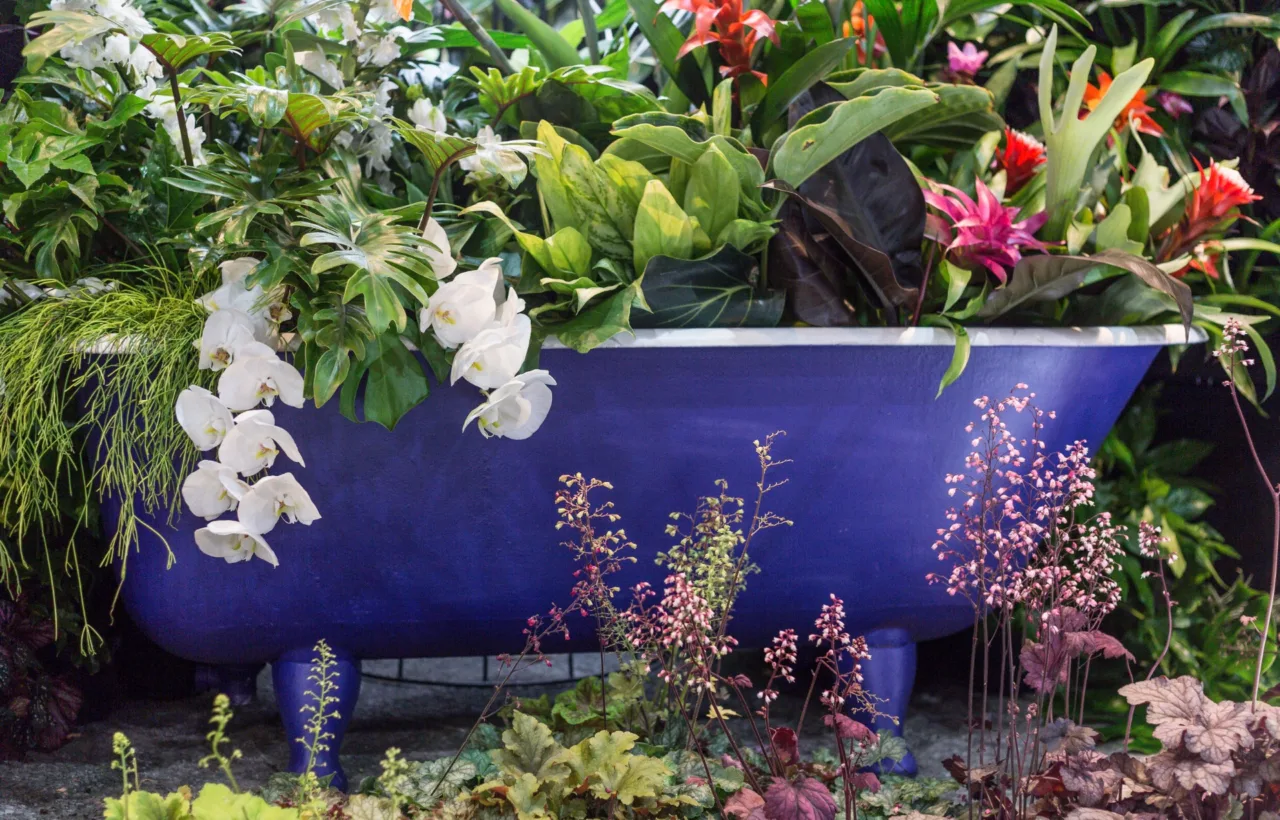
Bold leaves need a foil. Ferns, Japanese forest grass, coral bells, brunnera, astilbe, hellebores, and lungwort share shade and moisture without copying the same shape. Southern Living also flags the mismatch that wrecks pairings: sun-and-dry plants next to shade-and-moist ones.
Skip aggressive carpets such as English ivy and bishop’s weed. They crawl over crowns and win. Pachysandra can do the same in a small bed. Hydrangeas and azaleas work behind hostas if the soil stays evenly moist.
Repeat one companion the way you repeat one hosta. A ribbon of ferns plus a drift of ‘Halcyon’ reads as a garden. A different plant in every gap reads as leftover inventory.
Mistakes That Make Hostas Look Accidental
The usual failure is not a mystery disease. It is a site or spacing problem that shows up midsummer.
Planting too deep invites crown rot. Planting in soggy clay does the same after a wet winter. Afternoon sun on thin leaves looks like a watering problem when it is a light problem. Bark piled against the crown keeps slugs happy and the growing point damp.
Collector planting is the design version of those mistakes. One giant gold hosta, one tiny blue mouse-ears type, and six unrelated variegated leaves will never settle into a picture. Group first. Edit later.
Deer and slugs are real. UMN Extension lists both as common problems. Thick-leaved cultivars reduce slug damage. Fencing or repellents are more reliable than wishful plant lists if deer treat your yard like a salad bar. Water in the morning, keep mulch thin, and clean up collapsed foliage in fall so slugs lose winter cover.
Frequently Asked Questions
How far apart should I plant hostas in a landscape bed?
Space to mature width. Minis can sit 10 to 18 inches apart. Medium clumps usually need 24 to 36 inches. Large and giant cultivars often want 3 to 5 feet. If you pack them for a fast carpet, plan to divide in a few years so air can still move through the leaves.
Can I use hostas in full shade landscaping ideas?
Yes. Hostas survive deep shade and still cover ground. They grow more slowly there, and gold leaves may lose punch. Filtered light or brief morning sun gives stronger color without the scorch that comes from late-day heat.
When is the right time for planting hostas?
Spring, as the eyes emerge, is the most forgiving window. Early fall is next, as long as roots have time before the ground freezes. Summer planting works if you water steadily and keep the soil from baking.
Will hostas grow under trees?
They can, if you manage roots and water. Dig only as much as you must, keep the crown away from the trunk, and add compost without burying existing tree roots. Where the ground is a solid root mat, containers are the kinder option.
How do I keep slugs from shredding new plantings?
Choose thicker leaves, water in the morning, and keep mulch off the crown. Hand-pick at dusk after rain. Iron phosphate baits are widely used in home gardens. Crowded, constantly wet beds stay attractive to slugs no matter which bait you try.
Are hostas safe around pets?
Hostas are toxic to dogs and cats if chewed. Place tempting clumps away from the spots where pets nibble plants, and do not treat fallen leaves as a snack.
Plant One Drift Before You Buy the Whole Catalog
Pick the shadiest problem first: the north foundation, the path that never grows grass, or the bare skirt under a tree. Choose one medium or large hosta that fits the light, plant three of it at mature spacing, and add one contrasting companion such as a fern or coral bell.
That small group will tell you more than a cart of mixed cultivars. If the leaves hold color and the soil drains, expand the drift next season. Shade gardens reward patience more than novelty, and a repeated mound of good foliage is the idea worth pinning.