
The fastest way to fill a small garden is not a cart full of tiny plants. You get more beauty and more harvest by stacking height, repeating a short plant list, and matching every choice to sun, pot size, and how often you actually cook or cut flowers. Strong small garden planting ideas start with one tall anchor, a vertical crop or climber, and a few compact plants you can harvest or deadhead for months. That mix works on a balcony, a side yard, or a single raised bed. Skip the plants that sprawl, sulk in shade, or finish in two weeks unless you have a plan to replace them.
Match Plants to Light Before You Buy Anything
Sun decides the plant list more than style does. Fruiting crops such as tomatoes, peppers, eggplant, and most beans need about six hours of direct light, and they perform better with more. Leafy crops and many herbs can handle three to five hours, which is why salad greens often succeed on a bright porch that would starve a beefsteak tomato.
Walk the space at midmorning and midafternoon before you shop. Note walls, fences, and neighboring trees that steal light after lunch. A north-facing strip that only catches evening sun is a shade garden, not a failed lavender border. Plant tags assume average conditions. Your courtyard may be hotter, windier, or dimmer than the nursery bench.
Perennials and shrubs also need the right winter range. Check your zone on the USDA Plant Hardiness Zone Map before you commit to a Japanese maple, dwarf hydrangea, or evergreen that has to stay outside all year. Annual vegetables can ignore zone maps. Woody plants cannot.
Pick a Planting Setup That Fits the Space You Have
Choose the container or bed first, then the plants that can live in that volume of soil. Undersized pots dry out, overheat, and stall fruiting crops even when the variety is labeled “patio.”
| Setup | Best use | Soil volume that matters | Plants that pay off |
|---|---|---|---|
| Large containers | Balcony, patio, rental yard | 2 gallons for greens; about 5 gallons for tomatoes and peppers | Cherry tomatoes, peppers, chard, herbs, compact flowers |
| Raised bed, 4 ft wide | Yard strip you can reach from both sides | 8 to 12 in of mix, more for roots | Mixed vegetables, cutting flowers, a rear trellis |
| Fence, trellis, or wall pockets | Any plot with a vertical surface | Deep pots or troughs at the base | Pole beans, peas, cucumbers, climbing roses, jasmine |
| Narrow in-ground border | Existing soil along a path or house | Improved native soil plus compost | One shrub, long-bloom perennials, bulbs, groundcover |
University of Maryland Extension puts leaf lettuce in a half-gallon pot and standard tomatoes in five gallons. Virginia Cooperative Extension makes the same point in different words: grow crops that stay compact or keep producing, and give fruiting plants full sun. Use potting mix in containers, not dug-up garden soil. Garden soil packs hard in a pot and holds too much water around roots.
Keep beds no wider than four feet so you never step on the soil. Put the tallest crops on the north side of a bed in the Northern Hemisphere so they do not shade the salad row all day.
Small Garden Planting Ideas That Earn Their Square Footage
A small plot looks bigger when a few plants do several jobs. Structure first. Color second. Food tucked where you will actually pick it.
Give the garden one tall anchor
Lots of miniature plants at ankle height make a yard look busy and smaller. One small tree, multi-stem shrub, or large pot specimen pulls the eye up and gives the rest of the planting a backbone. Compact options include a patio fruit tree, a dwarf panicle hydrangea, a Japanese maple in a sheltered pot, or a clump of ornamental grass that moves in the wind.
Repeat that anchor’s leaf color nearby instead of adding a new novelty every weekend. Three pots of the same foliage read as a design. Eleven unrelated impulse buys read as a clearance table.
Plant food where you can pick it every week
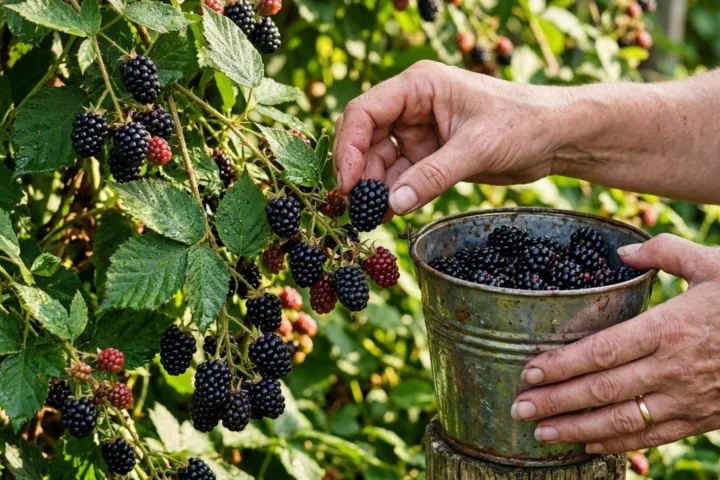
The vegetables that earn tight space keep giving after the first harvest. Leaf lettuce, chard, kale, bush beans, peppers, and cherry tomatoes fit that rule. Radishes and baby carrots earn a corner because they finish fast and free the square for a second crop.
If you like a grid, the square-foot spacing method is a simple starting point: one tomato or pepper per square foot, four leaf lettuce or basil plants, nine spinach or bush beans, and sixteen radishes or carrots. Those numbers assume rich soil, regular water, and a trellis for anything that wants to vine. They are a planning tool, not a law. If leaves overlap into a soggy mat, thin them.
Grow mint, oregano that runs, and trailing strawberries in their own pots. In a mixed bed they annex the neighbors.
Use shade as a design constraint, not a dead zone
Deep shade will not ripen tomatoes. It will grow hosta, heuchera, ferns, astilbe, hydrangea, and fragrant winter shrubs such as sarcococca if the soil drains. Climbing hydrangea and some clematis can green a north fence without demanding a full day of sun.
For edible shade, think leaves, not fruit. Lettuce, spinach, chard, parsley, and chives tolerate part shade, especially in summer heat. Move a pot a few feet if one corner is brighter than it looked on paper. Containers forgive bad first guesses. In-ground shrubs do not.
A Weekend Planting Plan You Can Copy
This plan assumes a sunny patio or a 4-by-4 bed. Swap the sun plants for the shade list above if your plot gets only morning light.
- Place one 5-gallon pot of a determinate or patio cherry tomato against a fence, with a cage in the pot on day one. Add basil at the rim if the pot is wide enough that the tomato will not smother it.
- Fill two 2-gallon troughs or window boxes with leaf lettuce, arugula, and radishes. Sow a second pinch of seed two weeks later so you are not eating everything in the same weekend.
- Give peppers or bush beans their own 5-gallon pot in the hottest, brightest spot. Fruiting plants sulk when they share a cramped tub with a tomato.
- Train pole beans, peas, or a compact cucumber up the fence. The ground at their feet can hold a row of chard or calendula.
- Finish with one ornamental pot using the old florist formula: a tall “thriller” such as an upright grass or salvia, a mounding “filler” such as geranium or coleus, and a trailing “spiller” such as calibrachoa or creeping Jenny.
Water containers until water runs from the drainage holes. Check them daily in hot weather. Small pots on paving bake. Empty saucers so roots do not sit in stale water and mosquitoes do not move in.
Replace finished cool-season greens with more beans, basil, or late lettuce rather than leaving a bald square. That single habit is how a tiny plot keeps looking planted through August.
Planting Mistakes That Waste a Tiny Plot
Crowding is the usual failure, not a lack of rare varieties. Leaves need air. Fruit needs sun on the plant, not on the neighbor’s fence.
Watch for these traps.
- Buying a 1-gallon “tomato pot” for a full-size plant, then wondering why it wilts by noon.
- Planting lavender, rosemary, or other Mediterranean herbs in a damp, north-facing bed where stems rot.
- Letting mint, lemon balm, or running oregano share a raised bed with polite perennials.
- Filling every gap in week one, then having no room when the tomato doubles in size.
- Choosing melons, large squash, and corn when you wanted salad and herbs by the kitchen door.
Drainage holes are not optional. Gravel in the bottom of a pot does not improve drainage. It shrinks the usable soil and can keep water perched above the stones. Use a pot with open holes and a mix that stays fluffy when wet.
Frequently Asked Questions
What vegetables work in small garden planting ideas?
Choose crops that stay compact or keep producing: leaf lettuce, radishes, bush beans, chard, peppers, and cherry tomatoes. Avoid one-harvest space hogs such as full-size cabbage if you only have a few pots. Grow vining crops up a trellis instead of across the path. Match pot size to the plant, not to the photo on the tag.
How do I make a small garden look bigger with plants?
Use height and repetition. One small tree or large shrub, a climber on the far fence, and a limited color palette stretch the view. Pale flowers toward the back can recede a little. A carpet of dozens of different miniatures does the opposite. Leave a clear path so the planting has an edge the eye can follow.
Can I grow tomatoes in pots on a balcony?
Yes, if the pot is large enough and the spot gets full sun. Plan on about five gallons for a standard plant and a sturdy cage from the start. Cherry and determinate patio types are easier in wind. Water daily in heat and feed during the long season, because potting mix runs out of nutrients faster than garden soil.
What can I plant in a shady small garden?
Plant for foliage and spring or summer shade bloomers: hosta, heuchera, ferns, astilbe, hydrangea, and woodland groundcovers. For food, stay with leafy crops and herbs that tolerate part shade. Fruiting vegetables belong in the sunniest container you own, even if that container sits on a wheeled caddy you roll into a brighter corner.
How many plants fit in a 4-by-4 raised bed?
A 4-by-4 bed has 16 square feet. Using square-foot guidelines, that might be four caged tomatoes and twelve squares of mixed lettuce, beans, and roots, or a gentler mix with one tomato, two peppers, and the rest in greens and herbs. Leave walk-around space outside the bed. Packing 16 large plants into 16 squares only works on paper.
Plant the Anchor, Then Edit as You Go
Start with the dull decisions: hours of sun, pot volume, and one plant that gives the space a spine. Add the vertical crop next. Fill the leftovers with plants you will harvest or clip often enough to notice.
A small garden rewards editing more than collecting. If a plant sulks after three weeks, move it or replace it. Tight spaces show every gap and every tangle, which is also why a short, repeated planting list looks calmer than a nursery’s worth of one-offs. Put something in the ground this week that you can pick by the door. The rest of the scheme can catch up.