
The fastest way to grow a usable potato crop is to match the planting idea to the space you already have. Certified seed potatoes go into loose, draining soil when it is about 45 to 50°F, usually two to four weeks before your last spring frost, then get covered as the stems grow. A garden trench still tends to give the heaviest harvest. Grow bags, raised beds, and a straw mulch layer make potato planting ideas work on a patio, in sticky clay, or on days when you do not want to dig a furrow. Timing, spacing, and darkness around the new tubers matter more than a fancy setup.
Match the Method to Your Space First
Start with the constraint you cannot change. Clay that stays wet after rain is a poor place for a deep trench. A sunny balcony cannot host three 36-inch rows. A short growing season punishes late maincrop varieties.
If you have workable garden soil and want storage potatoes, plant in a trench and hill the stems. If the ground is compacted, contaminated, or borrowed, use a 10- to 15-gallon grow bag or large container. If digging is the problem, set seed potatoes on loosened soil and cover them with clean straw. A tall chicken-wire tower looks clever on Pinterest. It rarely multiplies yield the way the photos imply, because new tubers form close to the original seed piece, not all the way up a three-foot column of soil.
Decide the harvest you want before you space anything. Closer planting favors smaller “new” potatoes. Wider planting favors fewer, larger keepers.
Get Seed Potatoes Ready Before They Go In
Buy certified seed potatoes, not last week’s bag from the produce aisle. Grocery tubers are grown to eat. Many are treated so they will not sprout in storage, and they can carry viruses or blight that certified seed is inspected to limit. University and extension sources advise against planting store potatoes in a garden you care about.
Small seed potatoes the size of a golf ball can go in whole. Larger tubers should be cut into chunks about 1½ to 2 ounces, each with one to three eyes. University of Minnesota Extension recommends pieces around 1¼ inches across, with two or three eyes when you can get them.
- Warm the tubers indoors until the eyes swell.
- Cut with a clean knife and let the cut faces dry for one to three days so they callus.
- Plant cut-side down, eyes up, without knocking off short sprouts.
Chitting, which means pre-sprouting in a cool bright spot for a few weeks, is optional. It helps early varieties get moving in a short spring. It does little for long-season maincrops.
Skip fresh manure. It encourages scab, the corky patches that ruin skins even when the potato is still edible after peeling. Aged compost is the safer amendment. Potatoes prefer slightly acidic soil, roughly pH 5.0 to 6.5.
Planting Depth, Spacing, and Timing That Change the Crop
Soil temperature is the real calendar. Plant when the soil is at least about 45°F and no longer waterlogged. Cold, wet ground does not “toughen” seed. It rots it. In most temperate gardens that window falls two to four weeks before the last frost. In hot-summer regions, plant in the cool months instead, often late winter into early spring, so tubers bulk up before soil stays above the mid-80s.
In the ground, start seed pieces about 3 to 5 inches deep. Cover with loose soil. Leave room to hill later. Space pieces 8 to 12 inches apart in the row, with 24 to 36 inches between rows. Use the tight end of that range for salad and new potatoes. Use 12 inches, and up to about 18 to 20 inches for large bakers, if your variety can handle it. Rows need walking room for hilling.
In containers, plan roughly 5 gallons of mix per plant. A 10- to 15-gallon bag holds two or three seed pieces without turning every tuber into a marble. Four or five pieces in a 10-gallon bag is how people end up with pretty vines and a disappointing dump at harvest.
A 10-foot garden row, handled well, often yields about 6 to 15 pounds. One healthy plant commonly returns several tubers, often in the range of five to ten, depending on variety, water, and crowding.
Potato Planting Ideas You Can Use This Season
Use one method well rather than stacking three experiments in the same weekend.
Trench and hill in garden soil
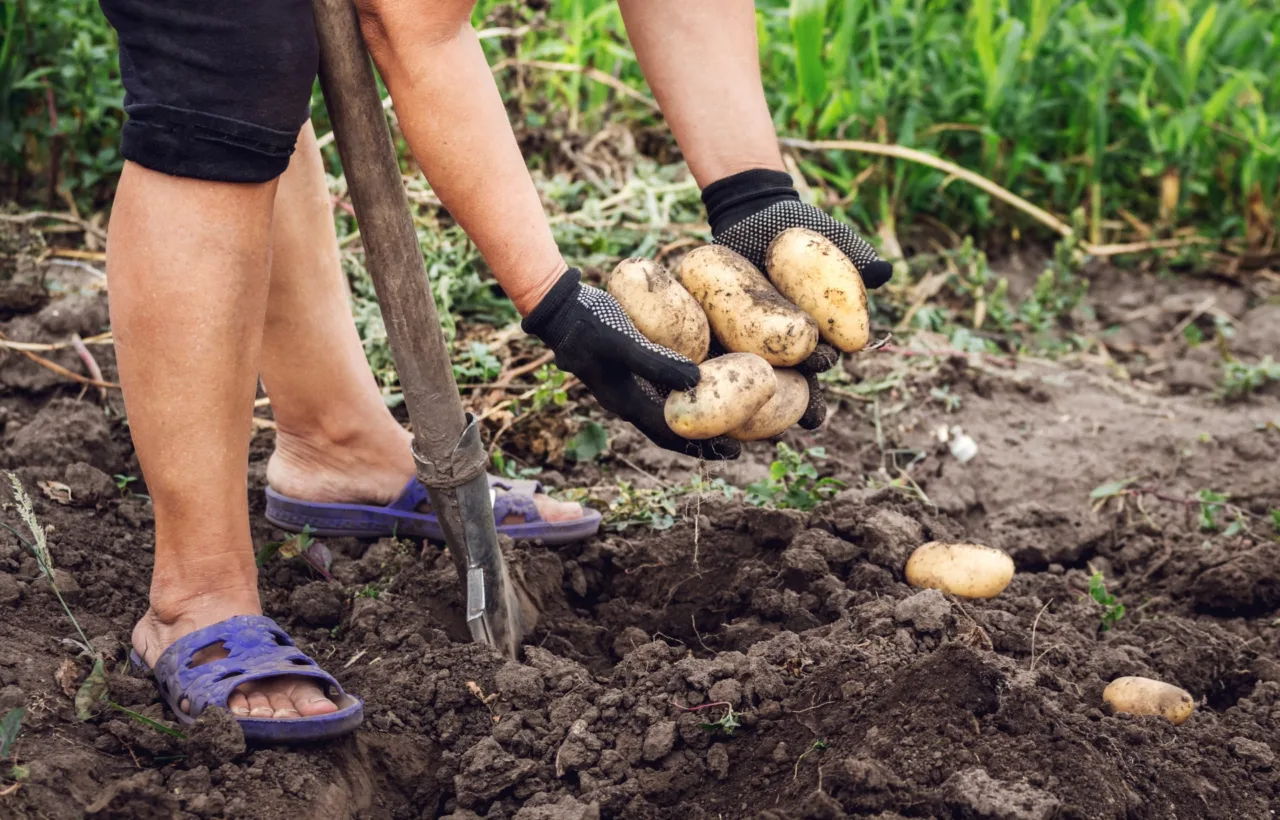
Dig a furrow 4 to 6 inches deep in full sun. Set seed pieces 10 to 12 inches apart, eyes up. Cover with about 3 to 4 inches of soil and water so the soil settles around the piece. When shoots reach 6 to 8 inches, pull soil from the path into a ridge around the stems, leaving the top leaves out. Repeat until the ridge is about 12 inches high.
This is still the most reliable idea when drainage is decent. A side-by-side comparison of home methods found trench-and-hill produced the most potatoes per plant, especially where voles raided surface plantings.
Grow bags and large containers
Choose an opaque container with drainage. Fabric bags breathe. Plastic bins need holes in the base and lower sides. Fill with 4 to 6 inches of potting mix blended with finished compost. Set two or three seed pieces, cover with 3 to 4 inches of mix, and water until the extra drains out.
As stems grow, add mix until the bag is nearly full, always leaving a tuft of leaves in the light. Containers dry fast and heat up in afternoon sun, so check moisture more often than you would in a bed. Early varieties suit bags because the plants stay smaller and finish sooner.
Straw mulch with almost no digging
Loosen the surface, set seed potatoes on the soil or only an inch deep, then cover with about 6 inches of clean straw. Add straw as stems rise so tubers stay dark. Harvest is gentler. You lift mulch instead of spearing keepers with a fork.
Washington State University Extension notes this can fail in extremely hot, dry summers, when straw cannot keep soil cool and moist. Voles also like a straw buffet. If rodents are already a problem, trench-and-hill or a bag off the ground is the safer bet.
Raised beds sit between trench and container. Plant on a 12-inch grid in loose, compost-rich soil, then hill inside the bed. They help in clay because you control the mix and the drainage.
| Method | Best fit | Labor | Tradeoff |
|---|---|---|---|
| Trench and hill | Draining garden soil, storage crop | Moderate digging and hilling | Highest typical yield per plant |
| Raised bed | Clay, small yard, mixed vegetables | Bed building, then light hilling | Soil control without a patio setup |
| Grow bag or tub | Patio, rental, poor native soil | Little digging, frequent watering | Easier harvest, usually a smaller pile |
| Straw mulch | No-dig beds, sore backs, easy lifting | Low if straw stays topped up | Cleaner tubers, more vole risk |
| Tall potato tower | Tiny footprint, a project you enjoy | High setup for modest return | Extra height rarely equals extra tubers |
Hill, Water, and Keep New Potatoes in the Dark
Hilling is not optional decoration. Buried stem tissue is where extra tubers can form, and soil or mulch keeps developing potatoes out of sunlight. Light turns skins green and raises solanine, the bitter compound you should not eat. Green patches get cut away. A mostly green potato gets composted.
Hill in the morning while stems are upright. Water so the soil stays evenly moist, about an inch a week in the ground, more in bags during heat. Uneven water during tuber swell leads to hollow centers and cracked skins. Do not flood heavy soil. Rot starts there.
Keep potatoes out of ground that recently grew tomatoes, peppers, eggplant, or last year’s potatoes. Rotation cuts disease carryover. Full sun, six hours or more, keeps foliage strong enough to feed the crop underneath.
Mistakes That Quietly Shrink the Harvest
Planting in cold mud is the classic early-season loss. The seed piece sits, softens, and never sends a shoot. Waiting a week for warmer soil beats replanting.
Overfilling a bag looks generous and then competes every plant into bite-size tubers. Under-hilling looks tidy until pale potatoes surface and turn green. Deep planting with no later cover can delay emergence. Fresh manure and high pH invite scab. Saved garden potatoes and supermarket bags import problems you cannot see on the skin.
Towers fail for a simpler reason than “you did it wrong.” Most varieties set their crop in a band near the seed piece. Piling two extra feet of straw does not create two extra feet of potatoes. If vertical growing is the only option, use one stout bag and stop adding mix about 12 inches above the seed.
Frequently Asked Questions
Can grocery-store potatoes be used for potato planting ideas?
They can sprout if the inhibitor has worn off, but they are a gamble. Store tubers may carry disease and often start slowly. Certified seed is the safer input for a bed you will use again. If you plant a kitchen leftover anyway, keep it in a container so a problem stays off your garden soil.
How many potatoes grow from one seed potato?
Plan on several tubers per plant, commonly about five to ten when space, water, and variety cooperate. A large seed potato cut into pieces becomes several plants. Crowding, heat, and dry bags cut that number fast.
Do you have to chit seed potatoes before planting?
No. Unchitted seed still grows. Chitting mainly helps early varieties in a short, cool spring by shaving time off emergence. Maincrop potatoes have a long season and rarely need the extra step.
How deep should you plant potatoes in the ground?
Start about 3 to 5 inches deep in loose soil, then hill as shoots grow. Planting 8 to 9 inches deep from day one can reduce later hilling, but emergence is slower and cold soil is riskier. Shallow planting without mulch leaves tubers exposed.
When is a planted potato ready to harvest?
New potatoes can come when plants flower, often 60 to 80 days for early types. Storage potatoes wait until vines yellow and die back, commonly 90 to 120 days. Let skins set a week or two after the tops collapse before you dig keepers.
Plant One Setup While the Soil Is Still Cool
Choose the container or bed that fits this week, not the project that needs a weekend of carpentry. Two seed pieces in a draining bag, or one short trench in soil that is finally warm, will teach you more than a tower built from wishful diagrams. Keep the tubers dark, the water steady, and the next crop in a different spot. Dinner from a bag you can tip over still counts as a garden.