
Most raised bed planting ideas look generous on a Pin and cramped in an actual 4-by-8 box. The useful starting point is simpler than a long plant list: match crops to soil depth and sun, put tall plants on the north edge, and plant in tight blocks instead of wide rows. That mix is how you turn one raised bed into salads, herbs, tomatoes, and a few flowers without a midsummer tangle.
You do not need a huge layout. You need a plan that respects root room, airflow, and what you will actually cook. The ideas below are built for that kind of weekend planting, not a catalog fantasy.
Start With Depth, Sun, and What You Eat
A raised bed is only as productive as the soil volume inside it. Shallow beds suit lettuce, spinach, radishes, onions, strawberries, and most culinary herbs. Twelve inches of loose soil opens the door to beans, beets, carrots, kale, cucumbers, and summer squash. Tomatoes, peppers, eggplant, and winter squash want closer to 18 inches, especially if the bed sits on pavement and roots cannot reach native soil below.
Sun decides the rest. Fruiting crops need about 6 to 8 hours of direct light. If the bed gets only a few hours, lean into lettuce, baby kale, scallions, radishes, and beet greens instead of tomatoes.
Then edit the wish list. Grow what you eat weekly. One zucchini plant can bury a small bed. Two extra tomato plants can shade everything in front of them. A short list you will harvest beats a crowded list you will abandon in July.
Beds on hard surfaces dry faster because roots cannot tap ground moisture. Check soil more often there, and keep the mix deep enough for the crop.
Layout Rules That Keep Every Plant in the Light
Orientation matters more than pretty symmetry. Place the tallest crops on the north side of the bed so they do not throw afternoon shade across shorter plants. Trellis peas, pole beans, and cucumbers on that same north edge. Let trailing plants spill over the south or path side.
Skip traditional rows. You will not walk inside the bed, so you can plant in blocks or a staggered triangle pattern and use the smaller end of the spacing range on the seed packet. Keep paths wide enough for a wheelbarrow or a kneeling pad. A 3- to 4-foot bed width is the usual limit if you want to reach the center without stepping on soil.
Think in layers:
- Tall and vertical at the back or north edge
- Medium plants in the middle
- Fast greens, onions, and low herbs along the front and corners
That one habit prevents the classic Pinterest fail: a beautiful May photo that becomes a tomato jungle by July.
Raised Bed Planting Ideas You Can Copy This Weekend
These plans assume a 4-by-8 bed with at least 12 inches of soil, or a 4-by-4 if you scale the plant counts in half. Adjust for your last frost date and local season length.
A cut-and-come-again salad bed
Fill the south two-thirds with leaf lettuce, spinach, arugula, and radishes sown in 1-foot blocks. Tuck green onions along the rim. Leave a north strip for a short pea trellis in spring, then replace the peas with bush beans after the last harvest. Sow a fresh patch of lettuce every two to three weeks so you cut leaves instead of waiting for one giant head.
This bed works in cooler weather and in part sun. It also gives you food in weeks, which is the point if you clicked through from a Pin and want dinner, not a theory.
A tomato kitchen bed
Put two or three staked tomatoes on the north side, not six. Leave about 24 inches between plants. Plant basil at the base of each tomato, then fill the front with parsley, leaf lettuce, and a thin line of marigolds or sweet alyssum. The greens finish before the tomatoes get bulky. The flowers pull in pollinators and take almost no room.
If the bed is only 8 to 10 inches deep, skip full-size tomatoes and grow determinate patio types or move fruiting crops to a deeper box.
A salsa or pizza theme bed
Theme beds work when you respect plant size. For salsa, use two pepper plants, a compact tomato, a clump of cilantro (succession-sown, because it bolts), and onions along the edge. For pizza, swap the hot peppers for extra basil and oregano, and keep mint in its own pot so it cannot annex the bed.
Do not add a sprawling squash “because it is Italian.” One vine will erase the theme by August.
How Tight to Plant Without Crowding
Intensive planting works in raised beds because the soil is loose and you never walk on it. It does not mean every seedling can sit shoulder to shoulder. Overcrowding cuts airflow and invites powdery mildew once the canopy closes.
Square-foot counts are a practical ceiling, not a contest. Use them as a starting grid, then give large fruiting plants extra room if your summers are humid.
| Plant type | Typical plants per sq ft | Minimum soil depth | Better neighbors |
|---|---|---|---|
| Tomato, pepper, broccoli | 1 | 12–18 in. | Basil, lettuce, marigold |
| Leaf lettuce, basil, chard | 4 | 6–12 in. | Onions, radish, tomato |
| Bush bean, beet, spinach | 9 | 8–12 in. | Carrot, lettuce, pea |
| Carrot, radish, green onion | 16 | 6–12 in. | Lettuce, onion, herb edge |
| Trellised cucumber or pea | 2 along the north edge | 12 in. | Greens in front, not squash |
After a square is harvested, add a thin layer of compost and sow the next crop. That is how one bed produces spring radishes, summer basil, and fall spinach without looking empty.
Flowers and Herbs That Earn Their Square
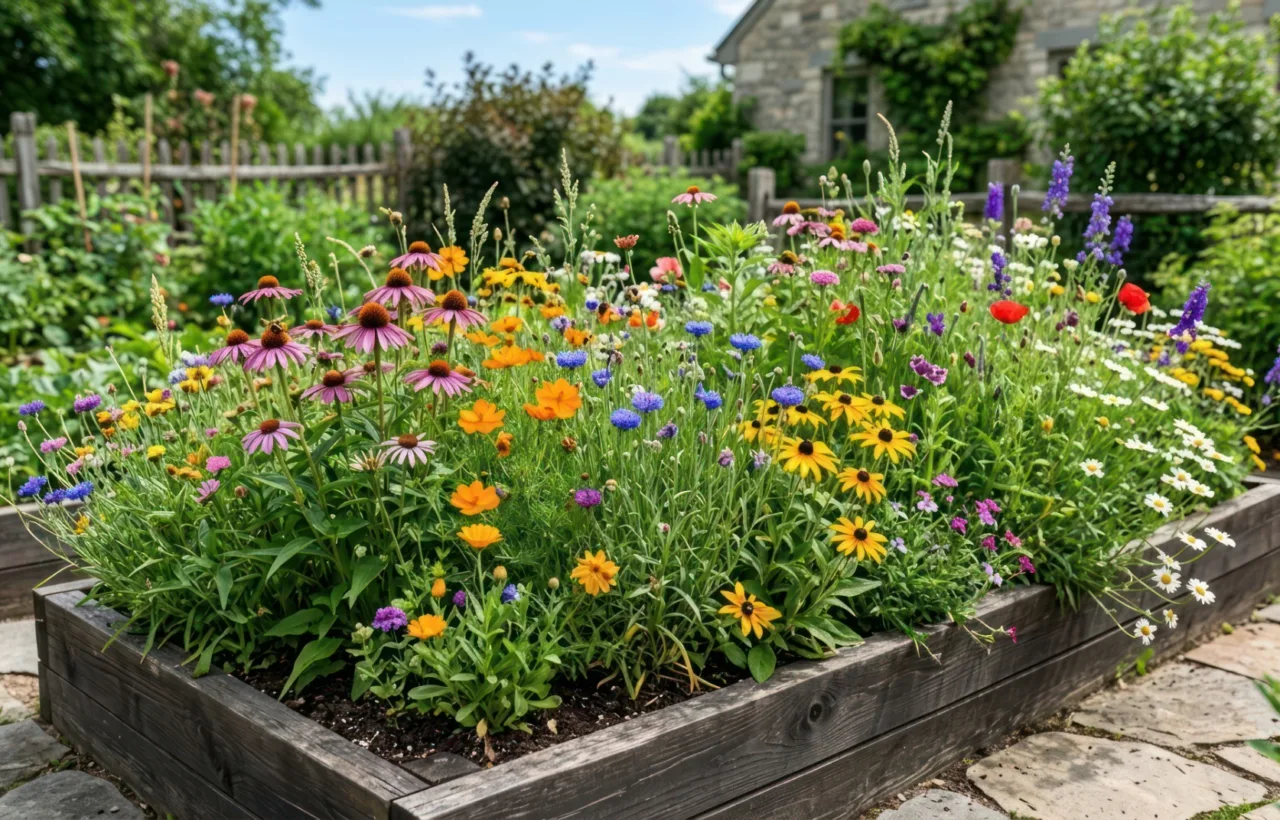
Flowers are not decoration first. They are working plants if you choose compact ones and park them on the edges. Marigolds, calendula, nasturtiums, sweet alyssum, and dwarf zinnias attract pollinators, hide bare soil, and give you something to snip. Keep sunflowers and full-size dahlias out of a small vegetable bed unless you want shade on purpose.
Group herbs by water need. Rosemary, thyme, sage, and oregano like it on the drier side. Basil, parsley, and cilantro want steadier moisture. Mint belongs in a container sunk into the corner or kept outside the bed. Put it in open soil and you will still be pulling runners next year.
A simple mix that photographs well and cooks well: tomatoes, basil, lettuce, chives, and a marigold at each corner. That is a complete raised bed planting idea, not a starter kit for chaos.
Planting Mistakes That Quietly Cut the Harvest
Pretty plans usually fail in the same five places.
First, the soil. Native yard dirt packed into a box often drains poorly and sets like cake. A workable mix is roughly half to two-thirds topsoil with one-third to one-half plant-based compost. If the topsoil is heavy clay, add a little coarse sand so water can move.
Second, one giant plant family in the same box year after year. Rotate nightshades (tomato, pepper, eggplant, potato) out of a bed for three or four seasons when you can. Multiple smaller beds make that easier than one long trough.
Third, watering on a calendar. Raised beds warm and dry faster than in-ground soil, which is helpful in spring and stressful in a heat wave. Water when the top inch or two feels dry, and consider drip or a soaker hose if you have more than one bed.
Fourth, filling a shallow bed with deep-rooted crops and hoping the frame height is enough. Depth is soil depth, not the height of the boards.
Fifth, treating companion charts as magic. Basil near tomatoes is a smart space-saver. Beans next to onions is a weaker pairing. When in doubt, match water and sun first, then worry about folklore.
Frequently Asked Questions
How many plants can I put in a 4×8 raised bed?
Enough for a real harvest, not a nursery display. A balanced 4×8 might hold 2 to 3 tomatoes, 2 peppers, a basil patch, a square of carrots, lettuce along the front, and a trellis of beans or cucumbers. That is dozens of meals. Twelve tomato plants in the same box is a crowding problem with extra steps.
What are easy raised bed planting ideas for beginners?
Start with leaf lettuce, radishes, bush beans, basil, and one or two staked tomatoes. Add a marigold at each corner. Those crops forgive small timing mistakes, give you food at different speeds, and teach spacing before you try squash, corn, or a full salsa garden.
Can I mix flowers with vegetables in the same raised bed?
Yes, if the flowers stay compact and sit on the edges. Marigolds, alyssum, nasturtiums, and calendula fit. Tall cutting flowers belong in their own bed or along a fence so they do not steal light from peppers and greens.
Do raised beds need different planting ideas in hot climates?
They need the same layout rules and more attention to water. Choose heat-tolerant varieties, mulch the soil surface, and skip cilantro and lettuce as summer centerpieces. Plant those in spring and fall, then let peppers, basil, and okra take the hot months.
Should I plant the same raised bed planting ideas every year?
Keep the theme if you like it, but move crop families. Follow tomatoes with beans or greens, not more peppers. Refresh the top few inches with compost each season. Soil in a box is a closed system, and last year’s heavy feeders leave a bill.
Plant One Bed Completely Before You Build Three
If the Pin that brought you here showed a tidy grid of herbs, tomatoes, and flowers, you can have that. Build it in one box first. Get the depth right, put the tall plants on the north side, leave breathing room, and harvest the fast crops so the slow ones can finish.
A second bed is more useful after the first one is feeding you. Until then, one well-planted box beats a yard full of half-finished ideas.